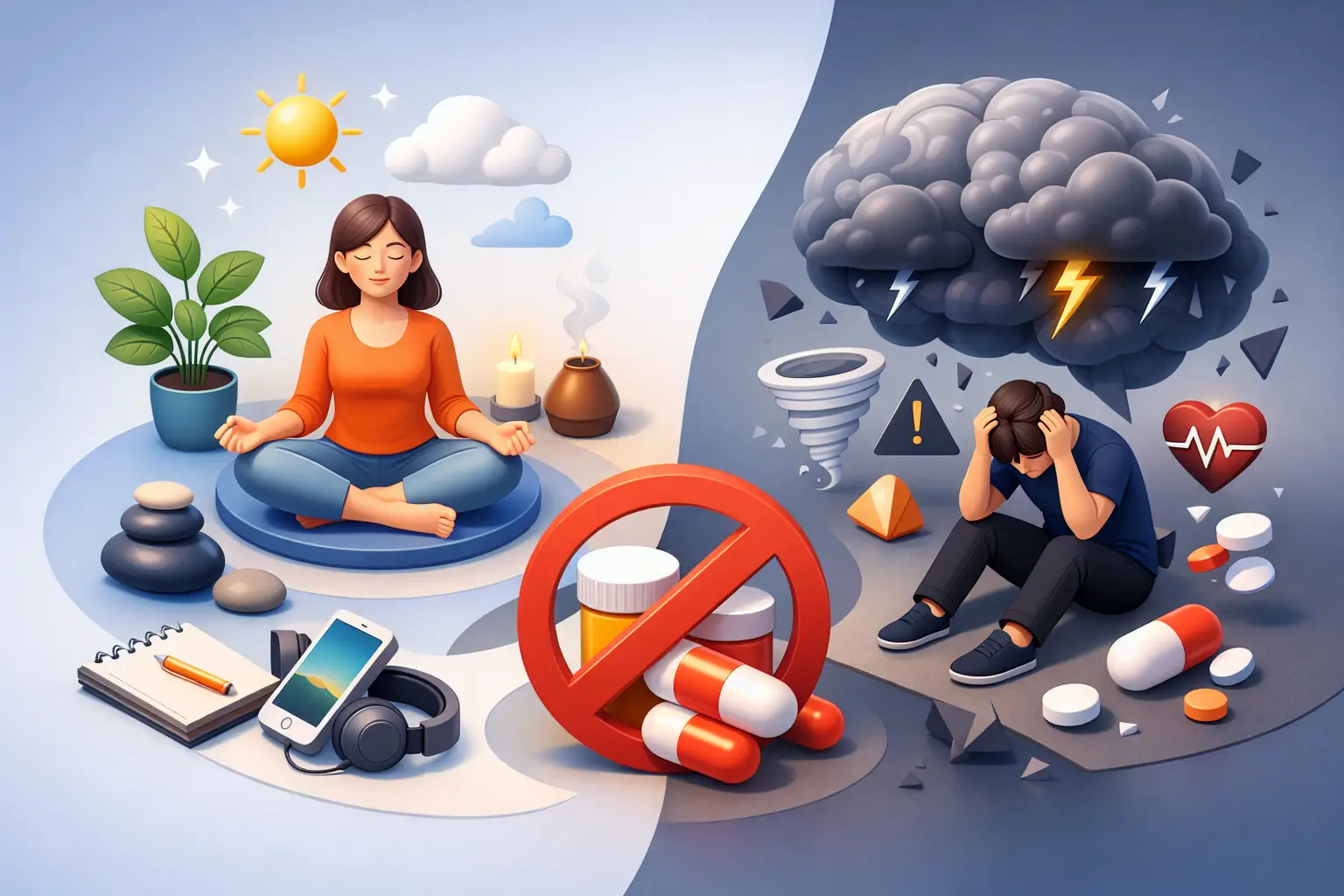
A panic attack can make an ordinary moment feel dangerous in seconds. Your heart races, your breathing changes, your thoughts speed up, and the fear of losing control can become its own source of distress. If you are looking for how to treat anxiety and panic attacks without medication, the goal is not to force yourself to “just calm down.” It is to help your body and brain build a steadier response to stress over time.
Non-medication approaches can be effective, but they work best when they are personalized and practiced consistently. Some people need immediate tools for sudden panic. Others need support addressing weeks or years of poor sleep, chronic stress, worry, trauma, or an overactive nervous system. A thoughtful plan can include counseling, daily regulation habits, and brain-based care such as neurofeedback.
First, Know When Anxiety Needs Urgent Help
Panic attacks can feel similar to serious physical conditions. If chest pain, fainting, new shortness of breath, weakness, confusion, or other severe symptoms are present, seek urgent medical care. It is wise to have new or changing symptoms evaluated, especially if you have a heart, lung, or thyroid condition.
If anxiety brings thoughts of self-harm, hopelessness, or feeling unable to stay safe, contact emergency services or a crisis resource right away. Non-medication support is valuable, but safety always comes first.
If you currently take anxiety medication, do not stop or change it on your own. A prescribing clinician can help you make decisions safely. For some people, medication is appropriate; for others, non-drug strategies may be the preferred first step or an important part of a broader plan.
What to Do During a Panic Attack
Panic rises quickly, but it also passes. The most helpful response is usually one that tells your nervous system, through repetition, that you are safe enough to ride out the wave. Trying to fight every sensation can accidentally add more fear.
Start by placing both feet on the floor and gently lengthening your exhale. You might inhale through your nose for a comfortable count of three or four, then exhale slowly for five or six. Do not force deep breaths if they make you lightheaded. A softer, slower rhythm is enough.
Use your surroundings to ground yourself. Name five things you can see, four things you can feel, three things you can hear, two things you can smell, and one thing you can taste. This shifts attention from frightening internal sensations to the present moment.
It can also help to use a simple, believable statement: “This is panic. It feels intense, but it will pass.” Avoid checking your pulse repeatedly or searching symptoms online in the middle of an attack. Those habits may bring short-term reassurance while keeping the fear cycle active.
How to Treat Anxiety and Panic Attacks Without Medication Over Time
Long-term progress usually comes from reducing the conditions that keep the nervous system on high alert. That does not mean you caused your anxiety or can solve it through willpower. Anxiety has many influences, including temperament, family history, health, stress, sleep, and past experiences. It does mean your brain can learn new patterns with the right support.
Work With a Therapist Who Treats Anxiety
Cognitive behavioral therapy, often called CBT, helps people recognize the thoughts, behaviors, and avoidance patterns that feed anxiety. For panic disorder, a therapist may also use exposure-based approaches. In a safe, guided setting, you gradually practice facing feared situations or sensations rather than organizing your life around avoiding them.
This can sound uncomfortable, and it is not a one-size-fits-all process. But avoidance often teaches the brain that normal sensations and everyday places are dangerous. Gentle, structured exposure can teach the opposite lesson: discomfort is manageable, and you can remain safe while it passes.
Therapy may also help when anxiety is connected to grief, relationship stress, perfectionism, parenting pressure, school demands, or past trauma. The right therapist creates a plan that respects your pace rather than pushing you through a generic program.
Make Sleep a Treatment Priority
A tired brain is more reactive. Poor sleep can make worries louder, reduce patience, increase physical tension, and lower the threshold for panic. Improving sleep will not erase every anxious thought, but it can make coping skills far more effective.
Keep wake-up time as consistent as possible, including weekends. Create a wind-down routine that is calm and repeatable, reduce late-day caffeine, and give yourself a screen-free transition before bed when possible. If insomnia is persistent, individualized care matters. Lying awake and worrying about sleep can become another cycle that deserves support.
Use Movement and Steady Nourishment
Regular movement gives the body a healthy outlet for stress hormones and can improve sleep and mood. A daily walk, cycling, strength training, dancing, or time outside can all help. The best choice is the one you can realistically continue, not the most demanding workout.
Notice whether skipped meals, dehydration, high caffeine intake, alcohol, nicotine, or energy drinks make symptoms worse. For some people, these factors strongly resemble or trigger panic sensations, such as a pounding heart or shakiness. Small adjustments can create meaningful relief.
Practice Regulation Before You Need It
Breathing exercises, mindfulness, progressive muscle relaxation, and gentle yoga are most useful when practiced outside a crisis. Think of them as regular training for your nervous system. Five to 10 minutes a day can make it easier to access the skill when anxiety rises.
The right practice depends on the person. Some people feel calmer focusing on their breath. Others become more aware of physical sensations and do better with walking meditation, music, stretching, or grounding through the senses. If a technique increases distress, it is okay to choose a different one.
Consider Neurofeedback for Brain-Based Support
Anxiety is not simply a problem of negative thoughts. It can also reflect a brain and nervous system that are having difficulty regulating arousal. Neurofeedback is a noninvasive form of biofeedback that helps train healthier brainwave patterns associated with regulation, focus, sleep, and resilience to stress.
During a session, sensors read brainwave activity while you relax and receive real-time feedback, often through a movie, game, or sound. There is no medication and no electrical stimulation delivered into the brain. The feedback gives the brain information it can use to practice more balanced activity, much like a fun workout for the brain.
A brain map may help identify patterns that guide an individualized training plan. This matters because two people can both say, “I feel anxious,” while experiencing very different challenges. One may have racing thoughts and trouble sleeping; another may feel tense, distracted, and easily overwhelmed. Personalized care can better match the support to the person.
Neurofeedback is not a quick fix or a replacement for medical and mental health care when those services are needed. It is often most helpful as part of a whole-person plan that may include therapy, healthy routines, and support from your healthcare team. At Neurofeedback Carolina, training is designed to feel calm, approachable, and tailored to children, teens, and adults.
Track Patterns Instead of Judging Yourself
A brief anxiety log can reveal useful clues. Record when panic occurs, what happened beforehand, sleep quality, caffeine or alcohol use, meals, physical symptoms, and what helped. The purpose is not to monitor yourself obsessively. It is to recognize patterns and give your care team better information.
Also pay attention to progress beyond the absence of panic. Maybe you recover faster after a stressful meeting, sleep more soundly, drive a route you used to avoid, or feel more present with your family. These quieter changes are often signs that your nervous system is becoming more flexible.
You do not have to wait until anxiety takes over your work, relationships, or family life to ask for help. A free consultation can be a comfortable place to discuss what you are experiencing, learn whether brain mapping or neurofeedback may fit your needs, and take one practical next step toward greater peace.


