A panic attack can make an ordinary moment feel suddenly unsafe. Your heart races, your chest tightens, your thoughts speed up, and your body may seem certain that something is terribly wrong. When these episodes keep returning, it is natural to ask: does neurofeedback help panic attacks?
For some people, neurofeedback can be a helpful part of a broader plan for reducing panic symptoms and building a steadier stress response. It is not a quick fix, and it should not replace appropriate medical or mental health care. But by helping the brain practice healthier patterns of regulation, neurofeedback may support the calm, resilience, sleep, and emotional balance that panic can disrupt.
What panic attacks do to the brain and body
Panic attacks are not simply “overreacting.” They are intense nervous-system events. The brain’s threat-detection system can activate as if there is immediate danger, even when the person is physically safe. This can produce a rush of adrenaline and symptoms such as shortness of breath, shaking, dizziness, sweating, nausea, chest discomfort, tingling, or a fear of losing control.
After a frightening episode, many people begin watching closely for the next one. They may avoid driving, crowded stores, restaurants, meetings, exercise, or any setting where they worry panic might strike. That ongoing anticipation can keep the nervous system on high alert and make daily life feel smaller.
Panic can also affect sleep. A person may lie awake replaying symptoms, wake suddenly with a racing heart, or feel exhausted after days of carrying constant tension. This cycle is one reason a whole-brain approach can be appealing: panic often involves more than one difficult moment. It can affect focus, energy, relationships, confidence, and the ability to feel at ease.
Does neurofeedback help panic attacks?
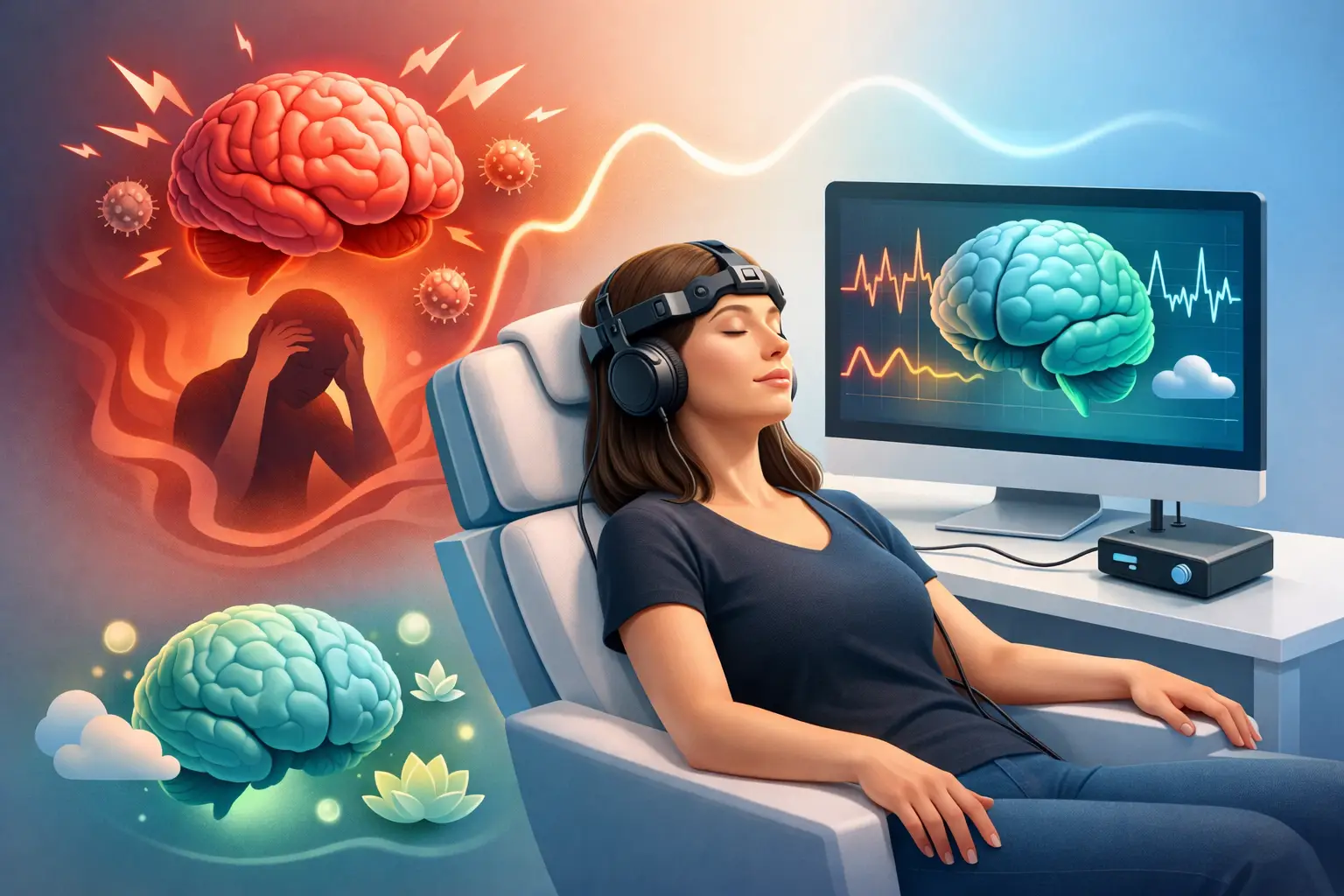
Neurofeedback is a noninvasive form of biofeedback that helps the brain receive information about its own activity. During a session, sensors placed on the scalp measure brainwave activity. The sensors do not put anything into the brain and do not cause discomfort. Instead, the neurofeedback system provides real-time feedback, often through a movie, game, or sound.
When the brain moves toward healthier, more regulated patterns, it receives a small reward in the feedback. Over repeated sessions, the brain can learn to spend more time in those productive patterns. Many clients describe the process as a relaxing, engaging workout for the brain.
Research on neurofeedback for anxiety symptoms is promising, but the evidence specific to panic disorder is still developing. Results can vary based on the person, the type of symptoms they experience, the training approach used, and whether neurofeedback is combined with other care. It is most accurate to view neurofeedback as a supportive tool that may help reduce the underlying dysregulation associated with anxiety and panic, rather than as a guaranteed cure for every panic attack.
For the right person, improvements may show up gradually. Someone might notice they recover more quickly after stress, sleep more soundly, feel less reactive to body sensations, or have more space between an anxious thought and a fearful response. These changes can matter greatly when panic has made the body feel unpredictable.
How brain training may support a calmer response
The goal of neurofeedback is not to suppress emotions or make someone feel detached. Healthy anxiety has a purpose. It can alert us to real concerns and help us prepare. The challenge comes when the brain and body stay stuck in a heightened state long after danger has passed.
Neurofeedback training may support regulation in several connected ways. A more settled nervous system can make it easier to pause before reacting to a racing heartbeat or a wave of dizziness. Better sleep can improve emotional resilience the next day. More stable attention can reduce the feeling of being pulled into worst-case thinking.
This matters because panic often feeds on interpretation. A normal body sensation, such as a skipped heartbeat after coffee or lightheadedness from standing up quickly, can become frightening when the nervous system is already primed for danger. As regulation improves, some people find it easier to recognize those sensations without immediately spiraling into alarm.
Neurofeedback is also personalized. There is no single brainwave pattern that explains every person’s panic attacks. One adult may struggle primarily with racing thoughts and insomnia. Another may feel physically tense all day but have panic episodes only in certain situations. A teen may experience anxiety alongside attention difficulties, sensory overwhelm, or social stress. Individualized training is more meaningful than a one-size-fits-all approach.
Why brain mapping can be useful
A brain map, sometimes called a quantitative EEG assessment, can provide a clearer picture of brainwave patterns that may be connected to concerns such as anxiety, poor sleep, attention problems, or emotional reactivity. It is not a diagnosis of panic disorder, and it does not replace a medical evaluation. It is a tool that can help guide a more individualized training plan.
At Neurofeedback Carolina, an evaluation can help identify the concerns that are affecting everyday life, whether that includes panic, chronic stress, insomnia, ADHD, depression, or a combination of symptoms. This whole-person view is especially valuable because panic rarely exists in isolation.
What a neurofeedback session feels like
Many people are relieved to learn that neurofeedback sessions are quiet and easy to fit into a regular routine. After sensors are placed on the scalp, you can relax in a comfortable setting while watching a show or engaging with feedback on a screen. The system tracks brain activity and adjusts the feedback moment by moment.
There is no need to force your brain to do something or talk through every painful experience during the session. The learning happens through feedback and repetition. Children, teens, and adults can all participate, though the training plan should match the person’s needs and goals.
Progress is typically measured over a series of sessions, not after a single visit. Some people notice shifts early, such as deeper sleep or feeling less keyed up. Others need more time, especially if panic has been present for years or occurs alongside trauma, medication changes, hormonal shifts, chronic illness, or major life stress.
Neurofeedback works best as part of thoughtful care
Panic attacks deserve compassionate, complete support. Neurofeedback may fit well alongside counseling, especially cognitive behavioral therapy or exposure-based therapy, which can help people change their relationship with panic sensations and avoidance. Depending on the situation, a physician or psychiatrist may also recommend medication, medical testing, or other treatment.
It is wise to speak with a healthcare professional about new, severe, or changing symptoms. Panic can feel similar to certain medical problems, including heart, breathing, thyroid, and medication-related concerns. Chest pain, fainting, severe shortness of breath, or symptoms that feel different from previous panic episodes should be evaluated promptly.
Neurofeedback may be particularly appealing for people who want a non-drug option to complement their existing care. It can also be a good conversation to have when anxiety affects multiple areas of life, such as sleep, concentration, mood, and the ability to enjoy family time.
When to consider an evaluation
An evaluation may be worth considering if panic attacks are becoming more frequent, if fear of another episode is changing your routines, or if you feel constantly tense even between attacks. It can also help when a child or teen seems overwhelmed, has trouble sleeping, avoids school or activities, or has anxiety alongside attention and emotional regulation challenges.
The best next step is not to promise yourself that you must “push through” alone. A personalized conversation can clarify what you are experiencing, what may be contributing to it, and whether neurofeedback belongs in your care plan.
Panic can be loud, convincing, and exhausting, but it does not have to define what your days look like. With patient support and training tailored to your brain and your goals, it may become possible to feel more grounded in your body and more confident in your ability to meet life’s stressful moments.


