A stressful day can leave the body tired while the mind stays wide awake. Thoughts keep replaying, small problems feel larger than they are, and sleep may not come easily. When stress becomes a familiar pattern instead of an occasional response, many people begin asking, how does neurofeedback reduce stress without adding another medication or complicated routine?
Neurofeedback is a noninvasive form of biofeedback that helps the brain practice better self-regulation. Rather than asking you to force yourself to relax, it gives your brain real-time feedback about its activity. Over a series of short, comfortable sessions, the brain can learn to shift away from patterns associated with being stuck in high alert and toward patterns that support calm, focus, sleep, and emotional balance.
How Does Neurofeedback Reduce Stress in the Brain?
Stress is not just a feeling. It is a whole-body response directed by the brain and nervous system. In a short-term challenge, that response is useful. Your heart rate rises, your attention narrows, and your body prepares to act. The problem comes when the brain has trouble receiving the signal that the threat has passed.
For some people, this may look like constant worry or racing thoughts. For others, it may show up as irritability, panic symptoms, headaches, trouble concentrating, emotional outbursts, or lying awake at night despite feeling exhausted. Children and teens may seem unusually reactive, restless, overwhelmed, or unable to settle after school.
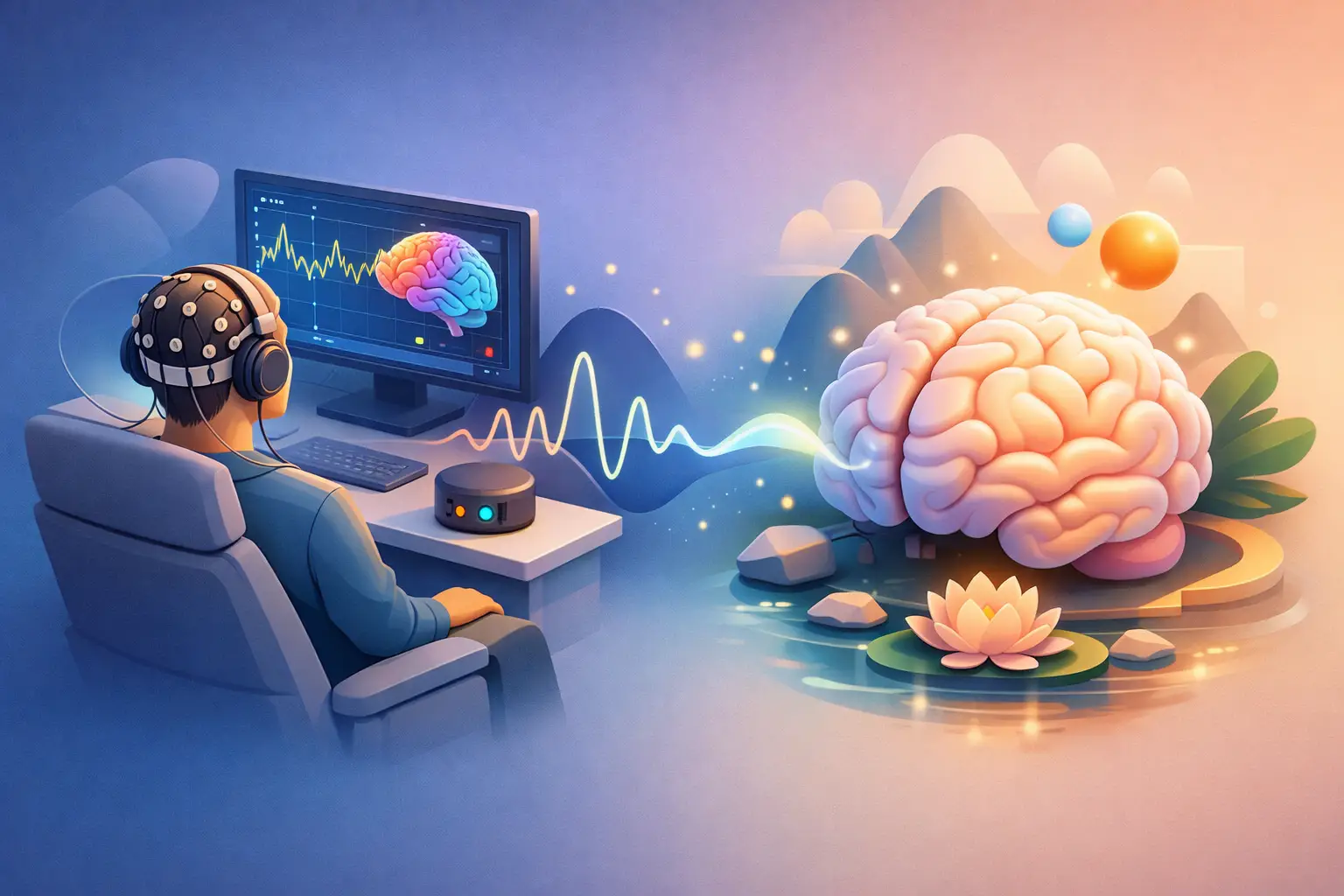
Neurofeedback looks at brain activity and uses gentle feedback to encourage more balanced brainwave patterns. Small sensors are placed on the scalp to measure electrical activity. They do not put anything into the brain. The system simply reads the brain’s signals while a person watches a movie, listens to audio, or plays a simple game.
When the brain produces a desired pattern, the movie or audio continues smoothly. When it moves away from that pattern, the feedback changes slightly. The brain recognizes this feedback on its own and begins learning which patterns help it receive a positive response. It is similar to a fun workout for the brain: repeated practice helps build a more effective regulation skill.
From High Alert to Better Regulation
Chronic stress can be associated with patterns of overarousal or underarousal. An overaroused brain may be quick to react, scan for danger, or stay mentally “on” long after a stressful event. An underaroused brain may feel foggy, shut down, unmotivated, or unable to engage. Some people move back and forth between the two.
The goal is not to make the brain slow, flat, or disconnected. It is to help it become more flexible. A well-regulated brain can become alert when needed, then return to a calmer state afterward. That flexibility can make everyday demands feel more manageable.
As regulation improves, clients may notice they recover more quickly after a difficult conversation, a busy workday, a school challenge, or an unexpected change. Stressors do not disappear, but the nervous system may stop treating every stressor like an emergency.
Why Better Sleep and Focus Can Lower Stress
Stress often feeds on other struggles. A person sleeps poorly, then has less patience and concentration the next day. That can lead to missed details, conflict, worry, and another restless night. For families, this cycle can affect everyone in the home.
Because neurofeedback training can support brain regulation, it may also help with concerns that make stress harder to manage, including sleep difficulties, attention challenges, anxiety, and mood changes. Better sleep can create more emotional breathing room. Improved focus can make schoolwork, meetings, and household tasks feel less overwhelming. Greater emotional control can help a child pause before reacting or help an adult move through a tense moment with more steadiness.
These changes are connected. The brain does not separate attention, sleep, mood, and stress as neatly as a checklist does. When it has an easier time regulating its activity, daily life often feels easier to regulate too.
What a Personalized Neurofeedback Plan Looks Like
Stress does not look the same in every brain. One adult may struggle with panic attacks and insomnia. Another may feel tense, distracted, and mentally drained. A child with ADHD may become overwhelmed by transitions, while a teen with anxiety may seem calm on the outside but spend hours caught in worried thoughts.
That is why personalized care matters. A brain map, also called a quantitative EEG or qEEG in some settings, can provide useful information about patterns of brain activity. Combined with a person’s symptoms, history, and goals, this information helps guide an individualized training plan.
At Neurofeedback Carolina, training is designed to feel calm and approachable, not intimidating. Sessions are appointment-based and typically involve relaxing in a comfortable setting while the brain receives feedback. Parents often appreciate that their child is not being asked to talk through every hard moment during a session. Adults often appreciate having a quiet, practical way to support their well-being.
The number of sessions varies. Brain training is a learning process, and progress may be gradual. Some people notice early changes in sleep, calm, or focus, while others need more time and consistency before changes become clear. Factors such as symptom severity, sleep habits, medications, medical conditions, home stress, and the presence of ADHD, autism, depression, or anxiety can all affect the experience.
What Neurofeedback Can and Cannot Do for Stress
Neurofeedback may be a valuable part of a broader wellness or mental health plan, especially for people who want non-drug support. It can help train the underlying self-regulation skills that influence how the brain responds to pressure. Many clients are looking for durable improvements, not just a brief distraction from stress.
Still, neurofeedback is not a promise that life will become stress-free. It does not remove grief, financial pressure, relationship conflict, trauma, or a demanding schedule. It also should not replace urgent medical or mental health care. Anyone experiencing thoughts of self-harm, a mental health crisis, severe panic, or sudden changes in functioning should seek immediate help from an appropriate medical or mental health professional.
For some people, counseling, movement, nutrition, sleep support, medication management, or changes at school or work may remain important parts of care. Neurofeedback can complement these supports by helping the brain become more receptive to calm and more capable of recovering after stress.
Signs That Brain-Based Stress Support May Be Worth Exploring
You may want to consider an evaluation if stress feels less like an occasional reaction and more like a daily pattern. Common signs include difficulty winding down, waking during the night, persistent worry, feeling on edge, concentration problems, irritability, emotional overwhelm, or a sense that your body never fully relaxes.
For children and teens, signs may include big reactions to small frustrations, trouble settling at bedtime, school avoidance, frequent meltdowns, impulsivity, or difficulty transitioning between activities. These behaviors are not simply a matter of willpower. They can reflect a nervous system that needs more support with regulation.
A Calmer Response Can Be Learned
The most encouraging part of neurofeedback is that it works with the brain’s ability to learn. Your brain is not fixed in its current stress pattern. With repeated, individualized feedback, it can practice responding with more balance.
If you or someone in your family feels stuck in a cycle of overwhelm, poor sleep, racing thoughts, or emotional reactivity, a free consultation can be a comfortable place to ask questions and learn whether personalized neurofeedback training may fit your goals. A calmer nervous system may not change every demand in life, but it can change how much those demands take from you.


