A child may understand the homework assignment but lose track of it after two minutes. An adult may sit down to answer emails and find their mind racing from one thought to the next. These moments are frustrating because attention is not simply about trying harder. Understanding how neurofeedback improves attention starts with recognizing that focus depends on the brain’s ability to regulate itself.
Neurofeedback is a noninvasive form of biofeedback that gives the brain information about its own activity. During training, the brain receives gentle, immediate feedback as it moves toward healthier patterns. Over time, this can help it practice the steadier, more organized activity associated with concentration, calm, and follow-through.
Attention Is a Brain Regulation Skill
Attention involves more than sitting still or finishing a task. It includes noticing what matters, filtering distractions, shifting gears when needed, remembering the next step, and staying engaged long enough to complete it. For children, those skills affect schoolwork, friendships, and confidence. For adults, they can influence work performance, relationships, driving, organization, and daily stress.
When the brain is under-aroused, a person may feel foggy, sluggish, or easily pulled away from a task. When it is over-aroused, thoughts can feel fast and scattered, the body may feel tense, and small distractions can become hard to ignore. Sleep trouble, anxiety, chronic stress, depression, concussion history, and ADHD can all affect attention in different ways.
That is why a one-size-fits-all approach rarely makes sense. Two people can both say, “I can’t focus,” while needing very different support. One may need help settling a busy brain; another may need support with alertness and mental stamina.
How Neurofeedback Improves Attention Through Practice
Neurofeedback does not force the brain to concentrate. Instead, it creates a learning environment where the brain can recognize and repeat more regulated patterns.
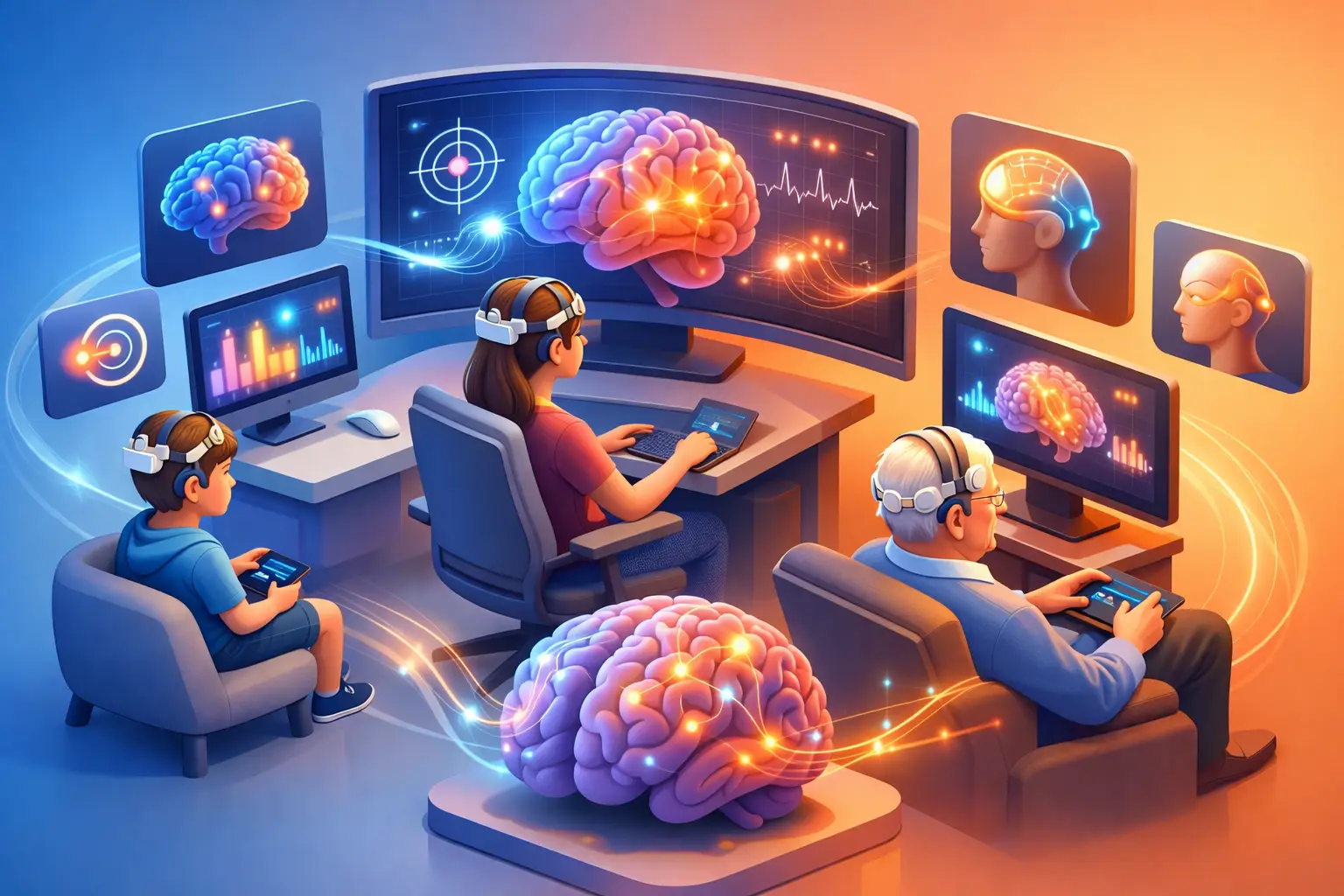
During a session, sensors are placed on the scalp to read brainwave activity. They do not send electricity into the brain, and the process is painless. The client may watch a movie, play a simple visual activity, or listen to sound while the system responds to selected brainwave patterns in real time. When the brain moves in a helpful direction, the feedback becomes more rewarding or engaging.
Think of it as a fun workout for the brain. A physical workout builds strength through repetition. Neurofeedback uses repetition and feedback to encourage the brain to become more efficient at regulating itself. As training progresses, many people find that it is easier to pause before reacting, remain with a task, organize thoughts, or recover after distraction.
The changes are not usually about becoming intensely focused every moment of the day. Healthy attention is flexible. It helps a student listen in class, then relax at home. It helps an adult stay on a project, then shift attention to family or sleep without carrying mental momentum into the evening.
A calmer nervous system can support better focus
For many people, attention problems are tied to a nervous system that is constantly on alert. Worry, panic symptoms, sensory overload, or accumulated stress can make the brain scan for threats instead of staying with the task at hand. In those situations, better focus may begin with feeling safer and calmer.
As brain regulation improves, some clients notice that racing thoughts are less intense or that it takes less effort to return to what they were doing after an interruption. This does not mean neurofeedback is a cure for every attention concern. It means training may address a contributing factor that is often overlooked: the brain’s ability to move out of an overly stressed state.
Better sleep may strengthen attention during the day
Attention and sleep are closely connected. A tired brain can look inattentive, impulsive, emotional, or unmotivated. Children who are not sleeping well may have more difficulty with behavior and schoolwork. Adults may compensate with caffeine, then struggle with afternoon crashes or restless nights.
When neurofeedback supports healthier regulation, sleep may improve for some individuals as well. Better sleep does not solve every focus challenge, but it gives the brain a stronger foundation for memory, patience, emotional balance, and sustained attention.
Why Personalized Training Matters
The same diagnosis does not always mean the same brain patterns. ADHD, for example, can involve distractibility and restlessness for one person, while another person may seem quiet but mentally drift away. Anxiety can resemble ADHD when worry keeps pulling attention from the present moment. Sleep loss, medication effects, learning differences, and emotional stress can also complicate the picture.
A brain map, also called a quantitative EEG or qEEG in some settings, can provide helpful information about brainwave patterns and areas that may benefit from training. It is not a stand-alone diagnosis. Rather, it can be one part of a thoughtful, individualized plan that considers symptoms, goals, health history, and day-to-day life.
At Neurofeedback Carolina, personalized care begins with listening. Parents may want their child to get through homework with fewer tears. A teenager may want to feel less overwhelmed before tests. An adult may be looking for a non-drug option to help with distractibility, stress, or mental fatigue. Clear goals help shape training and make progress easier to recognize.
What a Course of Neurofeedback Can Feel Like
Neurofeedback sessions are designed to be calm and comfortable. There is no need to perform perfectly, explain every thought, or push through an uncomfortable experience. Most clients simply settle in, watch or listen to the feedback, and allow the brain to practice.
Progress can be gradual. Some people notice early changes in sleep, calm, or patience before they notice stronger focus. Others first see practical improvements, such as starting tasks more easily, needing fewer reminders, or staying organized through a busy day. The pace depends on the person, the concerns being addressed, consistency with sessions, and factors such as sleep, stress, medications, and home or school demands.
For children, parent observations are especially valuable. A child may not say, “My self-regulation has improved,” but a parent may notice fewer morning battles, smoother transitions, more independent work, or less emotional fallout after a difficult day. For adults, progress may show up as fewer unfinished tasks, more productive meetings, or the ability to relax without feeling mentally switched on all night.
Neurofeedback and Other Attention Supports
Neurofeedback can be part of a broader plan rather than an either-or decision. Some families use it alongside counseling, school accommodations, occupational therapy, healthy sleep routines, movement, nutrition support, or medication management. Others pursue it because they want to explore a non-drug option first.
The right combination depends on the individual. Neurofeedback is not meant to replace medical care, emergency mental health support, or prescribed treatment without a conversation with the appropriate provider. It can, however, offer a practical way to work on the underlying regulation skills that influence attention, mood, resilience, and sleep.
A thoughtful provider will also be honest about expectations. Neurofeedback requires a series of sessions and active participation in a care plan. It is not a quick fix, and results vary. Yet for many children, teens, and adults, the opportunity to train the brain in a gentle, engaging way can feel hopeful – especially when attention struggles have affected daily life for a long time.
If focus feels harder than it should, a free consultation or evaluation can be a comfortable first step. It gives you space to talk through what is happening, ask questions, and consider whether personalized brain training may support a calmer, more attentive path forward.


