When a child cannot settle into homework, a teen feels constantly on edge, or an adult lies awake with racing thoughts, the question is often the same: what is happening beneath the surface? qEEG testing offers a practical way to look at brainwave activity and better understand patterns that may be connected to focus, mood, sleep, and emotional regulation.
Rather than guessing which areas of the brain may need support, a quantitative electroencephalogram, or qEEG, creates a detailed picture of how the brain is functioning. This information can help make neurofeedback training more personal, targeted, and meaningful for children, teens, and adults.
What Is qEEG Testing?
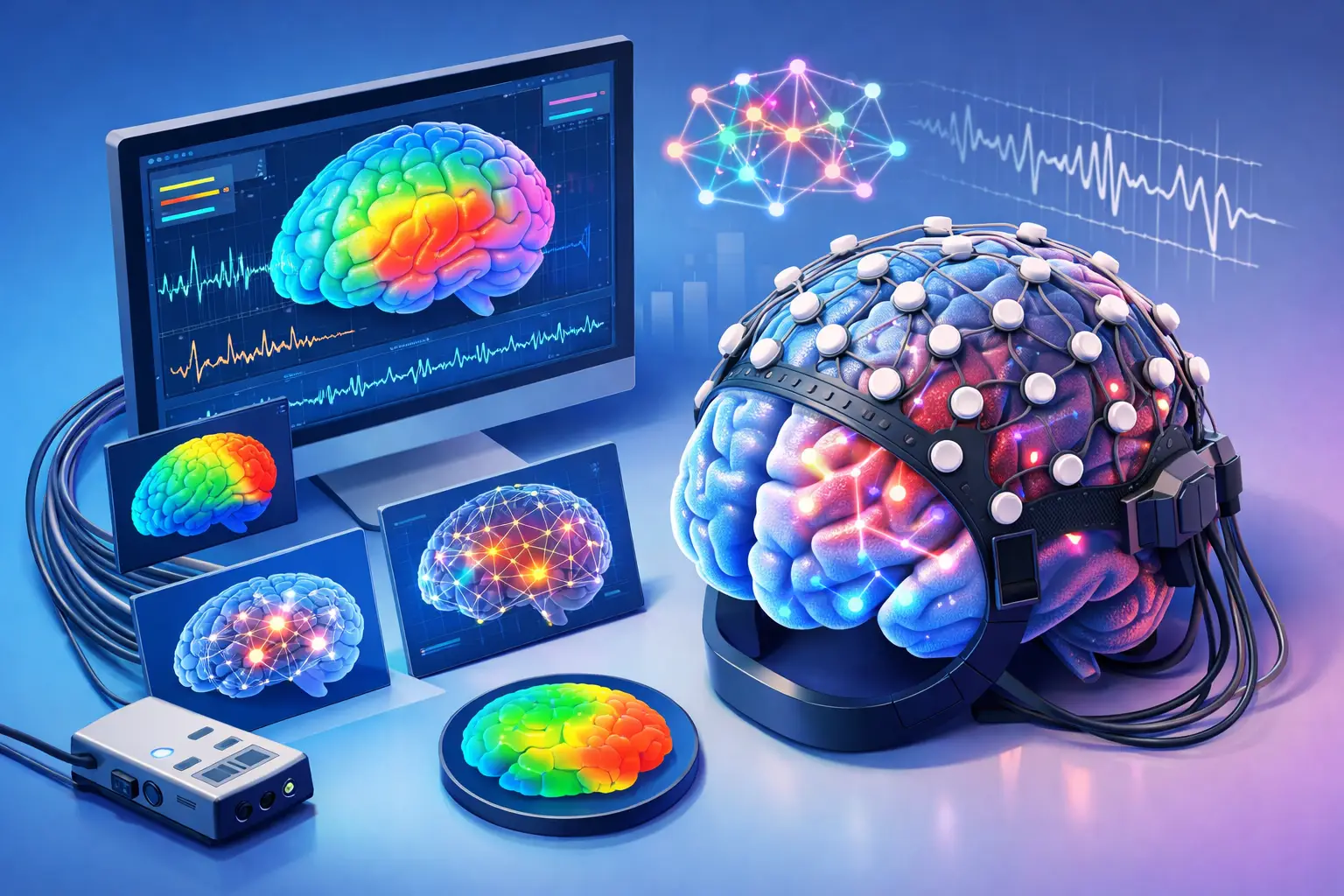
A qEEG is a noninvasive brain map. During the appointment, a trained provider places a comfortable cap with small sensors on the scalp. The sensors simply listen to the brain’s natural electrical activity. Nothing is put into the brain, and there are no needles, shocks, or medication involved.
The recording captures brainwaves while a person rests quietly, usually with eyes open and closed for short periods. Specialized software compares those patterns with age-based reference data and helps identify areas where brainwave activity may be too fast, too slow, too high, too low, or poorly coordinated.
Brainwaves are normal and necessary. Different patterns support different jobs, such as calm attention, deep sleep, problem-solving, and relaxation. The concern is not whether a person has a certain type of brainwave. It is whether the overall pattern appears out of balance for what the brain needs to do.
For example, a person who struggles to wind down may show a pattern associated with excessive activation. Someone who feels mentally foggy or has trouble sustaining attention may show a different pattern. A qEEG does not reduce a person to a chart, but it can add useful information to their full story.
Why a Brain Map Can Be Helpful
Many challenges have overlapping symptoms. Trouble concentrating can be related to ADHD, poor sleep, anxiety, chronic stress, depression, learning differences, or a combination of factors. Panic symptoms and insomnia can also feed each other. A brain map can help move the conversation beyond a one-size-fits-all approach.
At Neurofeedback Carolina, brain mapping can be used to guide an individualized neurofeedback plan. It gives the provider a starting point for deciding which brainwave patterns may benefit from training and how that training can be adjusted over time.
This personalized approach is especially valuable because two people with the same diagnosis may need very different support. One child with ADHD may be impulsive and highly active, while another may be quiet, distracted, and mentally tired. Both children deserve care that recognizes their individual nervous systems, strengths, and goals.
A qEEG may be considered by people seeking non-drug support for concerns such as:
- Attention difficulties, ADD, and ADHD
- Anxiety, panic attacks, and chronic stress
- Sleep problems, including trouble falling or staying asleep
- Depression, low motivation, or mental fatigue
- Autism-related regulation and sensory challenges
- Brain fog, cognitive concerns, and difficulty recovering from stress
The map is not a standalone diagnosis for any of these conditions. It is one piece of a thoughtful evaluation, alongside symptoms, health history, daily habits, goals, and professional guidance.
What Happens During a qEEG Appointment?
People are often relieved to learn that the process is calm and straightforward. A typical appointment begins with a conversation about the concerns bringing someone in. For a parent, that may include school struggles, emotional outbursts, bedtime battles, or a child who seems overwhelmed by everyday demands. Adults may describe poor sleep, persistent worry, burnout, low mood, or the feeling that their mind never gets a break.
The provider then measures the head to ensure the sensor cap fits properly. A small amount of conductive gel is used so the sensors can receive a clear signal. The recording itself is quiet. Clients sit comfortably while the brain’s activity is measured. Younger children may need encouragement and breaks, and a family-friendly office can make a real difference.
Afterward, the data is reviewed for patterns that may be relevant to the person’s concerns. The results are typically explained in plain language. Families should leave with a clearer understanding of what the map may suggest, what it cannot tell them, and whether neurofeedback is a reasonable next step.
How qEEG Testing Guides Neurofeedback
Neurofeedback is a form of biofeedback that helps the brain practice healthier patterns. During training, sensors monitor brainwave activity while the client watches a video, listens to audio, or engages with another simple activity. The brain receives immediate feedback when it moves toward the desired pattern.
Think of it as a gentle workout for the brain. The brain is not being forced or controlled. It is being given information and repeated opportunities to self-correct. Over a series of sessions, many clients find that regulation becomes easier outside the office too – at school, at work, during stressful moments, and at bedtime.
A qEEG can help inform where training starts and what goals are prioritized. If sleep is the most urgent concern, the plan may look different than it would for a student who needs support with sustained focus. As progress unfolds, the training approach can be refined based on real-life changes and the client’s response.
Progress is individual. Some people notice early changes, such as calmer evenings or more restful sleep, while others experience gradual improvements over time. Neurofeedback generally works best as a consistent process rather than a quick fix. Sleep routines, counseling, medical care, nutrition, school supports, and stress-management practices may also remain important parts of a person’s care.
Questions to Ask Before Scheduling qEEG Testing
A useful brain map should lead to an understandable plan, not more confusion. Ask who will review the results, how findings will be connected to your concerns, and how the map may shape training recommendations. It is also reasonable to ask about the expected schedule, how progress will be tracked, and whether the provider collaborates with other members of your care team when appropriate.
Be sure to share relevant health information, medications, previous diagnoses, and any recent changes in sleep, mood, or behavior. A qEEG reflects brain activity at a particular point in time, so context matters. Illness, lack of sleep, caffeine, medication changes, and stress can all influence how someone feels and functions.
For families, the goal is not to find a label that explains everything. It is to understand a child’s needs more clearly and create supportive next steps. For adults, it can be reassuring to see that ongoing struggles with attention, anxiety, or rest are not simply a matter of trying harder.
A Calmer Starting Point for Brain-Based Care
Living with poor focus, emotional overwhelm, or restless sleep can affect the whole household. qEEG testing gives families and individuals a way to begin with more clarity, using objective brainwave information alongside the experiences that matter most in daily life.
If you are considering neurofeedback, a free consultation or evaluation can be a comfortable place to ask questions and discuss whether brain mapping fits your goals. A thoughtful plan begins by listening carefully – to your concerns, your progress, and the brain’s own signals.


