A child who cannot settle into homework, a teen with racing thoughts at bedtime, and an adult living with panic or chronic stress may all be looking for the same thing: a calmer, more regulated nervous system. Understanding biofeedback versus neurofeedback differences can make it easier to choose support that fits the challenge, the person, and the family’s goals.
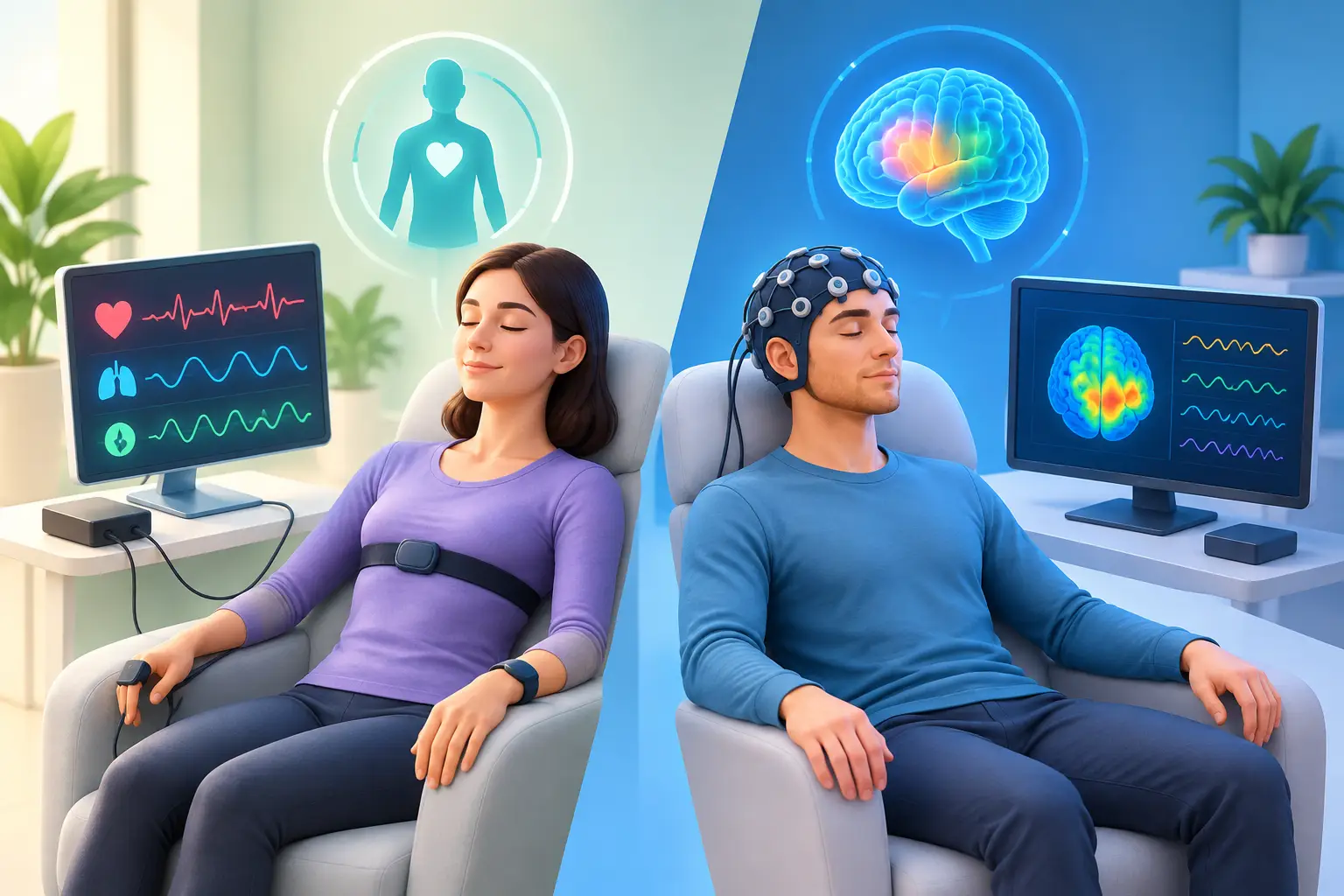
Both approaches are noninvasive and teach the body to respond differently through real-time information. The key difference is what they measure and train. Traditional biofeedback focuses on physical functions such as breathing, muscle tension, heart rate, or skin temperature. Neurofeedback focuses specifically on the brain’s electrical activity, or brainwaves.
Biofeedback Versus Neurofeedback Differences at a Glance
Biofeedback is the larger category. It uses sensors to help a person notice body processes that usually happen automatically. When you can see or hear a signal connected to your breathing, heart rate, or muscle activity, you can practice changing that signal through skills such as paced breathing, relaxation, posture, or muscle release.
Neurofeedback is a specialized form of biofeedback. Instead of tracking the body’s broader stress response, it tracks brainwave patterns with sensors placed on the scalp. The brain receives immediate feedback when it moves toward healthier, more flexible patterns. Over repeated sessions, this practice may help the brain build stronger regulation.
Think of biofeedback as learning to recognize and guide the body’s stress signals. Neurofeedback is more like giving the brain a focused workout, helping it practice the patterns associated with steadier attention, improved sleep, emotional balance, and resilience.
Neither approach is a one-size-fits-all answer. A person whose main concern is muscle tension and stress-related headaches may benefit from traditional biofeedback skills. Someone struggling with attention, impulsivity, sleep disruption, anxiety, or difficulty regulating emotions may want to explore whether brainwave-based training is a better match.
What Traditional Biofeedback Trains
During a traditional biofeedback session, a provider may use small sensors to measure functions such as heart rate variability, respiration, skin conductance, peripheral temperature, or muscle tension. The information appears on a screen in a way that makes the body’s response visible.
For example, a person may learn that their shoulders tighten and their breathing becomes shallow before they consciously recognize stress. With coaching, they can practice slower breathing or progressive muscle relaxation while watching the reading change. That immediate feedback helps connect a physical skill with a real physiological response.
Biofeedback is often used to support stress management, relaxation, chronic pain management, tension headaches, pelvic floor concerns, and some sleep challenges. It can be especially useful for people who want concrete tools they can use at home, during a difficult meeting, before an exam, or at bedtime.
The active part of biofeedback is usually very clear: you are practicing a skill on purpose. That can be empowering, but it also means progress may depend heavily on regular practice outside the office. For many people, that is a benefit. For others, particularly children or adults already overwhelmed by stress, a less effortful training format may feel more approachable.
What Neurofeedback Trains
Neurofeedback begins with the same basic principle of real-time feedback, but the target is different. Sensors on the scalp read brainwave activity. They do not send electricity into the brain, and the training is noninvasive.
During a session, the client may watch a movie, listen to audio, or engage with a simple visual activity. When the brain produces patterns that align with the training goals, the movie or sound responds positively. The brain notices that response and gradually learns through repetition, much as it learns other skills through feedback and practice.
This is why neurofeedback can feel surprisingly relaxing. A child may feel as though they are watching a favorite show. An adult may appreciate having a quiet, structured break from a demanding day. Beneath that simple experience, the training is tailored to support the brain’s ability to regulate itself.
Why brain mapping can matter
A personalized approach is especially valuable in neurofeedback because similar symptoms can have different underlying patterns. Two children may both struggle with focus, yet one may be over-aroused and restless while the other is mentally fatigued and slow to process information. Two adults may both report anxiety, while one has trouble winding down and another feels disconnected or low in energy.
A brain map can provide useful information about brainwave patterns and help guide an individualized training plan. It is not a stand-alone diagnosis, and it should be considered alongside a person’s history, symptoms, goals, and other care needs. Still, it can move the conversation beyond guesswork and toward a more targeted plan.
The Practical Differences That Affect Your Choice
The most meaningful differences are not about which method is “better.” They are about what you hope to change and how you prefer to participate in the process.
Biofeedback generally focuses on body-based signals and teaches conscious regulation strategies. It may be a natural fit when physical stress symptoms are front and center, or when a person wants hands-on practice with breathing, muscle relaxation, or heart-rate regulation.
Neurofeedback focuses on brainwave activity and uses feedback to encourage more effective brain regulation over time. It may be worth considering when concerns involve focus, hyperactivity, emotional reactivity, persistent anxiety, sleep quality, racing thoughts, cognitive fog, or difficulty recovering from stress.
The session experience differs, too. Traditional biofeedback often feels like guided skills training. Neurofeedback often feels more passive and engaging because the brain is learning while the client watches or listens. That distinction can be meaningful for younger children, busy teens, or adults who have tried to meditate or relax but find it difficult to quiet their minds on command.
Time commitment also varies. Both approaches usually work best as a series of sessions rather than a single visit. Neurofeedback is typically built around repeated training sessions because the goal is gradual learning and lasting change. The right pace depends on the individual, the severity and complexity of symptoms, and how consistently sessions can be scheduled.
Where Neurofeedback May Fit for Families
For families dealing with ADD or ADHD, autism-related regulation challenges, anxiety, panic attacks, depression, insomnia, or chronic stress, neurofeedback may offer a non-drug option to consider as part of a broader wellness plan. It does not require a child to explain every feeling perfectly or to force themselves through a relaxation exercise when their nervous system is already overloaded.
That does not mean neurofeedback replaces all other supports. Some people benefit most when it is paired with counseling, school accommodations, healthy sleep routines, medical care, movement, nutrition, or medication prescribed by their physician. A thoughtful provider should welcome coordination with appropriate members of a client’s care team.
Results also vary. Many clients are looking for practical changes: falling asleep more easily, feeling less reactive, staying with a task longer, recovering faster after a stressful moment, or having more patience at home. Progress can be gradual, and the best outcomes tend to come from an individualized plan and consistent participation.
What to Expect From a Safe, Personalized Process
Before beginning training, ask how the provider determines what to train, how progress is monitored, and whether they have experience with your specific concerns. A good consultation should make space for questions about symptoms, health history, goals, previous treatments, and daily routines.
Neurofeedback is generally comfortable and noninvasive, but it is still important to work with trained professionals who adjust the plan based on the person in front of them. Families should not be promised a cure or a guaranteed timeline. They deserve clear expectations, careful monitoring, and a plan that can change when their needs change.
At Neurofeedback Carolina, the goal is to make brain-based care feel welcoming rather than intimidating. A free consultation or evaluation can help clarify whether neurofeedback fits your needs and what a personalized training plan may look like.
When focus, sleep, mood, or stress is affecting everyday life, the next helpful step is not finding a perfect label. It is finding supportive care that helps the brain and body practice a steadier way forward.


