The night before a major test, anxiety rarely stays in one lane. A student may reread the same page without absorbing it, lie awake replaying worst-case scenarios, or sit down to test with a mind that suddenly feels blank. Parents often see the effort and preparation, yet watch anxiety get in the way of what their child truly knows. So, can neurofeedback help test anxiety? For some children, teens, and adults, personalized brain training may help support the calmer focus, sleep, and emotional regulation that make test days more manageable.
Neurofeedback is not a shortcut to a higher score, and it does not replace studying, academic accommodations, counseling, or medical care when those are needed. It is a noninvasive form of biofeedback that helps the brain practice healthier patterns of regulation. When test anxiety is tied to racing thoughts, trouble concentrating, poor sleep, or a body that stays on high alert, that practice can be meaningful.
Why Test Anxiety Can Feel So Overwhelming
A little nervousness before a test is normal. It can even help a student feel alert and motivated. Test anxiety becomes a problem when the stress response becomes so intense that it interferes with memory, focus, sleep, or the ability to think clearly under pressure.
A child who understands the material at home may freeze during a timed quiz. A college student may procrastinate because opening a study guide brings on dread. An adult preparing for a licensing exam may feel tense for weeks, sleep poorly, and struggle to retain information. These experiences are not signs of laziness or a lack of ability. They can reflect a nervous system that is having trouble shifting out of a high-alert state.
Test anxiety can also overlap with other concerns. ADHD may make it harder to organize studying or maintain attention through long exams. General anxiety can create constant “what if” thinking. Sleep difficulties can reduce concentration and emotional resilience before a test even begins. That is why a one-size-fits-all answer rarely helps.
Can Neurofeedback Help Test Anxiety and Focus?
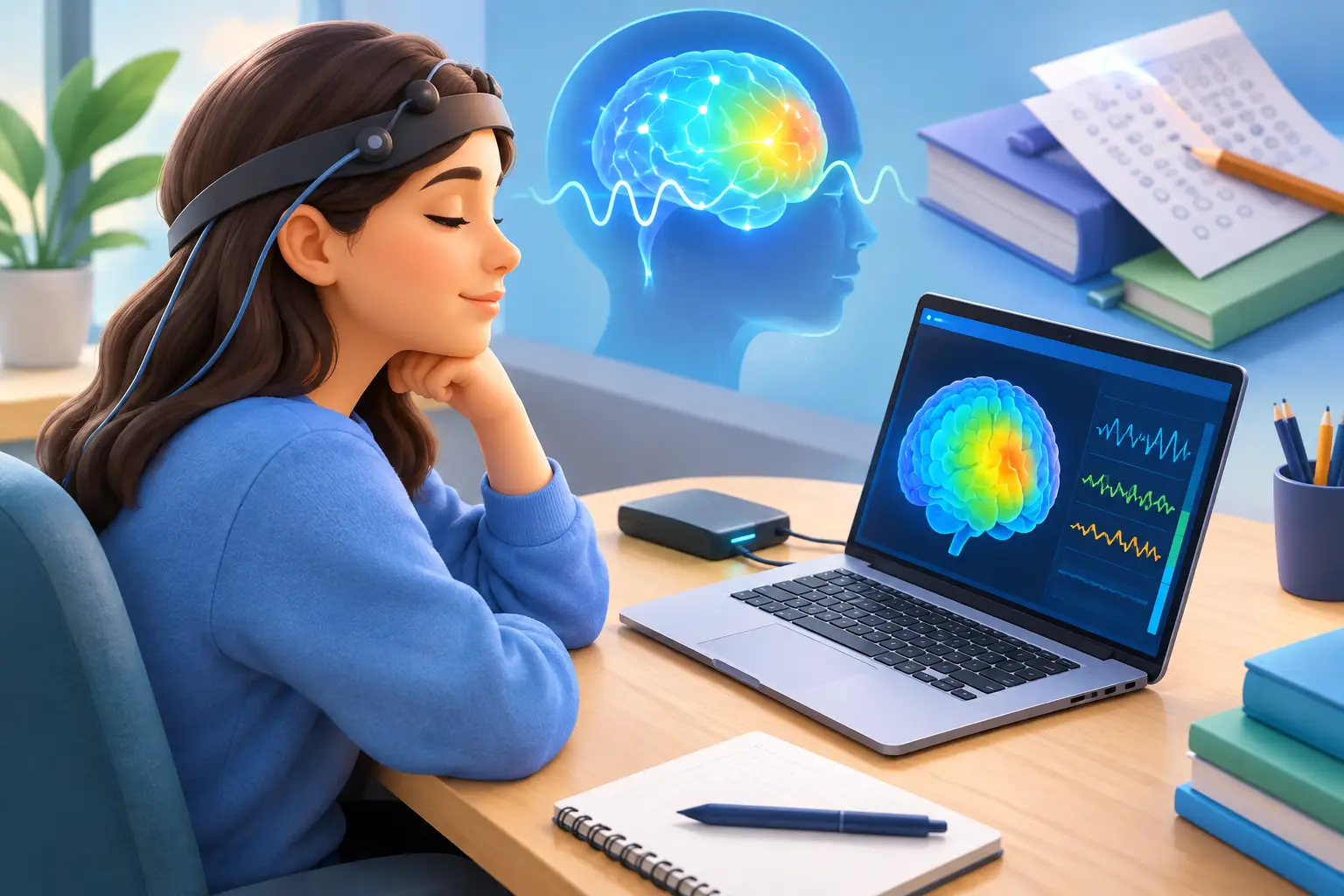
Neurofeedback may help by training the brain toward more balanced, flexible patterns of activity. During a session, sensors placed on the scalp measure brainwave activity. The sensors do not send electricity into the brain. Instead, they provide feedback through a movie, game, or other engaging activity. When the brain moves toward the desired patterns, it receives positive feedback, much like a fun workout that rewards the brain for practicing a new skill.
Over repeated sessions, some clients notice they can settle more easily, sustain attention longer, recover from stress more quickly, or sleep more soundly. Those changes can matter when a test is approaching. A calmer brain is often better able to take in information while studying and access it later under pressure.
The goal is not to eliminate every nervous feeling. Tests matter, and it is natural to care about the outcome. The goal is to help the brain respond to that pressure without becoming overwhelmed by it. For a student, that may mean reading a question without panicking. For an adult, it may mean being able to pause, breathe, and move to the next question rather than spiraling after one difficult item.
Results vary. Neurofeedback tends to be a process, not a single-session fix before the SAT, final exam, or professional certification test. Progress can depend on the person’s symptoms, sleep, stress level, coexisting attention challenges, consistency with training, and the quality of the individualized plan.
The Connection Between Brain Regulation and Test Performance
Strong test performance asks a lot of the brain at once. A person needs to focus on the task, filter distractions, manage time, recall learned information, and regulate emotions when a question feels difficult. Anxiety can disrupt each of those skills.
When the brain is stuck in an overactivated pattern, thoughts can race and physical symptoms may intensify. A student may notice a pounding heart, tight chest, shaky hands, nausea, or a sudden sense of mental fog. The brain may interpret the test as a threat rather than a challenge, making it harder to access the knowledge that is already there.
Neurofeedback is designed to support self-regulation, which is the ability to adjust attention, energy, and emotional response to what a situation requires. It is not about forcing the brain to be calm all the time. A brain needs alertness for learning and testing, as well as the ability to settle afterward. The aim is greater flexibility: enough activation to engage, without tipping into panic or shutdown.
What Personalized Training May Look Like
At Neurofeedback Carolina, care begins with getting to know the individual behind the symptoms. A free consultation or evaluation can help clarify whether neurofeedback may be appropriate and what concerns are most disruptive, from worry and panic to attention struggles, insomnia, or emotional ups and downs.
A brain map may be recommended to gather more individualized information about brainwave patterns. This can help guide training rather than assuming that every anxious student needs the same approach. Two people can both say, “I get anxious before tests,” while one is dealing mainly with racing thoughts and poor sleep and the other is coping with distractibility, frustration, and performance pressure. Their support plans may look different.
Training sessions are generally calm and comfortable. Clients relax while participating in feedback-based activities that allow the brain to practice more effective patterns. Families often appreciate that neurofeedback is non-drug and can fit into a broader wellness plan. It may be used alongside counseling, school supports, study skills coaching, healthy routines, or care from a physician or mental health professional.
Neurofeedback Works Best Alongside Practical Test Support
Brain training can support regulation, but students still need practical ways to prepare for testing. A predictable study schedule, enough sleep, regular meals, movement, and breaks can reduce the strain that builds before an exam. Learning how to use test accommodations, when appropriate, can also make a significant difference.
For younger students, parents can help by noticing the pattern without adding pressure. Instead of saying, “You know this, so just calm down,” try naming what is happening: “Your body is acting like this test is an emergency. Let’s help it settle and make a plan for the next step.” That approach validates the struggle while reminding a child that anxiety is something they can learn to work with.
Teens and adults may benefit from practicing test-day strategies before the stakes are high. This could include taking timed practice tests, using a brief breathing exercise between sections, writing down a simple plan for when panic rises, or choosing one grounding phrase such as, “One question at a time.” These tools do not need to be complicated to be useful.
When anxiety includes frequent panic attacks, depression, severe avoidance, thoughts of self-harm, or major changes in daily functioning, it is important to seek prompt support from a qualified medical or mental health professional. Neurofeedback can be part of care, but some situations call for additional evaluation and treatment.
Is Neurofeedback a Good Fit Before an Important Exam?
It depends on the timeline and the larger pattern. If a test is next week, the most helpful immediate steps may be improving sleep, creating a realistic study plan, using grounding skills, and speaking with a school counselor, therapist, or healthcare provider if symptoms are significant. Starting neurofeedback can still be worthwhile for longer-term anxiety or regulation goals, but it should not be presented as a last-minute guarantee.
If test anxiety has become a repeating cycle, however, neurofeedback may be worth exploring. This is especially true when it appears alongside ADHD symptoms, chronic stress, insomnia, difficulty calming down after setbacks, or anxiety that affects more than academics. The benefits people seek often extend beyond one test day: more peaceful evenings, better concentration, steadier moods, and greater confidence when life feels demanding.
A helpful next step is to look beyond the score and ask what anxiety is costing the student or adult every day. When the brain has more practice finding balance, preparation can feel less exhausting, test day can feel less threatening, and there is more room for ability to show through.


