A racing mind at bedtime. A child who melts down after holding it together at school. An adult who feels fine one minute and overwhelmed the next. Anxiety can take many forms, but the wish behind seeking support is often the same: to feel calmer, more capable, and more like yourself. Anxiety neurofeedback treatment results may include better emotional regulation, improved sleep, fewer physical stress reactions, and more room to respond rather than react.
Neurofeedback is not a quick fix or a one-size-fits-all program. It is a noninvasive form of biofeedback that gives the brain information about its own activity so it can practice more balanced patterns. For many children, teens, and adults, that practice can become a relaxing and encouraging part of a larger plan for anxiety support.
What anxiety neurofeedback treatment results can include
Anxiety does not live only in thoughts. It can show up as a tight chest, stomach discomfort, irritability, restlessness, panic symptoms, trouble concentrating, or difficulty falling asleep. When the nervous system stays on high alert, even ordinary demands can feel bigger than they are.
Because neurofeedback focuses on brain regulation, results are often noticed in everyday moments rather than in one dramatic instant. A parent may observe that a child recovers more quickly after disappointment. A teen may feel less consumed by social worries. An adult may notice fewer late-night thought loops or a greater ability to pause before anxiety takes over.
Some of the changes people hope to see include:
- Falling asleep more easily or waking less often during the night
- Feeling less reactive to stress, noise, conflict, or unexpected changes
- Experiencing fewer or less intense panic-like sensations
- Having improved focus when anxiety previously made concentration difficult
- Feeling more emotionally steady, patient, and resilient throughout the day
Results are personal. One person may first notice deeper sleep, while another recognizes that they can drive, attend school, participate in conversations, or handle work pressure with less fear. These shifts matter because they can make daily life feel more manageable.
How neurofeedback supports a calmer brain
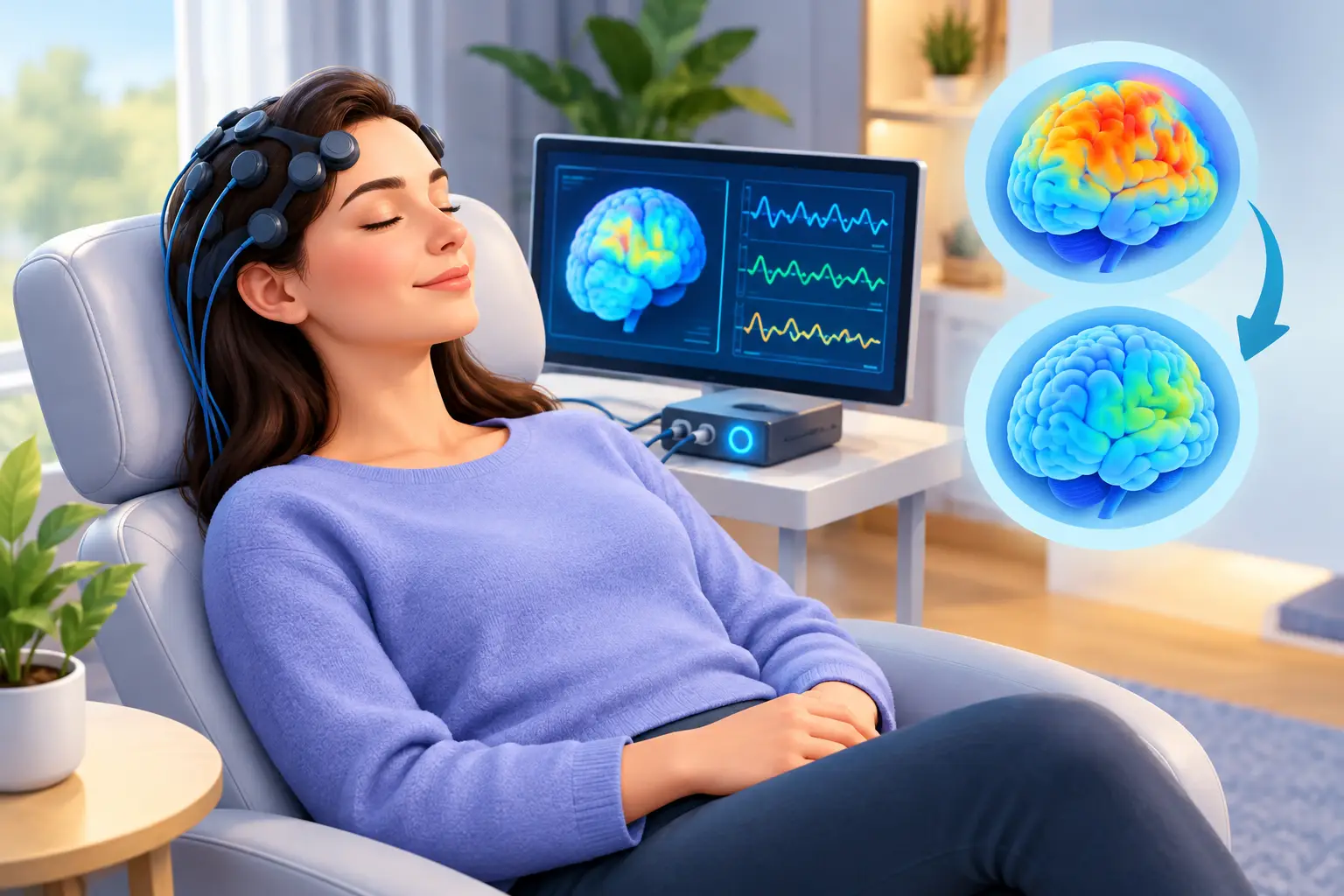
During a neurofeedback session, sensors are placed on the scalp to measure brainwave activity. The sensors only read information. They do not send electricity into the brain or force it to do anything.
That information is connected to immediate feedback, often through a movie, game, or other engaging activity. When the brain moves toward the training goals, the feedback responds. Over repeated sessions, the brain gets opportunities to recognize and practice more efficient patterns. Many clients describe the experience as a quiet, comfortable workout for the brain.
For anxiety, training may be designed to support regulation in patterns related to alertness, relaxation, attention, and sleep. The right approach depends on the individual. Someone with panic attacks, for example, may need a different training plan than someone whose anxiety is primarily connected to insomnia, ADHD, sensory overload, or chronic stress.
This is why an individualized evaluation matters. Brain mapping and a thorough conversation about symptoms, history, sleep, goals, and daily challenges can help guide a more focused plan. The goal is not to make a person flat or emotionless. Healthy anxiety can alert us to real concerns. The goal is to help the brain respond to stress with more flexibility instead of getting stuck in overdrive.
When do people notice changes?
There is no responsible way to promise an exact timeline. Some clients notice small improvements within the first several sessions, such as sleeping more soundly, feeling calmer after training, or having a little more patience at home. For others, progress is gradual and becomes clearer over several weeks.
The pace can depend on several factors: the intensity and length of anxiety symptoms, sleep quality, co-occurring concerns, consistency with sessions, medications, major life stressors, and the brain’s individual response to training. Children and adults also differ in how they describe progress. A child may not say, “My nervous system is more regulated,” but a parent may see fewer tears, smoother mornings, or better transitions.
Lasting change usually comes from repetition. Just as physical conditioning is built through regular workouts, brain training is generally a process. A provider may adjust the training plan as symptoms change and new patterns emerge. That responsiveness helps keep care centered on the person rather than on a generic protocol.
What progress often looks like before anxiety is gone
It can be helpful to look for functional improvements instead of waiting for anxiety to disappear completely. Perhaps anxious thoughts still come up, but they no longer control the entire evening. Perhaps a student still feels nervous before a test but can sleep the night before and complete it without shutting down.
These are meaningful signs of growing resilience. Progress may also be uneven. A difficult week at school, work, or home can temporarily raise stress levels. That does not automatically mean training is not helping. Looking at patterns over time gives a more accurate picture than judging progress by a single hard day.
What neurofeedback can and cannot do for anxiety
Neurofeedback can be a valuable non-drug option for people who want brain-based support for anxiety. It may also complement care from a physician, therapist, counselor, or other qualified provider. Some clients use it alongside talk therapy as they build coping skills and work through the experiences that contribute to their anxiety.
At the same time, neurofeedback is not a replacement for emergency mental health care, medical evaluation, or treatment for every underlying condition. Sudden severe anxiety, chest pain, thoughts of self-harm, substance concerns, or major changes in behavior deserve prompt attention from the appropriate medical or mental health professional.
It is also wise not to stop prescribed medication without speaking with the provider who manages it. As regulation improves, some people want to discuss their treatment plan with their medical team, but those decisions should be made carefully and collaboratively.
The most encouraging results tend to come from realistic expectations. Neurofeedback is not about erasing personality or guaranteeing that life will never feel stressful. It is about helping the brain develop a steadier foundation so stress is less likely to run the show.
Making results easier to recognize at home
Families often see the clearest changes when they track a few simple, real-life markers. Instead of asking only, “Is the anxiety better?” consider sleep, morning routines, school attendance, recovery after frustration, stomach complaints, social participation, and the number of times reassurance is needed each day.
For adults, useful markers may include how quickly they settle after work, whether they avoid fewer situations, how often panic sensations arise, or whether they can focus through a task without spiraling into worry. These observations can help guide conversations during care and make subtle progress easier to appreciate.
Supportive routines can reinforce brain training, too. Regular sleep and wake times, nourishing meals, movement, time outdoors, therapy when appropriate, and fewer overstimulating demands before bed can all help a stressed nervous system. Perfection is not required. Small, repeatable habits are often more helpful than an ambitious plan that adds more pressure.
A personalized next step for anxiety support
Anxiety can make people feel as if they have to push through alone. They do not. A thoughtful evaluation can help clarify whether neurofeedback may fit your needs or your child’s needs, what goals are most meaningful, and how progress could be measured along the way.
At Neurofeedback Carolina, care is designed to feel welcoming, personal, and practical for children, adolescents, adults, and families. A free consultation or evaluation can be a calm place to ask questions and learn whether brain training may support better sleep, greater peace, stronger focus, and more confidence in daily life.
The next helpful step may be simply giving yourself permission to seek support. Feeling calmer is not about becoming a different person. It is about having more access to the capable, connected person anxiety has been crowding out.


