A child who cannot settle into homework, a teen whose anxiety rises at bedtime, or an adult with a mind that will not slow down may all share one frustrating experience: they know something feels off, but they do not know where to begin. A Guide to brainwave assessment can make the first step feel clearer. It explains how clinicians look at patterns of brain activity and use that information to create a more personal plan for better focus, sleep, emotional balance, and resilience.
Brainwave assessment is not a test of intelligence, character, or effort. It is a noninvasive way to gather information about how the brain is functioning in the moment. For families and adults seeking a non-drug option for concerns such as ADHD, anxiety, insomnia, depression, or stress, it can provide a helpful starting point for individualized neurofeedback care.
What is a brainwave assessment?
Your brain communicates through tiny electrical signals. These signals create brainwaves, which vary depending on what you are doing and how regulated your nervous system is. Some patterns are common during calm alertness, while others are more present during deep sleep, active thinking, or stress.
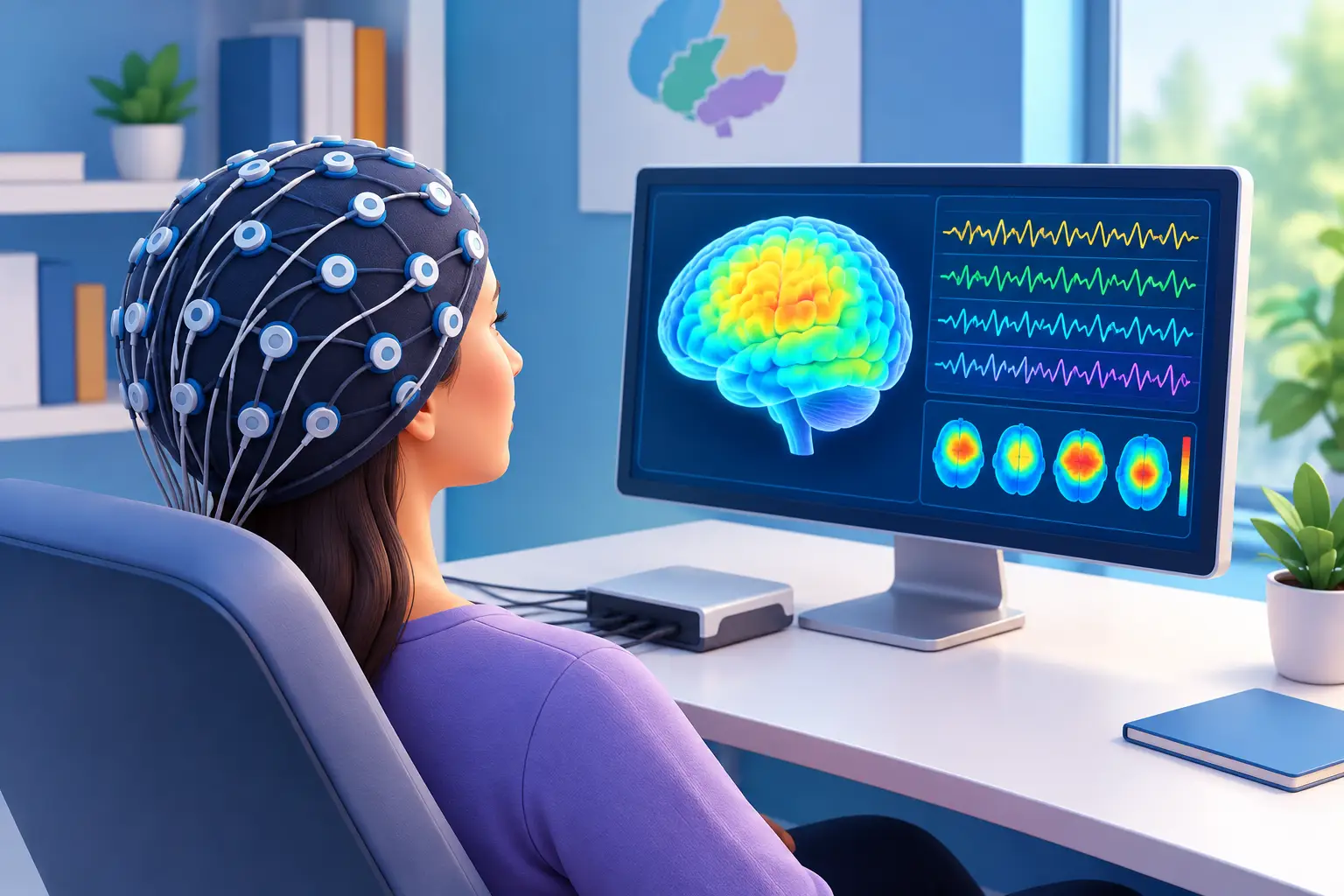
A brainwave assessment, often called brain mapping or a quantitative EEG assessment, records this activity from the scalp using small sensors. The sensors do not send electricity into the brain. They simply measure the brain’s existing electrical activity, much like a thermometer measures temperature without changing it.
The goal is not to label a brain as good or bad. Instead, the assessment looks for patterns that may help explain everyday struggles. For example, a person may show activity associated with difficulty settling down, trouble sustaining attention, poor sleep regulation, or heightened stress reactivity. Those findings are considered alongside symptoms, health history, daily routines, and personal goals.
Why brainwave patterns matter
The brain needs flexibility. It should be able to become alert for school, work, or driving, then shift into a calmer state for rest, connection, and sleep. When the brain has trouble making those transitions, a person may feel stuck in overdrive, mentally foggy, restless, emotionally reactive, or exhausted.
Brainwave patterns are only one piece of the picture, and they do not diagnose a condition on their own. A careful provider also considers medical history, medications, sleep habits, stressors, developmental needs, and any existing diagnoses. Still, a map of brain activity can add useful information when symptoms are hard to describe or when standard approaches have not brought enough relief.
For parents, this can be especially reassuring. A child who appears distracted, impulsive, withdrawn, or easily overwhelmed is not necessarily choosing those behaviors. Brain-based information can help shift the conversation from blame to support. It gives the family a clearer way to understand what may be making regulation difficult.
What happens during a brainwave assessment?
Most people find the process simple and comfortable. You sit quietly while a trained provider places a cap or individual sensors on the scalp. A small amount of conductive paste or gel may be used so the sensors can record clearly. There are no needles, shocks, or painful procedures.
During the recording, you may be asked to relax with your eyes open and closed for short periods. Depending on the assessment, you may also complete simple tasks that measure attention or response patterns. The appointment is designed to collect a snapshot of brain activity in a calm setting, not to put anyone under pressure.
Young children often do well when they know what to expect. It can help to explain that they are wearing a special hat so the provider can listen to how their brain is working. Bring any comfort item that makes sitting still easier, and let the office know ahead of time if your child has sensory sensitivities.
After the recording, the information is reviewed with your concerns and goals in mind. A good assessment conversation should be understandable. You should leave knowing what the findings may mean, what they do not mean, and whether neurofeedback or another support may be appropriate.
Preparing for the appointment
No elaborate preparation is usually needed, but a few practical choices can improve the quality of the recording. Arrive with clean, dry hair and avoid heavy styling products if possible. Try to get a typical night’s sleep rather than making major changes to your routine right before the appointment.
It is also helpful to share relevant details honestly. Let your provider know about medications, supplements, recent illnesses, concussions, sleep changes, and significant stress. These factors can affect brain activity and help place the results in the right context. Do not stop prescribed medication unless the clinician who manages that medication tells you to do so.
What can a brain map reveal?
A brain map may show areas where brainwave activity appears less balanced or less efficiently regulated than expected. For some people, that information aligns with challenges involving attention, impulsivity, worry, panic, low mood, sensory overwhelm, learning, memory, headaches, or sleep.
For instance, a person who feels tired yet wired may have a pattern that supports their report of difficulty downshifting into rest. Someone with attention concerns may show patterns that help a provider decide where training could be most useful. The results are not a crystal ball, and two people with the same diagnosis can have very different maps. That is exactly why personalized assessment matters.
The assessment can also establish a baseline. If you begin neurofeedback training, your provider can use the baseline alongside your day-to-day progress to guide adjustments. Better sleep, fewer panic symptoms, smoother mornings, improved schoolwork, and a greater ability to pause before reacting are all meaningful signs of change, even when progress is gradual.
From assessment to neurofeedback training
Neurofeedback is a form of biofeedback that helps the brain practice healthier patterns. During a session, sensors monitor brain activity while you watch a movie, play a simple game, or listen to audio. When the brain moves toward the desired pattern, it receives immediate feedback, such as a brighter screen, clearer sound, or progress in the activity.
Over repeated sessions, the brain learns through practice. Many clients describe it as a relaxing, engaging workout for the brain. You are not being forced to think a certain way, and there is no medication involved. The training gives the brain information it can use to become more flexible and regulated.
The number of sessions varies. It depends on the concern being addressed, the person’s age, the complexity of their symptoms, consistency with appointments, and how their nervous system responds. Some people notice early changes in sleep or calmness, while others experience improvements more gradually. Lasting change generally comes from a consistent training plan rather than a one-time session.
Questions to ask before moving forward
Choosing a provider is a personal decision. Ask how the assessment will be interpreted, how your individual goals will shape the training plan, and how progress will be tracked. You may also want to ask what experience the provider has with your specific concern, whether they coordinate with other members of your care team, and what a typical schedule looks like.
It is wise to be cautious of anyone who promises a cure, guarantees the same result for every person, or treats a brain map as a standalone diagnosis. Brainwave assessment is most helpful when it is part of thoughtful, whole-person care. It can complement therapy, medical treatment, school accommodations, healthy sleep habits, exercise, and other supports when appropriate.
At Neurofeedback Carolina, brain mapping and neurofeedback are approached with the understanding that every brain and every family has a different story. The purpose is to create a plan that feels manageable, welcoming, and connected to the changes you want to see at home, at school, at work, and at night.
Is brainwave assessment right for your family?
If ongoing attention problems, anxiety, emotional outbursts, racing thoughts, poor sleep, or stress are affecting daily life, an assessment may offer useful direction. It can be especially valuable when you are looking for a clearer picture before committing to a training plan or when you want support that goes beyond a one-size-fits-all approach.
A free consultation or evaluation is a comfortable place to ask questions, discuss symptoms, and decide whether brain-based training fits your needs. The first step does not have to be overwhelming. Sometimes it begins with a quiet appointment, a clearer understanding of the brain, and the possibility that feeling more focused, rested, and at peace can become part of everyday life.


