A child may understand the homework but cannot stay with it for more than a few minutes. An adult may feel exhausted at bedtime yet lie awake with a mind that will not slow down. When people ask, “what is a brainwave imbalance?” they are often looking for a clearer explanation for experiences like these – persistent challenges with focus, mood, sleep, energy, or stress that do not feel like a matter of simply trying harder.
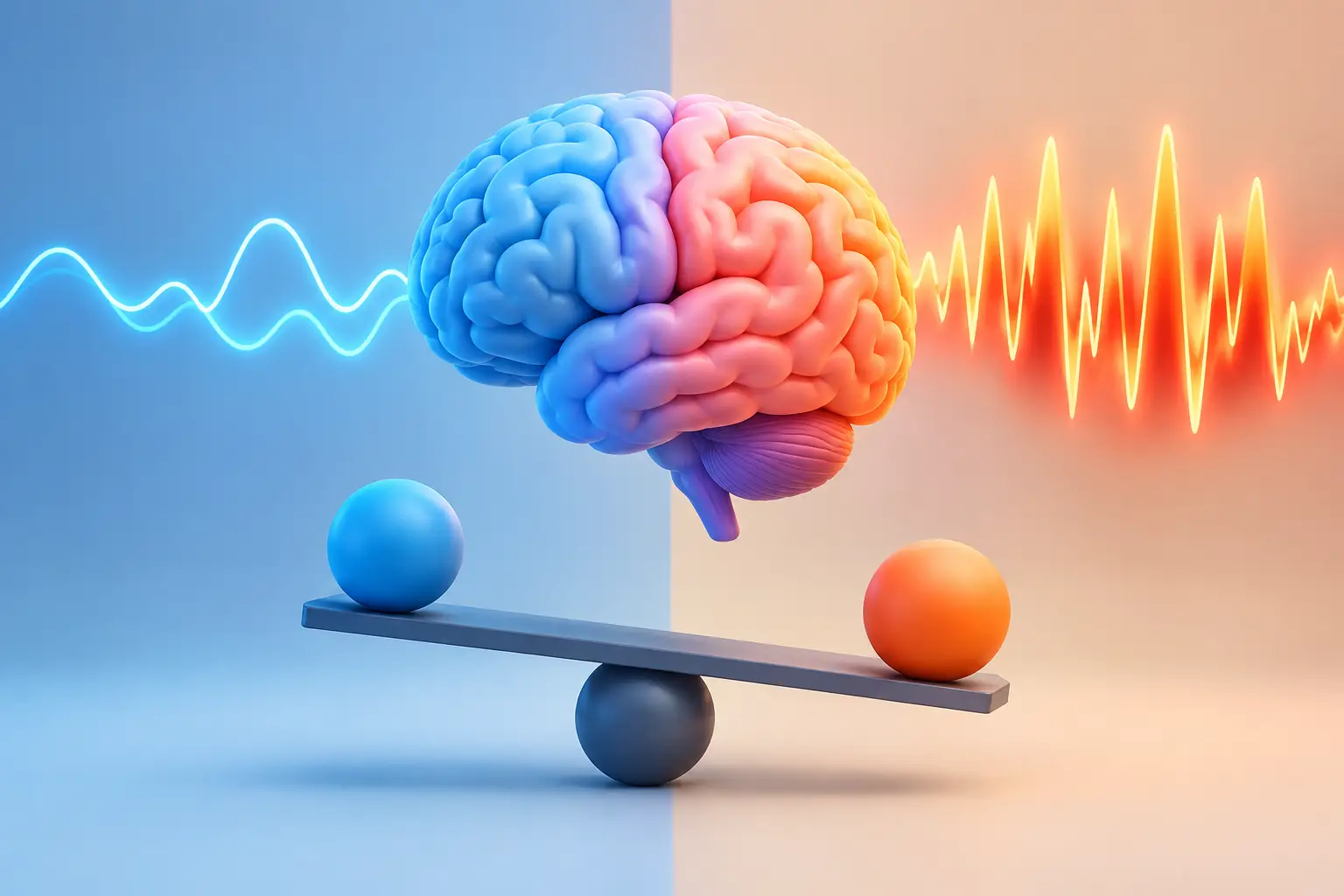
A brainwave imbalance is a pattern of brain activity that may not be well matched to what the brain needs to do at a particular time. The brain is always producing electrical activity, and those patterns shift naturally as we sleep, learn, relax, solve problems, and respond to stress. When certain patterns are too fast, too slow, too strong, too weak, or not changing smoothly between tasks, a person may have more difficulty with regulation.
This does not mean there is something “wrong” with someone’s brain. It is also not a diagnosis by itself. Rather, it is a useful way to look at how the brain may be functioning and where it may benefit from support.
What Is a Brainwave Imbalance, Exactly?
Brainwaves are tiny electrical signals created as brain cells communicate. They can be measured at the scalp with sensors, much like other noninvasive forms of biofeedback. Different brainwave frequencies tend to be associated with different states of alertness and rest.
For example, slower activity is common during deep sleep and very relaxed states. Mid-range activity can support calm attention, while faster activity often increases when we are thinking, processing information, or responding to demands. Every healthy brain produces a mix of these rhythms. The goal is not to have one “perfect” brainwave or eliminate any frequency altogether.
What matters is flexibility and balance. A well-regulated brain can become alert when it is time to focus, settle when it is time to sleep, and recover after a stressful moment. An imbalance may be present when the brain gets stuck in a pattern that does not fit the situation, such as remaining overly activated during rest or underactivated during schoolwork.
Brainwave patterns are highly individual. Age, sleep, medications, stress, health history, and daily routines can all affect them. That is why a personalized evaluation is more helpful than assumptions based on symptoms alone.
How Brainwave Patterns Can Affect Daily Life
Brainwave imbalances are often discussed alongside attention concerns, anxiety, insomnia, depression, autism, concussion-related symptoms, and chronic stress. Still, similar symptoms can have many possible causes. Poor sleep, medical conditions, major life changes, nutrition, trauma, and medication effects may all play a role. A thoughtful provider looks at the whole person, not just one symptom or one scan.
For some people, excess fast activity may be associated with a feeling of being “on” all the time. They may experience racing thoughts, muscle tension, irritability, panic symptoms, or trouble falling asleep. Their brain may have difficulty shifting out of high alert, even when they are safe and ready to rest.
For others, too much slow activity during times that require focus may be connected with mental fog, low motivation, distractibility, or difficulty organizing thoughts. A student might stare at a page for a long time without absorbing it. An adult may feel mentally present in conversation but struggle to keep track of details or complete tasks.
The pattern is not always as simple as fast versus slow. Some people have difficulty with transitions, such as calming down after school, waking up feeling refreshed, or recovering after conflict. Others may be able to focus intensely on an enjoyable activity but have trouble directing attention when a task is repetitive or demanding. These differences can offer useful clues about regulation.
Signs That May Point to a Regulation Challenge
A brainwave imbalance cannot be diagnosed from a checklist, but recurring patterns can be worth exploring. In children and teens, families may notice distractibility, impulsive behavior, emotional outbursts, difficulty settling for sleep, sensory sensitivity, or school frustration. In adults, common concerns include racing thoughts, fatigue, worry, low mood, poor concentration, restless sleep, and feeling overwhelmed by everyday demands.
The key question is not whether a person has an occasional distracted day or a stressful week. Everyone does. It is whether the pattern is persistent, disruptive, or getting in the way of school, work, relationships, health, or peace at home.
If symptoms are sudden, severe, or include thoughts of self-harm, urgent medical or mental health support is essential. Neurofeedback can be part of a broader wellness plan, but it is not a replacement for emergency care or appropriate medical evaluation.
Why Brain Mapping Can Be Helpful
Because symptoms do not tell the whole story, brain mapping can add another layer of insight. A quantitative EEG, often called a qEEG brain map, records brainwave activity from different areas of the scalp while a person rests quietly. It is painless and noninvasive. For children, it can feel like wearing a soft cap with sensors while sitting still for a short period.
A brain map does not read thoughts or define a person’s potential. It helps identify patterns that may be relevant to challenges with attention, mood, sleep, or emotional regulation. It can also help guide a more individualized training plan rather than taking a one-size-fits-all approach.
A good evaluation also includes listening. What happens at bedtime? When is focus easiest? Are there changes after a busy week, illness, or difficult transition? A parent’s observations, a client’s goals, and health history all matter when deciding whether neurofeedback is appropriate.
How Neurofeedback Supports Healthier Regulation
Neurofeedback is a form of biofeedback that gives the brain real-time information about its own activity. During a session, sensors measure brainwave patterns while the client watches a movie, listens to audio, or engages with a simple on-screen activity. The sensors only receive information. They do not send electricity into the brain.
When the brain produces a more helpful pattern, the movie may become clearer, the sound may improve, or the activity may continue. When the brain moves away from that pattern, the feedback changes slightly. Over repeated sessions, the brain can learn through practice, much like it learns any other skill.
Many clients describe it as a relaxing, enjoyable workout for the brain. There is no need to force concentration or talk through difficult experiences during the training itself. The work is gentle, but the training plan is purposeful and based on each person’s goals and response over time.
Results vary. Some people notice improvements in sleep, calm, or focus early in training, while others experience gradual changes across several weeks or months. Progress may also look different from one family member to another. A child may have fewer difficult mornings; an adult may notice greater patience before reacting; a teen may feel more able to start and finish schoolwork.
A Personalized Path Matters
The most effective approach is rarely a generic protocol aimed at a label. Two people with ADHD can have very different sleep patterns, stress levels, brainwave activity, and daily challenges. The same is true for anxiety, insomnia, and mood concerns. Personalized care allows training to be adjusted based on the individual rather than the diagnosis alone.
At Neurofeedback Carolina, this process begins with understanding what daily life feels like now and what meaningful improvement would look like. For one person, that may be sleeping through the night. For another, it may be more peaceful family evenings, better focus at work, or fewer panic-driven moments.
Brain-based training works best as part of a thoughtful support system. Depending on a person’s needs, that may include good sleep habits, counseling, school accommodations, movement, nutrition, medical care, or medication management. Neurofeedback is a non-drug option that may complement these supports, not compete with them.
If focus, sleep, stress, or emotional regulation has become a daily struggle, a free consultation or evaluation can be a calm first step. You do not need to have all the answers before asking for help. Sometimes a clearer picture of how the brain is regulating is where a more hopeful routine begins.


