A child who cannot settle at bedtime, a teen whose attention disappears during homework, or an adult with racing thoughts may all be experiencing a form of dysregulation. How qEEG identifies brain dysregulation is by measuring patterns of electrical activity in the brain, then showing where those patterns may be out of balance for that person’s age, needs, and symptoms.
That matters because symptoms rarely tell the whole story. Trouble concentrating can stem from an over-alert stress response, difficulty maintaining steady focus, poor sleep, anxious thought patterns, or more than one factor at once. A quantitative electroencephalogram, often called qEEG or brain mapping, offers a clearer starting point for personalized neurofeedback training.
What qEEG Measures During a Brain Map
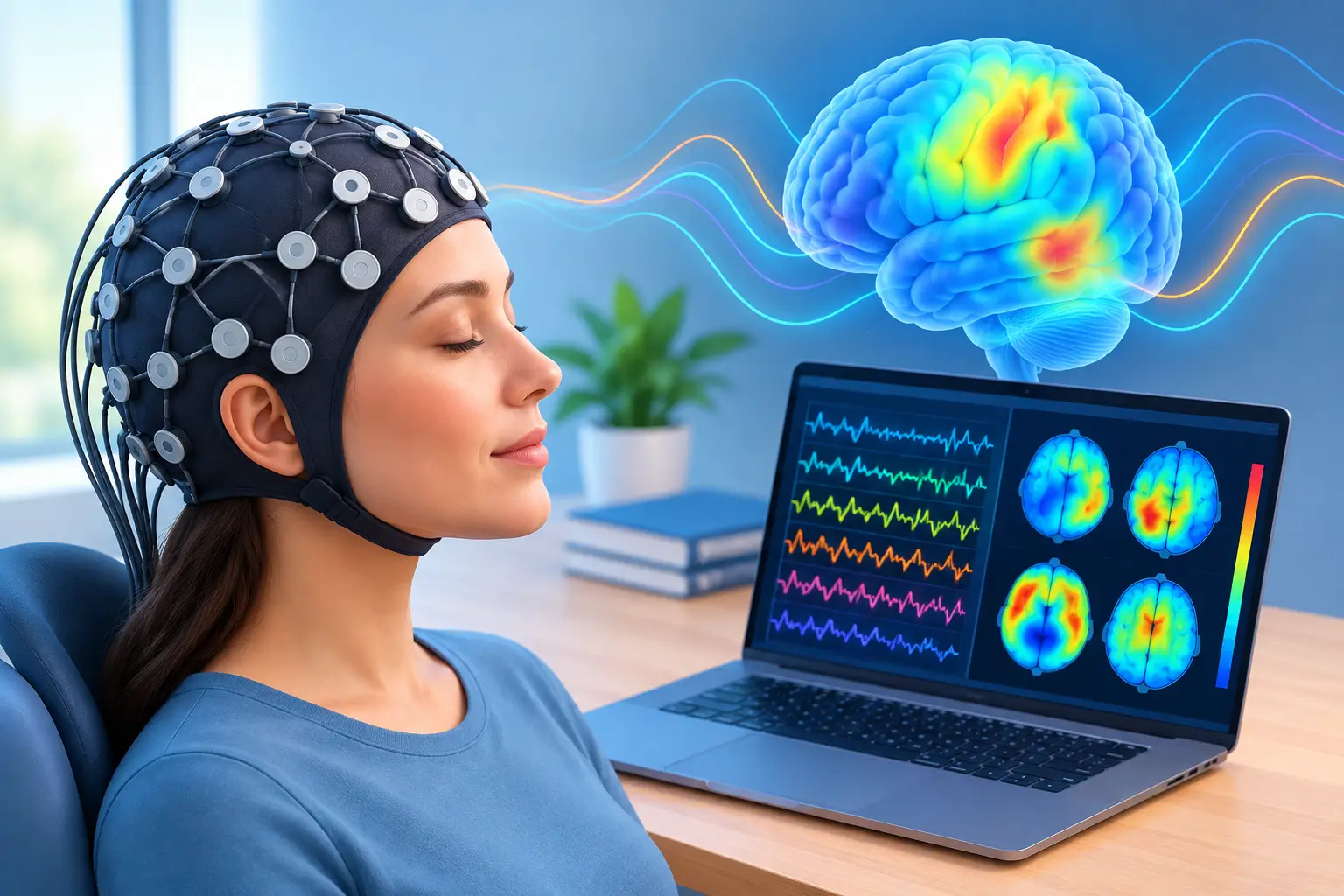
Your brain communicates through tiny electrical signals. An EEG records those signals with small sensors placed gently on the scalp. A qEEG takes this information further by using computer analysis to organize the data into a detailed map of brainwave activity.
The process is noninvasive and does not put electricity into the brain. There are no needles, radiation, or medication involved. Most people simply sit comfortably while sensors record brain activity during quiet periods, often with eyes open and closed. For children, it can feel much less intimidating than the word “assessment” suggests.
The recording captures several ranges of brainwave activity, including delta, theta, alpha, beta, and higher-frequency activity. Each type of brainwave has a useful role. Slower activity supports sleep and restoration, while faster activity can support alertness, problem-solving, and quick responses. The goal is not to have more or less of every brainwave. Healthy regulation means the brain can produce the right activity in the right place at the right time.
How qEEG Identifies Brain Dysregulation Patterns
After the recording, specialized software analyzes the brainwave data and compares it with age-based reference data. It can examine the amount of activity within different frequency ranges, the balance between them, and how efficiently areas of the brain communicate with one another.
A qEEG may reveal patterns such as excess slow-wave activity in areas associated with attention, unusually high fast-wave activity that may align with a constantly activated stress response, or difficulty shifting into calmer patterns needed for rest. It can also show whether certain regions appear underactive, overactive, or poorly coordinated with other areas.
These findings do not mean a brain is damaged or that a person is defined by a map. Brain dysregulation is better understood as the brain working harder than it needs to in certain situations. It may have trouble moving smoothly between focus and rest, alertness and calm, or emotional reaction and recovery.
For example, someone with anxiety may have a brain that stays on high alert even when there is no immediate danger. Someone with attention challenges may struggle to maintain a steady, organized level of activation during schoolwork or meetings. A person with insomnia may be tired physically but unable to shift into the calmer brain state that supports sleep. The map helps connect those lived experiences to measurable patterns.
The Map Is Personal, Not a Label
Two people can both have ADHD, anxiety, depression, or sleep concerns and still show very different qEEG patterns. That is one reason a one-size-fits-all approach may not serve every family well.
A brain map is not a stand-alone diagnostic test for ADHD, autism, depression, or any other condition. It cannot replace a full clinical evaluation, medical care, or mental health support when those are needed. Instead, it provides another useful piece of information. A knowledgeable provider considers the map alongside symptoms, health history, medications, developmental factors, sleep habits, and personal goals.
This individualized view is especially valuable when symptoms overlap. Anxiety can look like inattention. Sleep deprivation can worsen emotional outbursts. Depression may involve low motivation, mental fog, or agitation. By looking beyond a checklist of symptoms, qEEG can help guide a more targeted plan.
From Brain Map to Personalized Neurofeedback
A qEEG is often the first step in creating a neurofeedback program. Rather than guessing which brainwave patterns to train, the provider can use the map to select training goals that fit the person in the chair.
During neurofeedback, sensors continue to read brain activity while a person watches a movie, plays a simple game, or listens to sound. The system gives the brain immediate feedback when it moves toward a healthier, more regulated pattern. There is nothing the client has to force or consciously figure out. Through repetition, the brain practices more efficient activity much like it would build coordination during a workout.
For a child, that may mean becoming better able to settle into homework and transition through the evening without feeling overwhelmed. For a teen, it may support steadier mood, sleep, and concentration. For an adult, the changes may show up as fewer racing thoughts, greater resilience under pressure, clearer thinking, or a more restful night.
Progress is not always linear, and the number of sessions varies. Some people notice early shifts in sleep or calm, while others need more time for changes to become noticeable in daily routines. Consistency matters because brain training is a learning process, not a quick fix.
Why Symptoms and Maps Do Not Always Match Perfectly
qEEG is a valuable tool, but it is not a crystal ball. Brainwave patterns can be affected by poor sleep, illness, medication, caffeine, stress, age, and the person’s ability to relax during the recording. A high-quality assessment depends on careful data collection and thoughtful interpretation, not just colorful images on a screen.
It also depends on the question being asked. A parent may want help with a child’s meltdowns, while the child’s map and history suggest that sleep disruption is a major contributor. An adult may seek support for focus but discover that chronic anxiety is draining the mental energy needed to concentrate. The best training plans address the patterns most connected to everyday struggles and meaningful goals.
For some people, neurofeedback may be one part of a broader care plan that includes counseling, school support, healthy sleep routines, medical evaluation, or medication management. For others, it may be a preferred non-drug option for building better self-regulation. The appropriate path depends on the individual.
What a Brain Mapping Appointment Can Feel Like
Many families worry that a brain map will be uncomfortable or overly clinical. In reality, the appointment is designed to be calm and approachable. The sensors rest on the scalp with conductive gel or paste to help capture a clear signal. They do not send a shock or change brain activity during the assessment.
Before the recording, the provider will typically talk with you about concerns such as attention, anxiety, panic attacks, mood, sleep, behavior, learning, or cognitive changes. That conversation helps ensure the map is interpreted in the context of real life, not as a collection of numbers alone.
After analysis, the findings can be explained in plain language. You should leave with a clearer understanding of what may be contributing to your concerns, what neurofeedback could target, and whether training feels like a good fit for your family.
A Better Starting Point for Brain-Based Support
When everyday life is shaped by poor focus, big emotions, chronic worry, or restless sleep, it is easy to feel as though you have tried everything without understanding the root of the problem. A qEEG does not provide all the answers, but it can replace some of the guesswork with useful, individualized information.
At Neurofeedback Carolina, brain mapping and neurofeedback are approached as supportive tools for helping the brain practice steadier, more flexible patterns. A free consultation can be a comfortable first conversation about what you or your child has been experiencing and whether a personalized brain-based plan may help bring more calm, focus, and resilience into daily life.


