A panic attack can feel as if it arrives without warning: a racing heart in the grocery store, tightness in the chest while driving, dizziness during a normal conversation, or a sudden fear that something is terribly wrong. Yet panic attack triggers are often more layered than one obvious event. They may involve stress, physical sensations, sleep loss, past experiences, and a nervous system that has been running on high alert for too long.
Learning your patterns does not mean blaming yourself for panic. It means giving yourself useful information. When you can recognize what may be putting added pressure on your brain and body, you have more options for responding with care instead of fear.
What Is Happening During a Panic Attack?
A panic attack is an intense surge of fear or discomfort that can include a pounding heartbeat, shortness of breath, shaking, sweating, nausea, numbness, dizziness, chest discomfort, or feelings of unreality. Some people fear they are having a heart attack, losing control, or about to pass out.
The body is designed to activate quickly when it senses danger. During panic, that alarm system can fire even when there is no immediate threat. Adrenaline rises, breathing may become faster and shallower, muscles tense, and the mind scans for an explanation. The sensations themselves can then feel frightening, creating a cycle: a sensation sparks fear, fear amplifies the sensation, and the alarm grows louder.
Panic attacks are real physical experiences, not a sign of weakness or a failure to “just calm down.” They can happen to adults, teens, and children, especially during periods of change, stress, illness, or disrupted routines.
Common Panic Attack Triggers
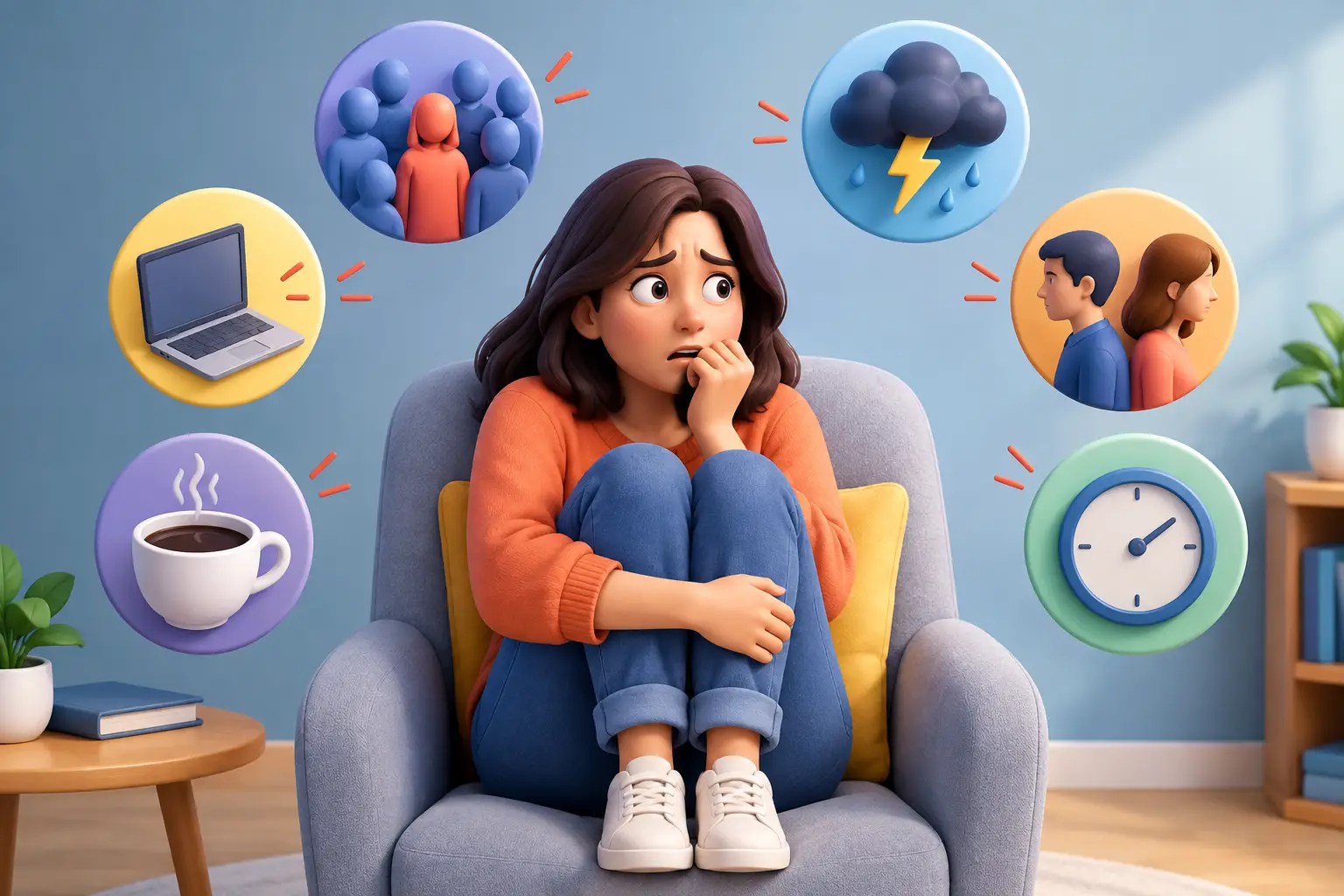
Triggers vary from person to person. For some people, a crowded restaurant or a difficult meeting is the clear spark. For others, panic seems to appear in calm moments because the contributing stress has been building quietly in the background.
Stress That Has Been Building for Weeks
Major stressors such as a job change, financial strain, caregiving, grief, conflict, school pressure, or a move can increase the nervous system’s overall load. But everyday demands matter, too. A full calendar, constant notifications, poor boundaries, and little recovery time can leave the brain with fewer resources to regulate strong feelings.
Sometimes panic happens after the stressful period appears to be over. This can be confusing, but it is common. Once a person slows down, the body may finally register how much strain it has been carrying.
Body Sensations That Feel Dangerous
A rapid heartbeat after climbing stairs, lightheadedness from skipping lunch, warmth from a hot shower, or breathlessness during exercise may be harmless sensations. For someone who has experienced panic before, however, those sensations can resemble the beginning of an attack.
This is called fear of bodily sensations. The brain starts treating normal changes in the body as warning signs. Avoiding exercise, heat, caffeine, or unfamiliar places may provide short-term relief, but it can also reinforce the belief that those sensations are unsafe. Support often focuses on helping the nervous system learn that physical sensations can rise and fall without signaling danger.
Sleep Loss, Hunger, and Stimulants
A tired brain is often a more reactive brain. Poor sleep can make it harder to manage worry, tolerate frustration, and recover from stress. Skipping meals, dehydration, illness, hormonal changes, and blood sugar swings may also create sensations that resemble anxiety.
Caffeine, nicotine, energy drinks, some cold medications, and other stimulants can increase jitteriness, heart rate, and restlessness. This does not mean everyone with panic must avoid caffeine forever. It does mean it can be helpful to notice whether symptoms are more likely after a second cup of coffee, an energy drink, or a rushed morning without food.
Places, Situations, and Memories
The brain is built to make associations. If a panic attack occurred in a car, at school, in a store, or during a medical appointment, returning to that setting may bring anxiety before anything difficult has happened. People may begin avoiding the location because they fear another attack.
Past trauma, medical scares, or seasons of intense stress can create similar associations. A smell, sound, date, conversation, or body sensation may activate the nervous system before the person consciously connects it to a memory. These responses deserve compassion, not criticism.
Worry About Having Another Attack
One of the most powerful triggers can be the thought, “What if it happens again?” After a frightening episode, it is understandable to monitor every breath, heartbeat, and thought. Unfortunately, constant monitoring can keep the alarm system active.
This does not mean you should ignore your body. It means learning a steadier way to notice sensations: “My heart is beating fast. I have felt this before. I can slow down, breathe gently, and let this wave pass.” That shift takes practice, particularly if panic has been happening for months or years.
How to Identify Your Personal Patterns
A simple record can reveal patterns that are easy to miss in the moment. After an episode, write down what was happening in the hours before it began: sleep, meals, caffeine, stress level, location, body sensations, thoughts, and what helped it ease. Keep the notes brief. The goal is awareness, not perfection.
Look for trends across several weeks rather than drawing conclusions from one difficult day. For example, an attack may not be caused by a single busy afternoon. It may be more likely after three nights of poor sleep, a missed lunch, and an emotionally demanding week.
It is also helpful to ask what happened before the panic, not only during it. Did you feel tense but push through? Were you holding your breath while working? Did you have a conflict you did not get to process? Your body may have been signaling overload before the symptoms became intense.
What to Do in the Moment
When panic rises, the immediate goal is not to force it away. Trying to battle every sensation can accidentally add more fear. Instead, focus on sending your nervous system small signals of safety.
Plant both feet on the floor and name a few things you can see around you. Relax your jaw and shoulders. Try a slow, easy exhale rather than taking large, fast breaths. Remind yourself that panic is uncomfortable, but it will pass. If possible, stay where you are for a few moments instead of rushing away at the first sign of anxiety. Each safe experience can help retrain the alarm response.
If chest pain, fainting, trouble breathing, or other symptoms are new, severe, or concerning, seek prompt medical evaluation. It is always appropriate to rule out physical conditions, especially when symptoms are unfamiliar.
Building More Lasting Regulation
Lifestyle supports such as regular meals, movement, hydration, restorative sleep, and reduced stimulant use can lower the baseline stress that makes panic more likely. Counseling approaches can also help people understand anxious thoughts, process difficult experiences, and gradually reduce avoidance.
For some individuals, brain-based support may be part of a broader care plan. Neurofeedback is a noninvasive form of biofeedback that helps the brain practice more regulated patterns through training sessions that are calm and engaging. Rather than asking a person to talk their way out of panic in the moment, it focuses on strengthening the brain’s capacity for attention, emotional balance, sleep, and resilience over time.
At Neurofeedback Carolina, individualized brain mapping and training can help guide a personalized approach for children, teens, and adults who are dealing with anxiety, panic, racing thoughts, or sleep concerns. The right plan depends on the person, their symptoms, medical history, and the supports already in place.
Panic may feel like an emergency, but it is also a message from a nervous system that needs steadier support. With careful attention to patterns, compassionate professional care, and consistent practice, it is possible to feel safer in your body again.


