A child covers their ears in a busy store. A teenager becomes irritable after a crowded school day. An adult feels tense, distracted, or completely drained after ordinary errands. These moments are not always about behavior, effort, or attitude. They can be signs that the nervous system has taken in more sensory input than it can comfortably process. This guide to sensory regulation strategies can help families recognize those patterns and respond with practical, supportive tools.
Sensory regulation is the ability to notice input from the body and environment, then adjust so a person can feel safe, alert, focused, and connected. Sounds, lights, movement, textures, smells, hunger, fatigue, and social demands all affect that balance. What helps one person feel calm may make another person feel overwhelmed, so the most effective approach is always personal.
What sensory dysregulation can look like
Sensory needs do not always look dramatic. Sometimes dysregulation looks like shutting down, avoiding a task, losing focus, becoming tearful, needing constant movement, or having trouble falling asleep. A child may become explosive after holding it together at school all day. An adult may feel a racing mind after a meeting, struggle with crowded places, or need silence before they can talk about their day.
These responses are especially common for people with ADHD, autism, anxiety, panic symptoms, sleep difficulties, and chronic stress. They can also show up during periods of illness, major change, poor sleep, or emotional strain. Sensory regulation is not about making someone tolerate every uncomfortable experience. It is about helping the brain and body return to a more workable state.
A useful question is: what happened right before the person became more activated or more withdrawn? Look for patterns in noise, visual clutter, transitions, physical discomfort, hunger, screen time, rushed schedules, and lack of rest. Patterns provide better guidance than assumptions.
Start with the person’s signals
Before choosing a strategy, learn the early signs of overload. For one child, it may be talking louder, pacing, or becoming silly. For another, it may be going quiet, rubbing their eyes, or refusing a familiar activity. Adults may notice clenched shoulders, headaches, shallow breathing, snapping at loved ones, or an urge to escape.
It helps to think in terms of two general states. An over-alert nervous system may feel restless, anxious, reactive, or unable to settle. An under-alert nervous system may feel foggy, tired, disconnected, or unable to get started. The same person can move between both states, sometimes in a single day.
The goal is not to force calm on demand. It is to offer the kind of input that helps the person move a little closer to their best zone for learning, working, resting, or connecting. Start small and pay attention to the result. If a strategy creates more agitation, discomfort, or avoidance, it is not the right fit at that moment.
Sensory regulation strategies that work in daily life
Use movement with purpose
Movement can help discharge stress and improve alertness, but the type of movement matters. Slow walking, stretching, rocking, yoga, or gentle swinging may feel organizing when someone is anxious or overstimulated. More active options, such as dancing, jumping, biking, or a short outdoor game, can help when someone feels sluggish or has been sitting too long.
For children, a few minutes of movement before homework, getting dressed, or entering a busy setting can make transitions easier. For adults, a brief walk between meetings or before arriving home can create a valuable reset. The key is regularity rather than intensity.
Add calming body input
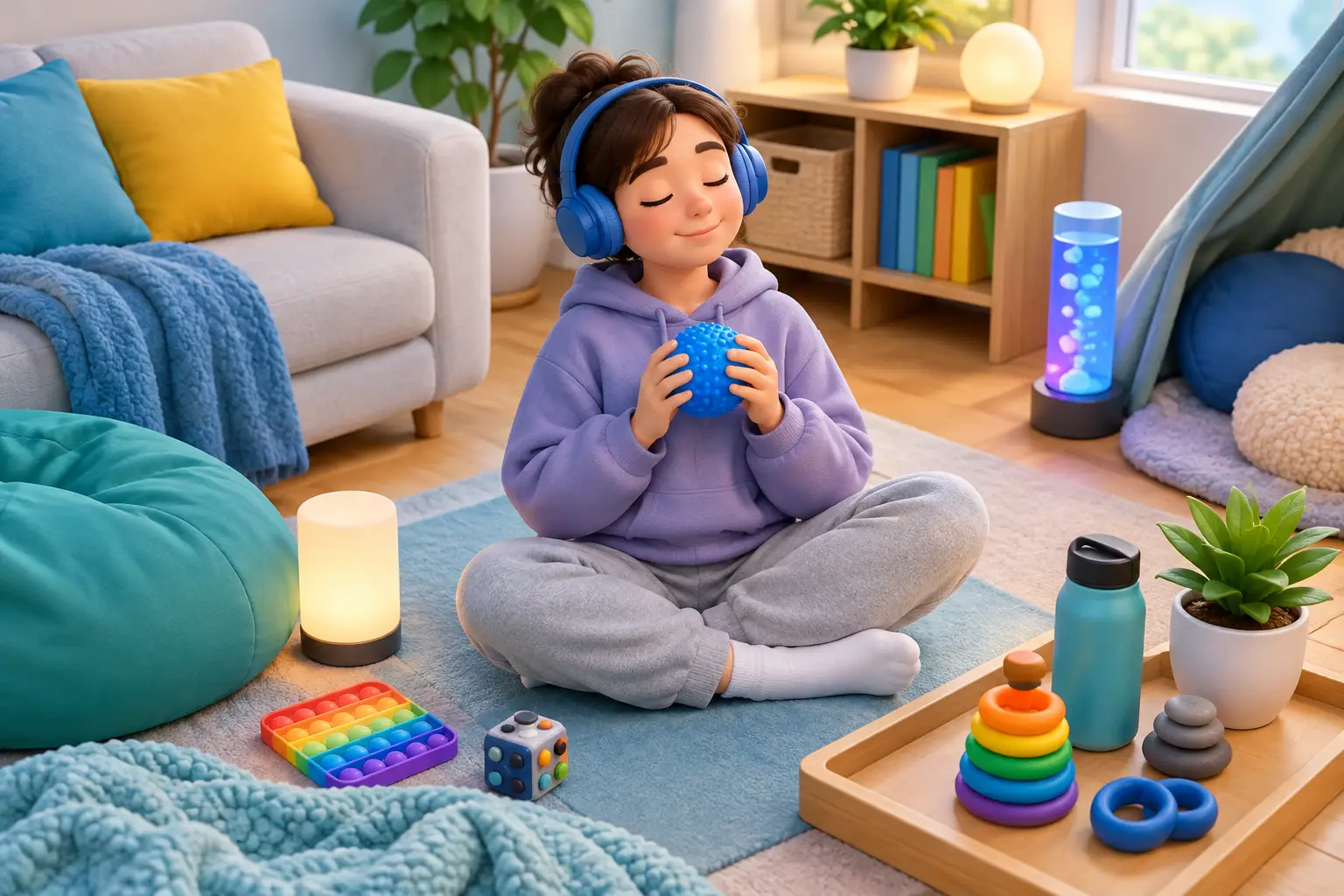
Many people find firm, predictable body input soothing. This may include wrapping in a favorite blanket, leaning against a cushion, using a weighted item when appropriate, carrying groceries, pushing a laundry basket, or doing wall push-ups. These activities can create a sense of grounding because they give the body clear feedback.
Safety and preference matter here. Weighted products should be used thoughtfully and should never restrict breathing or movement. A person should always be able to remove an item independently. If there are medical concerns, ask an appropriate healthcare professional before introducing weighted tools.
Adjust the environment before it becomes too much
A calmer environment often prevents a full sensory overload. Lowering harsh lights, reducing competing sounds, offering noise-reducing headphones, and creating a quiet corner can make a meaningful difference. A quiet space does not need to be elaborate. It might be a bedroom chair, a car ride without conversation, or a spot in the office where an adult can pause for five minutes.
Visual order can help too. When a room, backpack, or task list feels crowded, the brain has more to sort through. Try presenting one step at a time, clearing a workspace, or using a simple visual schedule for mornings and bedtime. This is not about creating a perfect home. It is about reducing unnecessary demands when the nervous system is already working hard.
Respect sound, texture, and food preferences
Some sensory triggers are easy to overlook because they seem minor to others. A shirt tag, a sock seam, a strong candle scent, a buzzing appliance, or the texture of a food can quickly move a person from manageable discomfort to distress. Whenever possible, solve the practical problem first. Choose softer clothing, offer familiar foods alongside new ones, turn down background noise, or give advance notice before a loud event.
There is a balance to consider. Avoiding every challenge can shrink a person’s world, while pushing through distress can damage trust and increase anxiety. A gradual approach is usually more helpful: offer choice, keep exposure brief, and build tolerance only when the person feels supported and regulated.
Build regulation into routines
Sensory support works best before a crisis. A predictable morning routine, a snack and decompression period after school, a movement break before difficult work, and a quieter wind-down before bed can reduce the number of times everyone reaches a breaking point.
For families, consider protecting the transition home. Many children need connection but not questions right away. A drink, a familiar snack, low-pressure movement, or time alone may help them reset before discussing school. Adults may need the same kind of buffer after work, caregiving, or social events.
Sleep deserves special attention. A brain that stays on high alert may have trouble shifting into rest. Dimmer lighting, reduced screen stimulation, comfortable bedding, consistent timing, and a calming routine can signal that the day is ending. If insomnia, racing thoughts, or nighttime anxiety persist, individualized support may be needed.
When sensory strategies are not enough
Home strategies can be valuable, but they are not a replacement for assessment when symptoms are frequent, severe, or affecting school, work, relationships, or safety. A child who regularly melts down, avoids school, cannot sleep, or seems unable to recover from stress deserves a closer look. The same is true for adults whose anxiety, panic, depression, attention challenges, or exhaustion are interfering with daily life.
Sensory concerns may overlap with ADHD, autism, anxiety, trauma, sleep disruption, learning differences, or medical issues. The right next step depends on the full picture. Support may include occupational therapy, counseling, medical care, school accommodations, and brain-based approaches that address regulation at the source.
Neurofeedback is a noninvasive form of biofeedback that helps the brain practice healthier patterns of activity. During training, the brain receives real-time feedback while a person relaxes and watches a screen or listens to audio. Many people describe it as a calm, engaging workout for the brain. Because brainwave patterns and symptoms vary from person to person, a brain map and individualized plan can help guide care.
At Neurofeedback Carolina, families and adults can explore whether personalized neurofeedback training may support attention, emotional regulation, sleep, and resilience to stress. A free consultation or evaluation can be a comfortable place to ask questions, discuss patterns, and consider options without pressure.
The most helpful sensory plan is one that fits real life. Notice what settles the body, protect small moments of recovery, and treat regulation as a skill that can be supported over time. A little more calm before the hard moment can change the rest of the day.


