A teen can look completely fine at breakfast, then unravel after a crowded school hallway, a difficult test, or one misunderstood text. That is why the best calming tools for teens are not about asking them to “just relax.” They give a young person a practical way to notice stress, lower the intensity, and regain a sense of control without feeling talked down to.
The most helpful tool depends on what is happening in the moment. A teen with racing thoughts may need a quiet way to slow down. A teen who feels restless, overwhelmed, or close to a panic attack may benefit from movement or sensory input. And when anxiety, attention difficulties, sleep problems, or emotional outbursts happen often, a more personalized plan can make a meaningful difference.
What Makes a Calming Tool Work for a Teen?
A calming tool is only useful if a teen will actually use it. That means it should fit their personality, their daily routine, and the settings where stress tends to show up. Something that works well at home may not be realistic during fourth period or before soccer practice.
It also helps to think of calming as regulation, not suppression. The goal is not to make a teen stop feeling disappointed, angry, nervous, or overstimulated. Those feelings carry information. The goal is to help their nervous system settle enough that they can think clearly, communicate, sleep, or choose what to do next.
Start with a few options rather than handing over a long list. Teens are more likely to build a skill when they have a say in it. Invite experimentation: “Which of these feels like it might help when your mind is moving too fast?” That approach respects their growing independence.
9 Best Calming Tools for Teens
1. Slow breathing with a visual cue
Simple breathing exercises can be surprisingly effective, especially when the exhale is a little longer than the inhale. A teen might breathe in for four counts and out for six, repeating for one or two minutes. A calming image can make this feel less awkward: picture slowly fogging a mirror, blowing through a straw, or tracing the edges of a square with a finger while breathing.
This tool is portable and private, which makes it useful before a presentation, during a tense family conversation, or while waiting for sleep. It may not be enough during a full panic attack, but it can be a reliable first step.
2. Noise-reducing headphones or earbuds
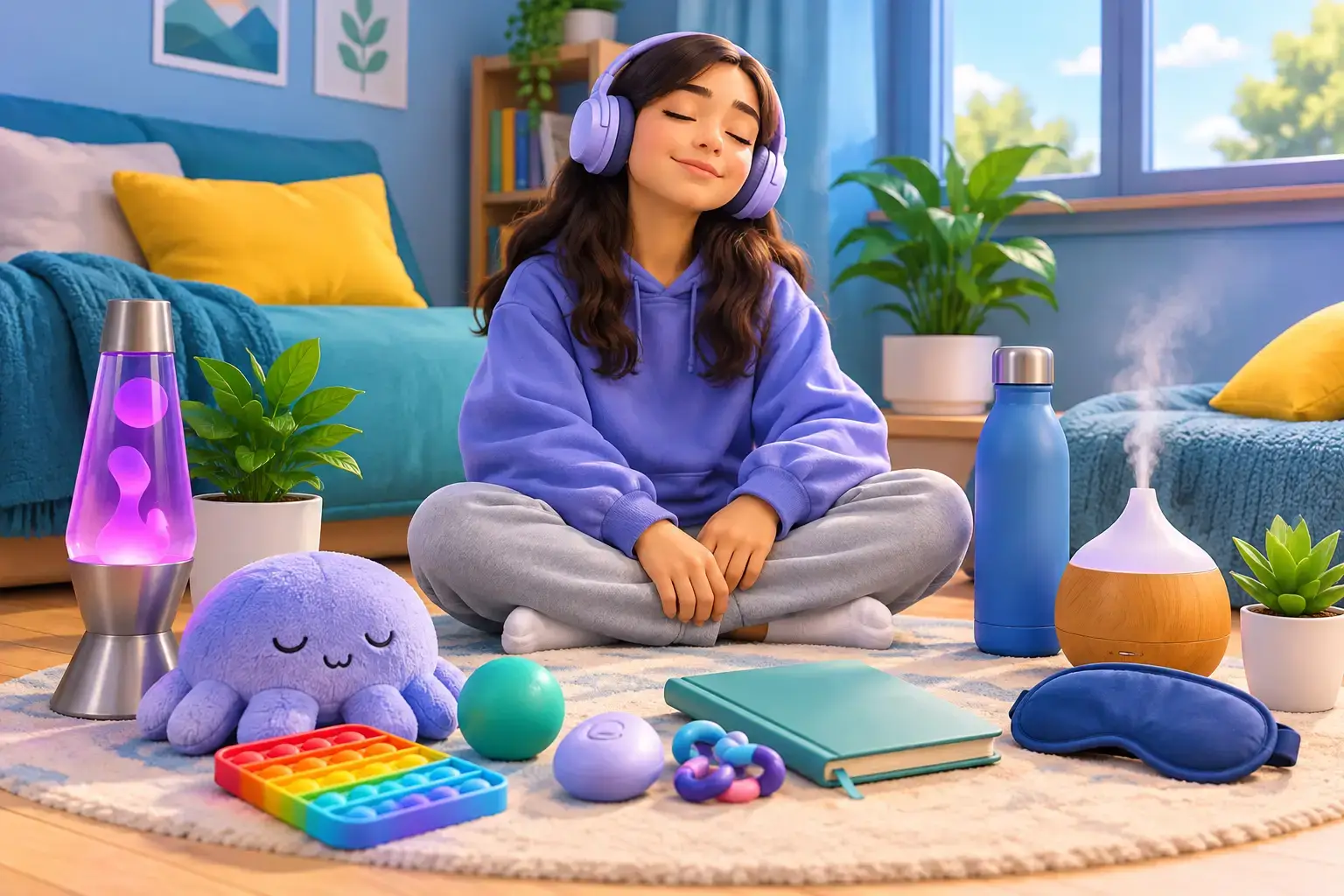
For teens who become overwhelmed by cafeterias, busy classrooms, traffic, siblings, or crowded events, sound can be the stressor. Noise-reducing headphones or comfortable earplugs can create a small buffer without requiring total silence.
They are not meant to help a teen avoid every challenging setting. Instead, they can help make an unavoidable environment manageable. A teen may use them during homework, on the bus, or for a short recovery break after school.
3. A sensory item that feels right
Fidget rings, smooth stones, putty, textured keychains, and weighted lap pads can give restless hands and bodies a safe place to direct energy. The right item is personal. Some teens find repetitive motion soothing, while others dislike anything that draws attention or feels childish.
Choose something discreet for school if that is where it will be used. A small item in a pocket may be more realistic than a large sensory tool that stays at home. The purpose is not distraction for its own sake. Gentle sensory input can help a teen stay present when emotions are rising.
4. Movement that changes the body’s state
Stress is physical as well as emotional. A brisk walk, a few minutes of stretching, shooting basketball, dancing to one song, or doing wall push-ups can release built-up energy and interrupt the feeling of being stuck.
This is especially helpful for teens who say, “I don’t know why I’m mad,” or who cannot sit still when anxious. Movement does not have to be a formal workout. Even a short reset between school and homework can make evenings feel less explosive.
5. A personalized calming playlist
Music can shift the mood quickly, but the best choice is not always the most relaxing song on someone else’s list. Some teens need quiet instrumental music; others first need a familiar, energetic song that helps them release emotion before they can slow down.
Encourage your teen to make a short playlist for different moments: one for winding down, one for frustration, and one for focus. Listening through headphones, humming, or singing softly can add a regulating rhythm to the experience.
6. A low-pressure way to get thoughts out
Journaling is useful for some teens, but a blank notebook can feel like homework. Alternatives include a notes app, voice memos, drawing, a private “brain dump” page, or writing one sentence that begins with “Right now, I need…”
Putting feelings into words can reduce the mental loop of holding everything inside. It can also help a teen spot patterns, such as anxiety that spikes before certain classes, poor sleep after late-night scrolling, or conflict that tends to happen when they are hungry and tired.
7. A predictable wind-down routine
Many teens are exhausted but cannot fall asleep because their minds are still active. A realistic bedtime routine can signal that the day is ending. It might include dimmer lights, a warm shower, gentle stretching, a paper book, or a charging spot outside the bedroom for the phone.
Perfection is not the goal. A teen does not need a two-hour routine to see benefits. A consistent 15-minute transition can be more helpful than an ambitious plan that lasts three nights. Better sleep often supports calmer moods, stronger focus, and greater resilience the next day.
8. A trusted person and a simple script
Teens often need connection, but may not know how to ask for it. Help them create language they can use when they are overwhelmed: “I need ten minutes,” “Can you sit with me without asking questions?” or “I need help figuring out what to do next.”
A trusted adult, sibling, friend, coach, counselor, or teacher can be part of a teen’s calming plan. The key is choosing someone who can listen without immediately lecturing, minimizing, or rushing to solve the problem.
9. Brain-based support for ongoing regulation challenges
When a teen’s stress response seems constantly switched on, individual calming tools may provide relief without addressing the full pattern. Frequent panic, persistent insomnia, intense irritability, difficulty focusing, or emotional shutdowns can point to a nervous system that needs more targeted support.
Neurofeedback is a noninvasive form of biofeedback that helps train healthier brainwave patterns. It is often described as a fun workout for the brain: the teen relaxes while the brain receives real-time feedback and practices more effective regulation. Brain mapping can also help identify patterns that may be connected to attention, sleep, mood, or anxiety concerns.
At Neurofeedback Carolina, personalized training is designed to feel calm, engaging, and practical for teens and families. It can be a valuable option for those seeking non-drug support alongside appropriate medical or mental health care.
How Parents Can Make Calming Tools More Likely to Stick
Timing matters. Do not wait until a teen is already at their limit to introduce a new strategy. Practice a breathing pattern during a calm car ride, try a playlist while doing homework, or test sensory tools on a low-pressure afternoon. Familiarity makes the tool easier to reach for during a difficult moment.
It also helps to model regulation without making it a lesson. A parent can say, “I’m getting frustrated, so I’m going to take a short walk and come back,” or “I need a few slow breaths before we keep talking.” Teens notice what adults do, especially when emotions are high.
Avoid using calming tools as consequences. Sending a teen to journal because they are “being dramatic” turns a supportive practice into punishment. Offer choices and space, while keeping healthy boundaries around safety and respectful behavior.
When a Teen Needs More Than Self-Calming Tools
Tools at home can support everyday stress, but they should not carry the whole burden when symptoms are severe or ongoing. Consider professional support if a teen is regularly missing school, withdrawing from friends, having panic attacks, struggling to sleep, showing major shifts in mood, or finding it hard to function in daily life.
Any talk of self-harm, suicide, or wanting to disappear requires immediate attention. Stay with your teen, remove access to immediate means of harm when possible, and contact emergency services, 988, or a qualified crisis professional right away.
A calming plan works best when it is built with a teen, not handed to them. One small tool that feels safe and doable can become the pause they need to feel steadier, ask for help, and remember that a hard moment does not have to control the rest of their day.


