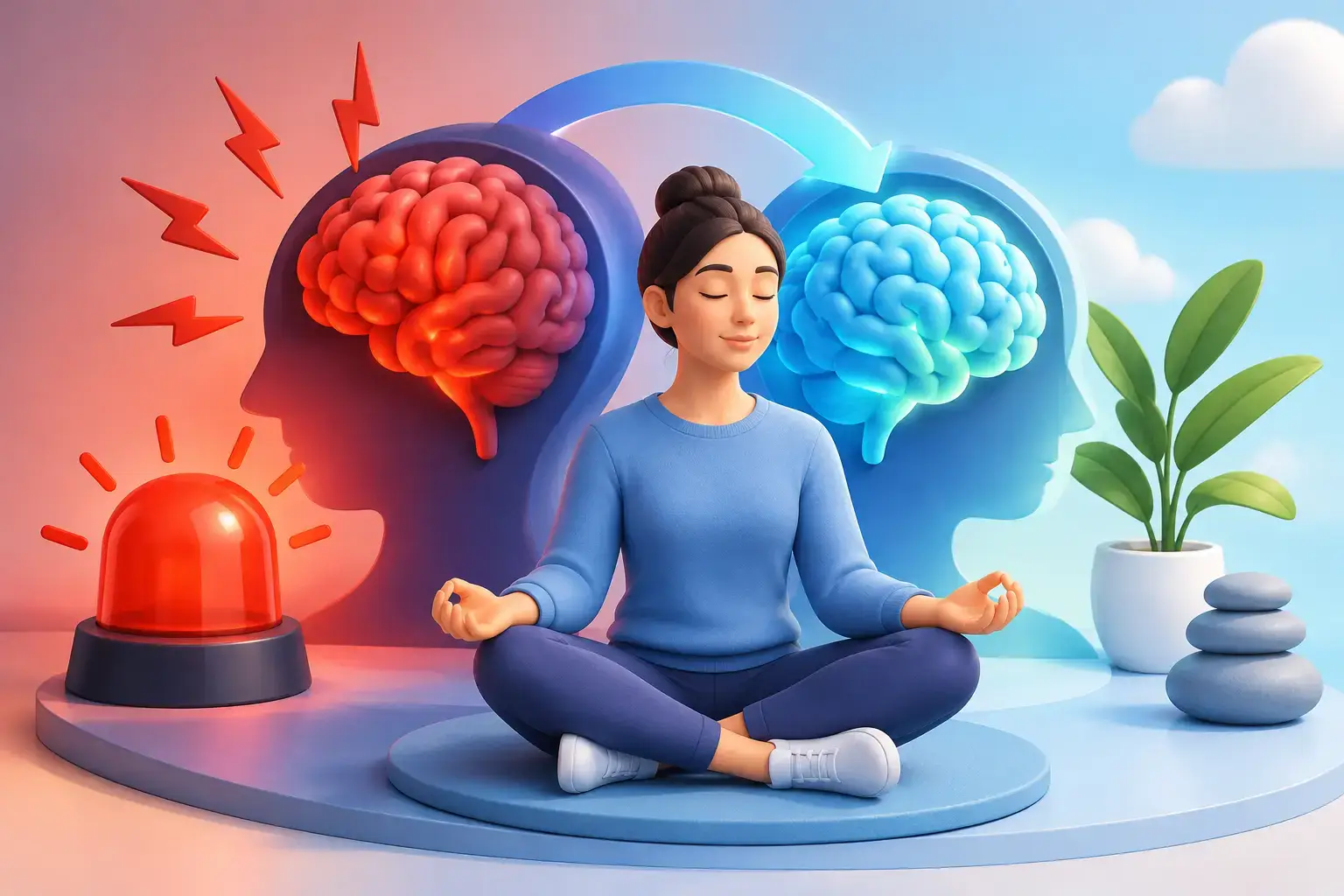
A panic attack can make a familiar room, a short drive, or a quiet bedtime feel suddenly unsafe. Your heart may race, breathing may become shallow, and your thoughts may insist that something terrible is about to happen. Panic relief is not about forcing yourself to “calm down” on command. It begins with understanding that your nervous system has activated an alarm – and that the alarm can learn to respond differently over time.
For adults, teens, and children, panic can be exhausting. Some people begin avoiding places, activities, or sensations that remind them of a previous attack. Others push through each day while quietly worrying about when the next episode will happen. A caring plan for panic should address both the immediate moments of fear and the longer-term patterns that may leave the brain and body on high alert.
What Panic Feels Like in the Body
Panic attacks often arrive quickly. Common symptoms include a pounding heart, chest tightness, dizziness, trembling, nausea, sweating, tingling, shortness of breath, or a feeling of being detached from yourself or your surroundings. Many people fear they are having a medical emergency, losing control, or about to faint.
Those sensations are real, even when the danger is not. The body’s fight-or-flight response is designed to protect you. When it activates without a clear external threat, however, it can feel overwhelming. The brain notices the racing heart or tight chest, interprets it as danger, and sends even more alarm signals. This feedback loop is one reason panic can build so fast.
Panic can also look different across ages. A child may complain of a stomachache, cling to a parent, cry intensely, or refuse school. A teen may withdraw socially, struggle with sleep, or become highly focused on physical symptoms. Adults may find that panic affects work, driving, parenting, relationships, or their willingness to leave home. No matter how it presents, panic deserves compassionate attention rather than shame.
Practical Panic Relief in the Moment
When panic is rising, the goal is not to argue with every fearful thought. The first priority is helping the nervous system receive a message of safety. Small, repeatable practices can be useful because they give your attention somewhere steady to go while the wave of panic passes.
Start by gently changing your breathing. Try inhaling comfortably through your nose and making the exhale slightly longer than the inhale. There is no need to take huge breaths, which can sometimes increase lightheadedness. A slower, softer rhythm can help signal to the body that immediate action is not required.
Grounding can also interrupt the feeling that you are being swept away. Notice the support of your feet on the floor, name a few objects you can see, or hold something cool in your hands. You might quietly remind yourself, “This is panic. It is uncomfortable, but it will pass.” That statement does not dismiss the experience. It gives the brain a more accurate explanation for what is happening.
If you are supporting a child or teen, keep your own words calm and brief. Rather than asking many questions in the middle of an episode, offer a simple anchor: “I am here. Let’s take one slow breath together.” After the episode has passed, you can talk about what they noticed and what helped.
These skills are not a guarantee that panic will disappear instantly. Some people find breathing exercises very helpful, while others need movement, grounding, or a quiet place before their body begins to settle. The key is practicing supportive tools when you are relatively calm, so they feel more familiar during a difficult moment.
Why Panic May Keep Returning
Recurring panic is rarely caused by a lack of willpower. Stress, disrupted sleep, major life changes, trauma, chronic worry, hormone shifts, illness, caffeine, and certain medications can all influence the nervous system. For some people, the fear of having another panic attack becomes a trigger of its own.
Brain regulation matters here. The brain constantly processes information from the body, environment, emotions, and memories. When its patterns are stuck in a state of over-arousal, it may react strongly to ordinary stressors or physical sensations. This does not mean a person is broken. It means the brain may benefit from support in learning steadier patterns of regulation.
A medical evaluation can also be an appropriate part of the process, particularly when symptoms are new, severe, or changing. Conditions affecting the heart, thyroid, breathing, blood sugar, and other systems can sometimes resemble anxiety symptoms. Getting clear information can reduce uncertainty and help guide the right kind of care.
Panic Relief Through Personalized Brain Training
Therapy, lifestyle changes, medical care, and prescribed medication can each have a place in panic support, depending on the individual. Neurofeedback offers another noninvasive option for people who want to help their brain practice more balanced regulation.
Neurofeedback is a form of biofeedback that observes brainwave activity and provides the brain with real-time feedback. During a session, sensors placed on the scalp read brainwave patterns while the client watches a movie, listens to audio, or engages with another relaxing activity. The brain receives feedback as it moves toward more helpful patterns, much like learning through repetition during a workout.
There is no need to force your thoughts to be perfect or relive difficult experiences during a session. For many clients, the experience is calm and engaging. Over a series of sessions, training may support improvements in resilience, sleep, focus, emotional regulation, and the ability to recover from stress. Results vary, and neurofeedback is not a one-size-fits-all solution. That is why individualized assessment is so valuable.
Brain mapping can help identify patterns that may be connected to attention difficulties, anxious arousal, sleep challenges, or mood concerns. Instead of relying only on a general description of symptoms, a provider can use this information to develop a more targeted training plan. For a person dealing with panic, that personalized approach may be especially reassuring: the goal is not simply to suppress symptoms, but to support the brain’s capacity to regulate.
At Neurofeedback Carolina, training is designed to feel approachable for children, teens, and adults. Families often appreciate that sessions can fit into a regular routine and feel more like a relaxing, guided workout for the brain than a burdensome clinical task.
Building a Life With More Room to Breathe
Lasting progress with panic often comes from a combination of support, practice, and patience. Better sleep can lower the nervous system’s baseline stress. Regular meals and hydration can reduce the physical sensations that sometimes fuel anxiety. Gentle movement can give the body a healthy outlet for stress hormones. Reducing caffeine may be particularly useful for people who notice that it increases jitteriness or heart racing.
It also helps to notice the difference between avoiding every uncomfortable sensation and responding wisely to genuine needs. Avoidance can bring short-term relief, but it may teach the brain that ordinary situations are dangerous. Gradual, supported re-engagement with meaningful activities can help rebuild confidence. The right pace depends on the person, their history, and the intensity of their symptoms.
If panic attacks are interfering with school, work, relationships, sleep, or daily life, reaching out for professional support is a strong next step. Seek immediate medical care for new or severe chest pain, trouble breathing, fainting, or symptoms that could indicate an urgent health concern. If you are in danger of harming yourself or someone else, call 911 or 988 right away.
Panic may feel like it has taken over the controls, but your nervous system can learn. With compassionate care, practical calming tools, and personalized support for brain regulation, it is possible to create more steady moments, more confidence, and more room to breathe.


