A panic attack can make a familiar place feel suddenly unsafe. Your heart races, your chest feels tight, thoughts speed up, and your body seems to sound an alarm that will not switch off. If you are asking, can neurofeedback reduce panic, you are likely looking for support that reaches beyond simply getting through the next episode.
Neurofeedback may help some people reduce the frequency, intensity, or aftereffects of panic by training the brain toward better regulation. It is noninvasive, drug-free, and designed around your individual brain patterns. It is not a quick fix or a substitute for emergency or mental-health care when that care is needed. But for many children, teens, and adults, it can be a meaningful part of a broader plan for feeling calmer, sleeping better, and responding to stress with greater resilience.
Why Panic Can Feel So Overwhelming
Panic is not a sign of weakness or a lack of willpower. It is a powerful nervous-system response. During a panic attack, the brain and body may react as though immediate danger is present, even when you are sitting at home, driving to work, or trying to fall asleep.
Common symptoms can include a pounding heart, shortness of breath, dizziness, shaking, sweating, nausea, tingling, chest discomfort, or a frightening sense that something terrible is about to happen. Some people fear they are having a medical emergency. Others begin avoiding stores, crowds, highways, appointments, or situations where they worry panic could strike again.
That anticipation can become part of the cycle. When the brain stays on high alert, everyday stressors may feel bigger, sleep may suffer, and the body has less opportunity to return to a settled state.
Can Neurofeedback Reduce Panic Symptoms?
For the right person, neurofeedback may support fewer panic symptoms by helping the brain practice steadier patterns of arousal and recovery. Rather than asking you to force yourself to relax during a frightening moment, neurofeedback uses real-time feedback to help your brain recognize and reinforce more regulated activity over repeated sessions.
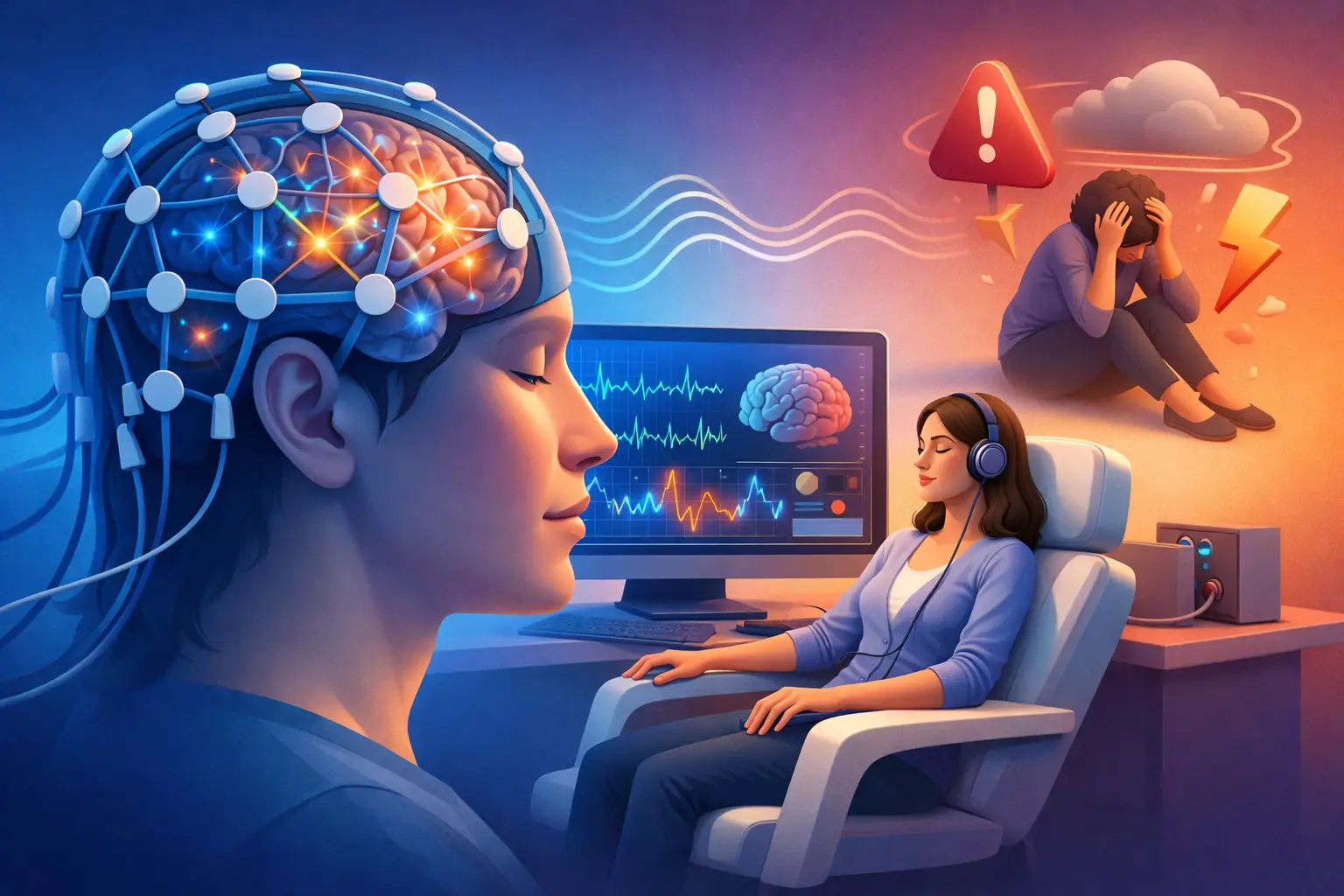
Think of it as a gentle workout for the brain. Sensors placed on the scalp measure brainwave activity. They do not put anything into the brain and do not cause pain. While you watch a movie, listen to audio, or engage with a simple on-screen activity, the system gives your brain feedback when it moves toward the training goals selected for you.
Over time, some clients notice that their nervous systems are less easily thrown off balance. They may still experience stress, because stress is part of life, but they can find it easier to pause, think clearly, and recover rather than escalating into panic.
Research on neurofeedback for anxiety-related concerns is still developing, and results vary. Panic can also have many contributors, including trauma, chronic stress, medical conditions, medication effects, caffeine use, sleep loss, and other mental-health concerns. Neurofeedback should be viewed as personalized support, not a promise that every panic attack will disappear.
How Brain Training May Support a Calmer Response
The goal is not to remove every strong emotion. A healthy brain needs to notice risk, respond to challenges, and feel a full range of emotions. The goal is better regulation: the ability to move out of an alarm state when danger has passed.
Identifying patterns that may be keeping the brain on alert
A brain map, also called a quantitative EEG or QEEG in some settings, can help identify patterns connected to overarousal, underarousal, attention difficulties, sleep disruption, or emotional reactivity. It does not diagnose panic disorder on its own. Instead, it gives the provider useful information for tailoring training to the person in front of them.
This individual approach matters. One person with panic may feel wired, restless, and unable to sleep. Another may feel mentally foggy all day and then become overwhelmed in certain situations. Their training plans may not look the same.
Building regulation through repetition
Brains learn through feedback and repetition. During a neurofeedback session, clients are typically comfortable and relaxed. There is no need to talk through a distressing event if that does not feel helpful. The training itself is quiet and engaging, which can be especially appealing for children and teens who do not connect with traditional talk-based approaches.
Changes tend to build gradually. Some people notice early improvements in sleep, mental quiet, or stress recovery. Others need more time before they notice meaningful shifts. Consistency, a personalized protocol, and communication about what you are experiencing all help guide the process.
Supporting the whole picture
Panic rarely exists in a vacuum. Trouble concentrating, ADHD symptoms, chronic stress, depression, sensory sensitivity, and insomnia can all make it harder for the nervous system to stay balanced. Neurofeedback can be particularly useful when panic is part of a wider pattern of dysregulation rather than an isolated concern.
It may also work well alongside care from a physician, therapist, psychiatrist, or counselor. Cognitive behavioral therapy, exposure-based therapy, medication when appropriate, movement, nutrition, and sleep support each have a place for different people. The best plan depends on your symptoms, health history, goals, and preferences.
What Neurofeedback Does Not Replace
Panic-like symptoms should always be taken seriously, especially when they are new, severe, or different from what you have felt before. Chest pain, fainting, severe breathing difficulty, or symptoms that could indicate a medical emergency require urgent medical evaluation. Do not assume a physical symptom is “just anxiety.”
Neurofeedback is also not emergency treatment for a panic attack that is happening right now. If you feel at risk of harming yourself or someone else, call 911, contact the 988 Suicide & Crisis Lifeline, or go to the nearest emergency room.
For ongoing panic, a qualified health professional can help rule out medical causes and determine whether you may benefit from therapy, medication, neurofeedback, or a combination. Honest conversations about medications, diagnoses, trauma history, and sleep patterns make personalized care safer and more effective.
What a Personalized Plan Can Look Like
A thoughtful neurofeedback program begins with listening. Before training starts, your provider should want to understand what panic feels like for you or your child: when it happens, what comes before it, how long recovery takes, and how it affects school, work, relationships, driving, sleep, or family life.
At Neurofeedback Carolina, this process may include an initial consultation and brain-based assessment to help shape a plan around the individual rather than a one-size-fits-all protocol. For a parent, that may mean discussing a teen who has become afraid to attend school. For an adult, it may mean looking at years of racing thoughts, poor sleep, and panic that appears during periods of high pressure.
Training sessions are generally easy to fit into a regular routine. You sit comfortably while the system tracks brainwave activity and provides feedback. Many clients appreciate that it feels less like a burdensome clinical procedure and more like dedicated time for their brain to practice a healthier rhythm.
Progress is usually measured by real-life changes, not just a screen. Are panic episodes becoming less frequent? Is recovery faster? Are you sleeping more soundly? Can your child tolerate transitions with less distress? Do you have more room to choose your response when stress shows up?
Helpful Habits Between Sessions
Neurofeedback works best when it is part of a life that gives the nervous system regular chances to settle. You do not need a perfect wellness routine. Small, repeatable supports can make a real difference.
Protecting sleep, eating regularly, staying hydrated, and noticing whether caffeine worsens symptoms can reduce physical triggers for some people. Slow breathing, grounding exercises, gentle movement, and therapy skills may also help you ride out a surge without feeding the fear of it. If panic tends to happen in a predictable setting, working with a therapist on gradual, supported exposure can be especially valuable.
It can also help to keep a simple record of episodes. Note the time, setting, body sensations, thoughts, sleep the night before, food or caffeine intake, and what helped you recover. This is not about monitoring yourself anxiously. It is about noticing patterns that can inform care.
A Calmer Future Can Be Built Gradually
Panic may have taught your brain to expect danger at inconvenient and frightening moments. With the right support, the brain can also learn a different pattern: alert when it needs to be, steady when it can be, and better able to return to calm.
If panic is limiting your life or your child’s confidence, a free consultation can be a gentle place to ask questions, understand your options, and decide whether personalized neurofeedback training belongs in your next step forward.


