A child who cannot settle into homework, a teen lying awake with a busy mind, or an adult who feels constantly on edge may all be dealing with a brain that has trouble shifting into the state the moment requires. Understanding how brainwave training works can make neurofeedback feel much less mysterious. It is a noninvasive way to help the brain notice its own activity and practice more balanced patterns – much like a gentle, engaging workout.
What brainwave training is actually training
Your brain is always producing tiny electrical signals. These signals, often called brainwaves, change naturally throughout the day. Some patterns are more common when you are alert and focused, while others tend to appear during relaxation or sleep. There is no single “good” brainwave pattern for every person or every moment. The goal is flexibility: being able to focus when focus is needed, calm down after stress, and rest at night.
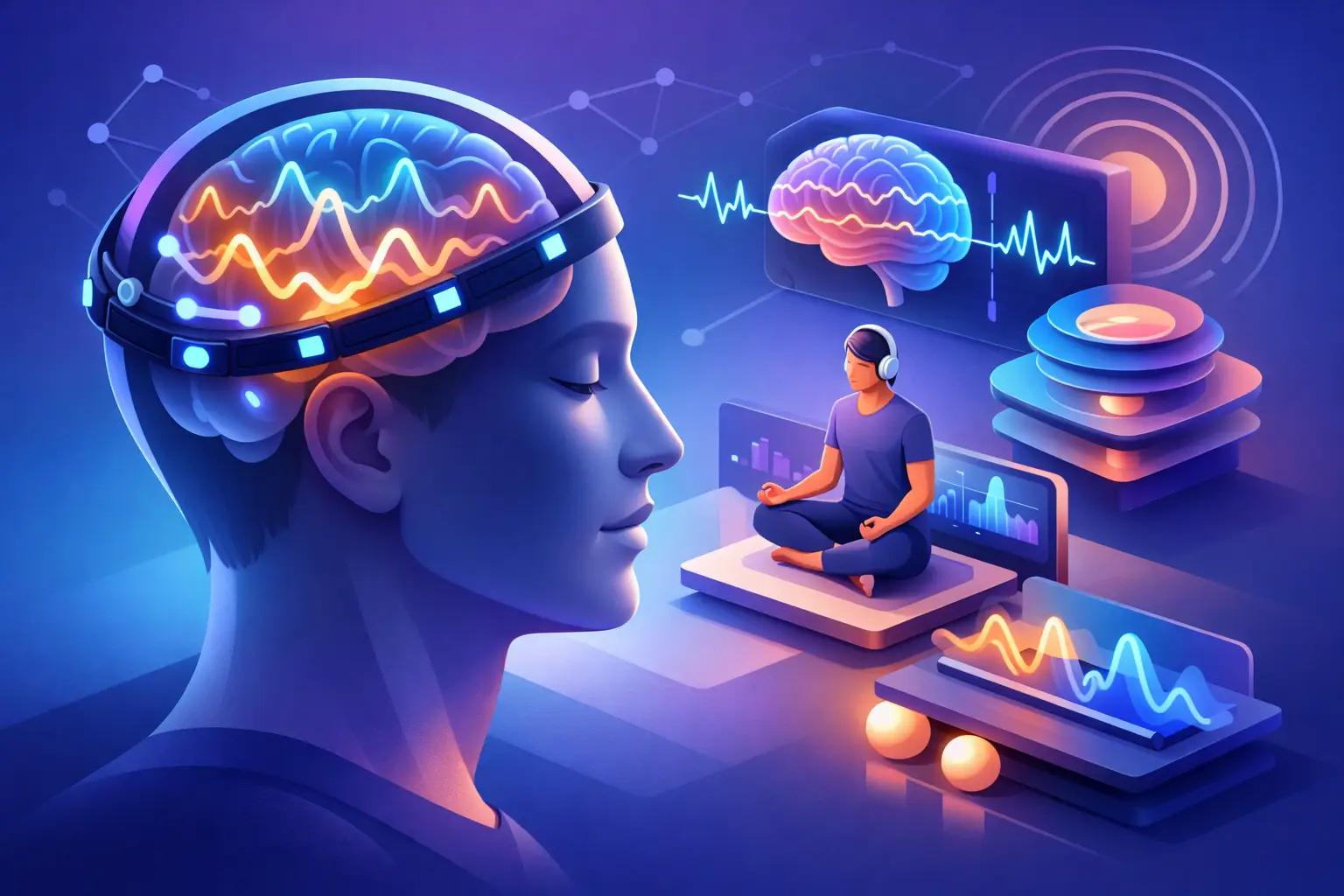
Brainwave training, also called neurofeedback, is a type of biofeedback. It uses sensors placed on the scalp to read electrical activity from the brain. The sensors do not put electricity into the brain, and they do not hurt. They simply measure what is already happening, much like a thermometer measures temperature.
When certain patterns are occurring, a computer provides immediate feedback through a movie, game, or sound. Over repeated sessions, the brain may learn that more regulated activity is rewarding and worth repeating. This learning process happens below the level of conscious effort. You do not have to force yourself to concentrate or figure out the “right” answer during a session.
How brainwave training works from session to session
A neurofeedback appointment is designed to be calm and approachable. After a provider places sensors on the scalp, you may sit comfortably and watch a video or participate in a simple computer-based activity. The system monitors your brainwave activity in real time.
When the brain moves toward the targeted pattern, the video may become brighter, the sound may become clearer, or the game may respond more smoothly. When activity moves away from the target, that feedback briefly changes. The brain notices this connection and begins adjusting on its own.
This is different from being told to “try harder” or “calm down.” A child with ADHD may hear those messages all day long, yet still struggle to regulate attention. Neurofeedback provides moment-by-moment information that the brain can use without judgment. For many clients, it feels more like watching a favorite show or playing a low-pressure game than participating in a demanding clinical procedure.
Training is usually repeated over a series of appointments because lasting learning takes practice. The number of sessions varies. It can depend on the symptoms being addressed, how long they have been present, a person’s age, sleep habits, stress level, medications, and response to training. Some people notice subtle changes early, such as falling asleep more easily or feeling less reactive. Others notice progress gradually over time.
Why feedback can lead to change
The principle behind neurofeedback is called operant conditioning. In simple terms, behaviors that receive a positive response are more likely to happen again. Here, the “behavior” is the brain’s own electrical activity.
The feedback is quick enough for the nervous system to connect a pattern with a response. Over many repetitions, the brain may become more efficient at producing patterns associated with regulation. The hope is not to create a permanently relaxed brain or a permanently activated brain. Healthy regulation means being able to move between states appropriately – alert in class or at work, settled during a conversation, and ready for sleep at bedtime.
Why a brain map may be part of the process
Two people can both say they have trouble concentrating, yet their brains and daily experiences may be very different. One person may feel mentally sluggish and distracted. Another may be highly alert, anxious, and unable to turn off racing thoughts. A personalized approach matters because the same training target is not right for everyone.
A brain map, sometimes called a quantitative EEG or qEEG, records brainwave activity from multiple areas of the scalp. It gives the provider more information about patterns that may relate to attention, mood, sleep, emotional regulation, or stress resilience. The findings are considered alongside symptoms, health history, goals, and day-to-day functioning.
At Neurofeedback Carolina, individualized evaluation and training help make the process more specific to the person in the chair. Brain mapping can be especially useful when symptoms overlap, such as anxiety alongside ADHD, poor sleep alongside depression, or sensory challenges alongside autism.
A brain map is not a stand-alone diagnosis, and it does not replace a thorough medical or mental health evaluation. Instead, it can be a useful guide for creating a training plan and monitoring whether that plan should be adjusted.
What concerns may benefit from neurofeedback?
Brainwave patterns are connected to how the nervous system manages attention, arousal, rest, and emotional responses. That is why people often seek neurofeedback for concerns such as ADD or ADHD, anxiety, panic attacks, insomnia, chronic stress, low mood, and cognitive fog. Parents may also explore it for children or teens with autism-related regulation challenges.
The possible benefits are personal. One client may be looking for fewer arguments around homework. Another may want to stop waking at 3 a.m. with a racing mind. An adult may hope to feel more present in meetings, less overwhelmed by daily demands, or better able to recover after a stressful event.
Neurofeedback is not a guaranteed cure, and results are not identical for every person. It also should not be viewed as a reason to stop prescribed medication or other care without speaking with the appropriate clinician. Some people use neurofeedback as one part of a broader plan that may include counseling, medication management, school support, movement, nutrition, or sleep changes.
What a comfortable training experience looks like
Most people tolerate neurofeedback well because it is noninvasive and does not involve medication. Sessions are often quiet and relaxing. Younger children may need encouragement at first, but the screen-based feedback can make the experience easier to engage with than traditional talk-based approaches alone.
Open communication is still essential. A provider should ask about changes in sleep, energy, mood, focus, and stress throughout the program. Sometimes a training plan needs to be adjusted. For example, a person who feels unusually tired, restless, or emotionally sensitive after a session should let the provider know so the next session can be tailored appropriately.
Consistency matters, but the process should fit real family life. A training schedule works best when it is manageable alongside school, work, appointments, and the normal unpredictability of raising children. The right pace is one that supports learning without making care feel like another burden.
Setting realistic expectations for brain training
Brainwave training is a learning process, not a quick fix. Changes may show up first in small, practical moments: a smoother morning routine, fewer emotional spikes, a little more patience, or an easier time winding down at night. Those changes can matter greatly, especially when they begin adding up across home, school, work, and relationships.
It also helps to track progress by looking beyond one difficult day. Sleep, illness, school pressure, family transitions, and workload can all affect symptoms. A good training plan considers the broader picture rather than expecting every week to look the same.
If you are considering neurofeedback for yourself or someone in your family, begin with questions about the challenges you want to change and the outcomes that would make daily life feel better. A free consultation or evaluation can help you understand whether personalized brain-based training may be a comfortable next step toward steadier focus, more peaceful sleep, and greater resilience.


