A child may be trying hard to focus but still melt down after school. An adult may feel exhausted yet unable to quiet racing thoughts at bedtime. These experiences can be frustrating because the reason is not always obvious from the outside. Understanding how qEEG works can offer a clearer starting point by showing patterns in the brain’s electrical activity that may be affecting focus, mood, sleep, and emotional regulation.
qEEG is short for quantitative electroencephalogram. It is often called a brain map because it gathers information about brainwave activity and organizes it into an easy-to-review visual report. At Neurofeedback Carolina, brain mapping can help make neurofeedback training more personal, so the process is based on each individual’s patterns rather than a one-size-fits-all plan.
What a qEEG Measures
Your brain cells communicate through tiny electrical signals. These signals create rhythmic patterns called brainwaves. An EEG records those patterns from the scalp. A qEEG takes that recorded information a step further by using computer analysis to measure, compare, and display it in detail.
Brainwaves occur at different speeds. Slower activity is often associated with deep rest and sleep, while faster activity can be connected with alert thinking, problem-solving, and concentration. All of these rhythms have a healthy place. The question is not whether a certain type of brainwave is simply good or bad. It is whether the timing, location, and balance of activity appear appropriate for what the brain needs to do.
For example, a person who feels foggy, impulsive, or unable to sustain attention may show a different pattern than someone who feels tense, over-alert, and unable to settle at night. A qEEG does not label a child as unmotivated or an adult as “just stressed.” It provides objective information that can help explain why regulation may feel difficult.
How qEEG Works During a Brain Map
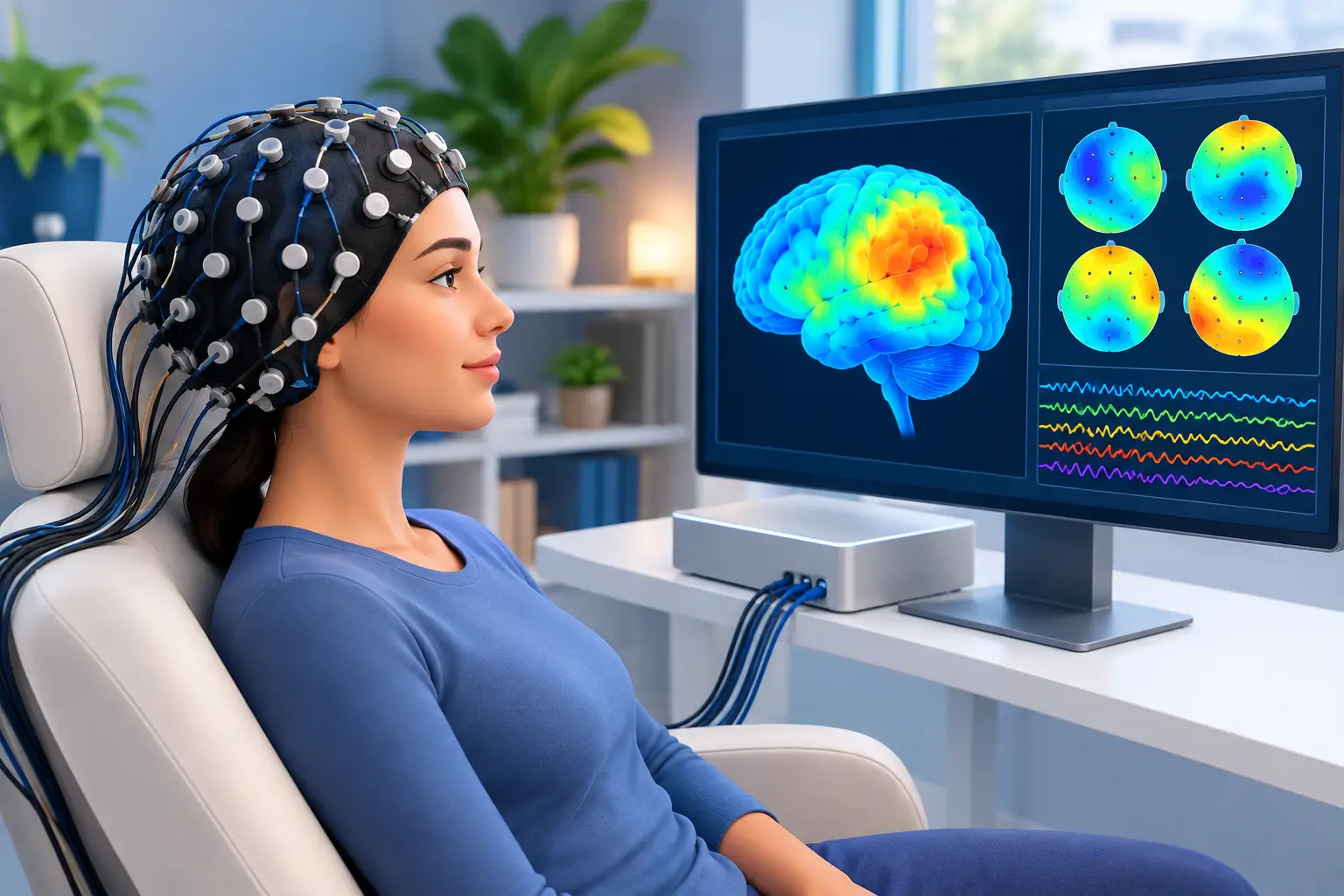
A qEEG appointment is noninvasive and does not involve needles, radiation, or electrical stimulation going into the brain. Small sensors are placed on the scalp with a conductive gel or paste. These sensors only listen to the brain’s natural electrical activity. They do not put anything into the body.
During the recording, the client may sit quietly with eyes open and closed, and sometimes complete simple tasks depending on the evaluation process. For children, the goal is to keep the experience calm and manageable. The recording itself is painless, and many families find it far less intimidating than they expected.
The sensors collect raw EEG data from different areas of the head. That information is then reviewed and processed by specialized software. The analysis may look at several features, including:
- The amount of activity in different brainwave ranges
- The location of unusually high or low activity
- How well different brain regions appear to communicate or synchronize
- Changes in activity between resting states and task-related states
The resulting brain map can display these findings with colors and images. While the visuals are useful, a brain map is not a simple red-light, green-light test. An experienced provider considers the data alongside symptoms, health history, age, sleep habits, medications, current stress, and the person’s real-life goals.
Why Brainwave Patterns Need Context
It can be tempting to expect a qEEG to produce one clear answer for every concern. In reality, brains are complex. The same symptom, such as poor concentration, can have different contributors. A student may struggle with attention because of anxiety, inconsistent sleep, sensory overload, learning challenges, or a pattern of brainwave dysregulation. Often, more than one factor is present.
That is why qEEG is best used as part of a thoughtful evaluation, not as a stand-alone diagnosis. It can support clinical decision-making and help guide a personalized neurofeedback plan, but it does not replace medical care, psychological assessment, or conversations with a qualified healthcare professional when those are needed.
The comparison data used in qEEG can also be helpful, but it has limits. Normative databases compare a person’s results with data from others in a similar age range. This can reveal patterns worth exploring, yet no database can capture every part of a person’s life, strengths, stressors, or experiences. A meaningful plan always combines the map with the person behind it.
From qEEG Results to Neurofeedback Training
The practical value of a brain map is that it can help focus neurofeedback training. Neurofeedback is a form of biofeedback that teaches the brain to regulate its own activity through real-time feedback.
In a typical session, sensors are again placed on the scalp to monitor brainwave activity. The client may watch a movie, listen to audio, or engage with a simple game-like display. When the brain moves toward the desired pattern, the movie may become clearer, the sound may continue, or the activity may progress. When it moves away from that pattern, the feedback briefly changes.
There is no need to force the brain to do something on command. Over repeated sessions, the brain learns from the feedback much like it learns from practice in other areas of life. That is why many clients describe neurofeedback as a relaxing, engaging workout for the brain.
A qEEG can help identify which training approaches may make the most sense to begin with. For someone whose sleep is disrupted by an overactive, unsettled nervous system, the training priorities may differ from those for a child with attention difficulties and impulsivity. The map helps inform the starting point, and ongoing observations help shape the plan as training continues.
What Changes Can Feel Like
Neurofeedback is not meant to erase personality or make someone feel unlike themselves. The goal is better regulation. Parents may notice that their child recovers more quickly after frustration, settles into homework with less conflict, or sleeps more peacefully. Teens may describe feeling less overwhelmed. Adults may notice clearer thinking, fewer racing thoughts, more emotional steadiness, or greater resilience during stressful weeks.
Progress is individual. Some people notice early shifts in sleep, calm, or focus, while others experience more gradual changes over time. The number of sessions needed depends on the person’s goals, history, consistency, and how their brain responds to training. A careful provider will monitor changes and adjust the training plan rather than promising identical results for everyone.
For concerns such as ADD or ADHD, anxiety, panic attacks, depression, autism-related regulation challenges, and insomnia, neurofeedback may be used as a supportive, non-drug approach. Some clients pursue it alongside therapy, school supports, medication management, or other medical care. Others are specifically looking for a brain-based wellness option that fits into family life without adding another burdensome routine.
Is qEEG Right for Your Family?
A qEEG may be worth considering when symptoms are persistent, when previous approaches have not provided enough relief, or when you want a more individualized understanding of brain-based challenges. It can be especially useful for families who are tired of guessing why a child is struggling, as well as adults who have spent years pushing through stress, poor sleep, or scattered attention.
The best next step is a conversation about what is happening day to day. Bring the details that matter: when symptoms began, what makes them better or worse, how sleep has changed, what school or work feels like, and what you hope will be different. Those details give the brain map meaning.
You do not have to have every answer before asking for support. A free consultation or evaluation can be a welcoming place to talk through your concerns, learn whether brain mapping is appropriate, and consider a personalized path toward more focus, peace, and rest.


