A parent may first hear about brain mapping while looking for help with a child’s focus, big emotions, sleep, or anxiety. An adult may wonder whether it could explain racing thoughts or a mind that never seems to settle. Before considering any next step, the natural question is: is brain mapping safe?
For the type of brain mapping commonly used to guide neurofeedback, the answer is generally yes. A quantitative electroencephalogram, often called a qEEG or brain map, is noninvasive and painless. It records the brain’s existing electrical activity through sensors placed on the scalp. Nothing is sent into the brain, and the sensors do not deliver shocks, radiation, or medication.
That said, safety also means understanding what the process does, what it can tell us, and why qualified interpretation matters. A brain map should feel like an informative, low-stress part of a personalized care plan, not something mysterious or intimidating.
Is Brain Mapping Safe for Children and Adults?
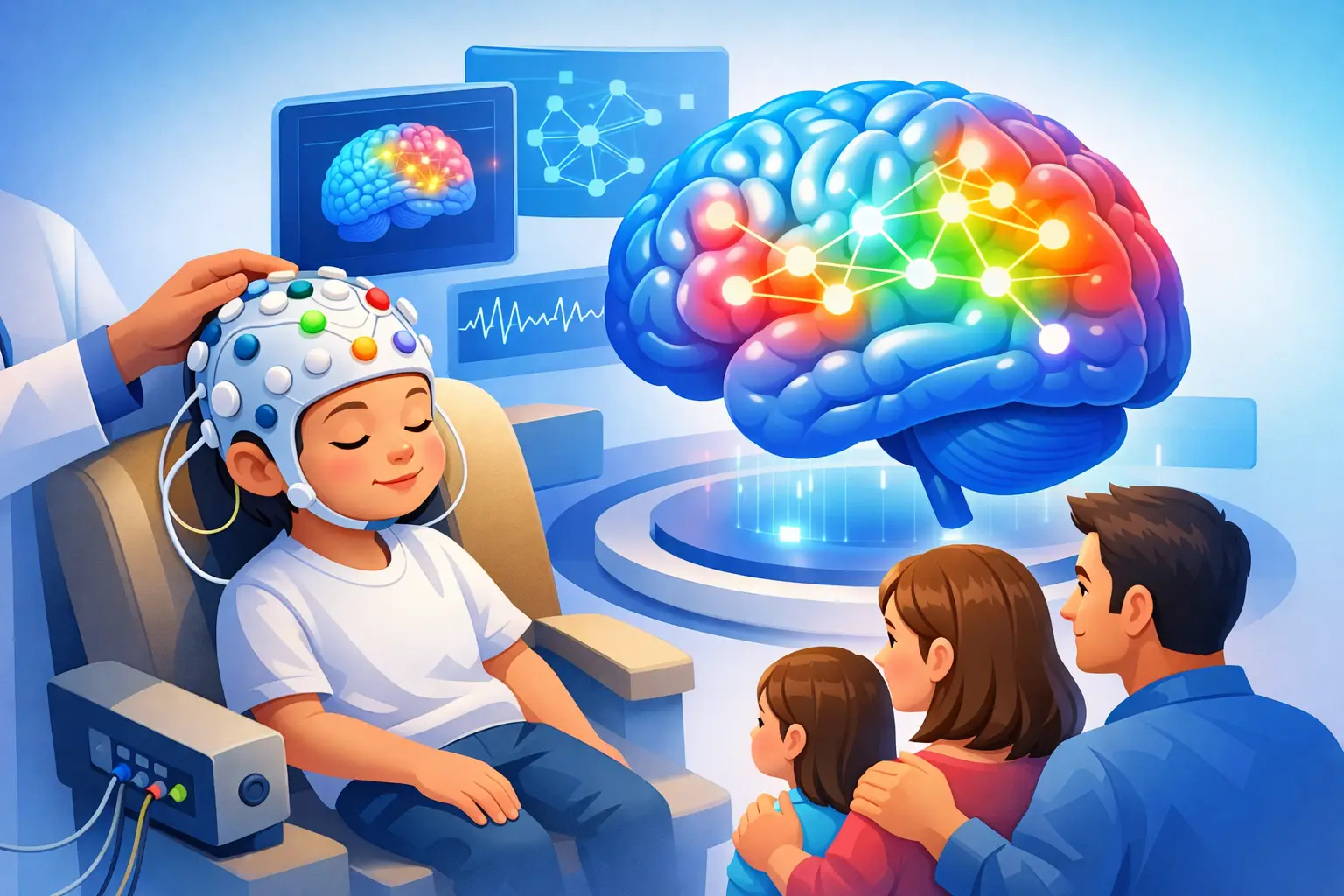
A qEEG brain map works much like a standard EEG. Small sensors are placed across the scalp using a conductive gel or paste. These sensors listen for tiny electrical signals naturally produced as brain cells communicate. The equipment records those patterns while the client rests quietly, usually with eyes open and closed for short periods.
The sensors are passive. They do not stimulate the brain or change brainwave activity during the mapping appointment. There are no needles, no imaging radiation, and no need for sedation. This makes qEEG brain mapping a comfortable option for many children, teens, and adults, including people who prefer non-drug approaches to wellness support.
Most people feel nothing at all during the recording. For some children, the least appealing part is sitting still or having gel in their hair. A caring provider can make the experience easier by explaining each step in age-appropriate language, allowing breaks when needed, and creating a calm, welcoming setting. The gel washes out after the appointment.
Brain mapping is also different from an MRI or CT scan. Those tests use very different technologies and may be used for different medical questions. When a neurofeedback provider refers to a brain map, they usually mean a qEEG recording that looks at patterns of brainwave activity.
What a Brain Map Can and Cannot Tell You
A brain map can provide useful information about patterns related to regulation. For example, it may show areas where certain brainwave frequencies appear unusually fast, slow, elevated, or reduced compared with expected patterns for a person’s age. These findings can help guide individualized neurofeedback training.
For a child who struggles to sustain attention, a map may offer clues about brainwave patterns associated with focus and alertness. For someone with anxiety or poor sleep, it may reveal patterns that fit a nervous system that has trouble settling. The goal is not to label a person by a chart. It is to understand the whole picture more clearly and create a training plan that matches their concerns, strengths, and goals.
A brain map is not a stand-alone diagnosis. It cannot, by itself, diagnose ADHD, autism, depression, anxiety, a learning disability, or a medical condition. It also cannot predict a person’s future or prove exactly why they feel a certain way. Symptoms, health history, current medications, sleep, stress, developmental factors, and professional clinical assessment all matter.
This is one reason an online brain-map interpretation or a one-size-fits-all protocol can be less helpful than a thoughtful evaluation. Good care connects the data to the real person sitting in the room. A teenager’s difficulty sleeping, for instance, deserves more context than a single score on a report can provide.
The Real Safety Question: Who Is Interpreting It?
The recording process is low risk, but the quality of care depends on the provider’s training and judgment. Brainwave data can be affected by movement, blinking, muscle tension, drowsiness, medications, caffeine, and poor sensor contact. These factors need to be recognized so that the final map is based on a clean, meaningful recording.
A qualified provider should review your concerns, explain the mapping process beforehand, and discuss results in plain language. They should be willing to say what the map suggests, what remains uncertain, and how it fits with other information. If symptoms point to a medical or mental health concern outside the scope of neurofeedback, appropriate referral and coordinated care are part of responsible practice.
Ask how the provider uses brain mapping in treatment planning. Some practices use it as one component of a broader intake and progress-review process. Others may not use qEEG mapping for every client. Neither approach automatically makes care better or worse. What matters is whether the recommendation is individualized, transparent, and clinically appropriate for your needs.
What Happens After a Brain Map?
If neurofeedback is recommended, brain mapping may help identify targets for training. Neurofeedback is another noninvasive process, but it is different from the map itself. During a session, sensors monitor brainwave activity while the brain receives real-time feedback, often through a movie, game, or sound. When the brain moves toward more desirable patterns, the feedback responds.
Many clients describe it as a relaxing, engaging workout for the brain. There is no need to force thoughts or perform perfectly. Over a series of sessions, the brain practices more effective regulation. Families may be working toward steadier attention, fewer emotional meltdowns, more restful sleep, greater calm, or better resilience under stress.
Results vary. Some people notice changes early, while others need more time and repetition. A personalized plan should include regular check-ins, so the provider can consider progress, adjust training when appropriate, and keep the focus on meaningful daily improvements rather than numbers alone.
Neurofeedback is not a replacement for emergency care, medication management, psychotherapy, educational support, or medical evaluation when those services are needed. It can be a valuable complementary option for people seeking additional, brain-based support. The right combination depends on the individual and the challenges they are facing.
When to Pause and Ask More Questions
Most people can complete a qEEG recording without difficulty. Still, communication is essential. Tell the provider about seizure history, neurological diagnoses, head injuries, implanted medical devices, current medications, sensory sensitivities, and any concern about remaining still. These details do not necessarily prevent brain mapping, but they can affect how the visit is planned and how results are understood.
You should also speak up if your child is worried, overwhelmed by unfamiliar settings, or sensitive to touch around the head. A family-centered practice can slow down, demonstrate the sensors, offer reassurance, and help the child feel included rather than pressured. A successful appointment is not about getting through it as fast as possible. It is about gathering useful information while helping the person feel safe.
Be cautious of promises that a brain map will reveal every problem or guarantee a specific outcome. Thoughtful providers avoid overstating what the technology can do. They focus instead on clear goals, careful monitoring, and practical changes that matter at home, school, work, and in relationships.
A Comfortable First Step Toward Personalized Care
For families and adults considering neurofeedback, brain mapping can take some of the guesswork out of creating a training plan. At Neurofeedback Carolina, the purpose is not to treat a report. It is to better understand the patterns behind everyday struggles and support the individual with compassionate, personalized care.
If focus feels harder than it should, sleep is unreliable, anxiety is taking up too much space, or your child is working far too hard to stay regulated, a conversation can bring clarity. A free consultation or evaluation is a gentle place to ask questions, learn whether brain mapping fits your situation, and decide on a next step that feels right for your family.


