A child who dislikes hair brushing, a teen who feels uneasy in medical settings, or an adult already carrying too much stress may have the same first question before a brain map: Is brainwave testing painless? Yes. Brainwave testing is generally painless, noninvasive, and quiet. Nothing is injected, nothing is implanted, and the sensors do not send electricity into the brain.
For many people, the experience is closer to having small sensors placed on the scalp while sitting comfortably and resting with their eyes open or closed. Understanding what happens during the appointment can make the process feel much less intimidating, especially for families considering neurofeedback for attention, anxiety, sleep, mood, or emotional regulation.
Is brainwave testing painless for children and adults?
Brainwave testing, often called an EEG or brain mapping, records the brain’s natural electrical activity. Your brain cells communicate through tiny electrical signals all day long. The testing equipment simply detects and records those signals from the surface of the scalp.
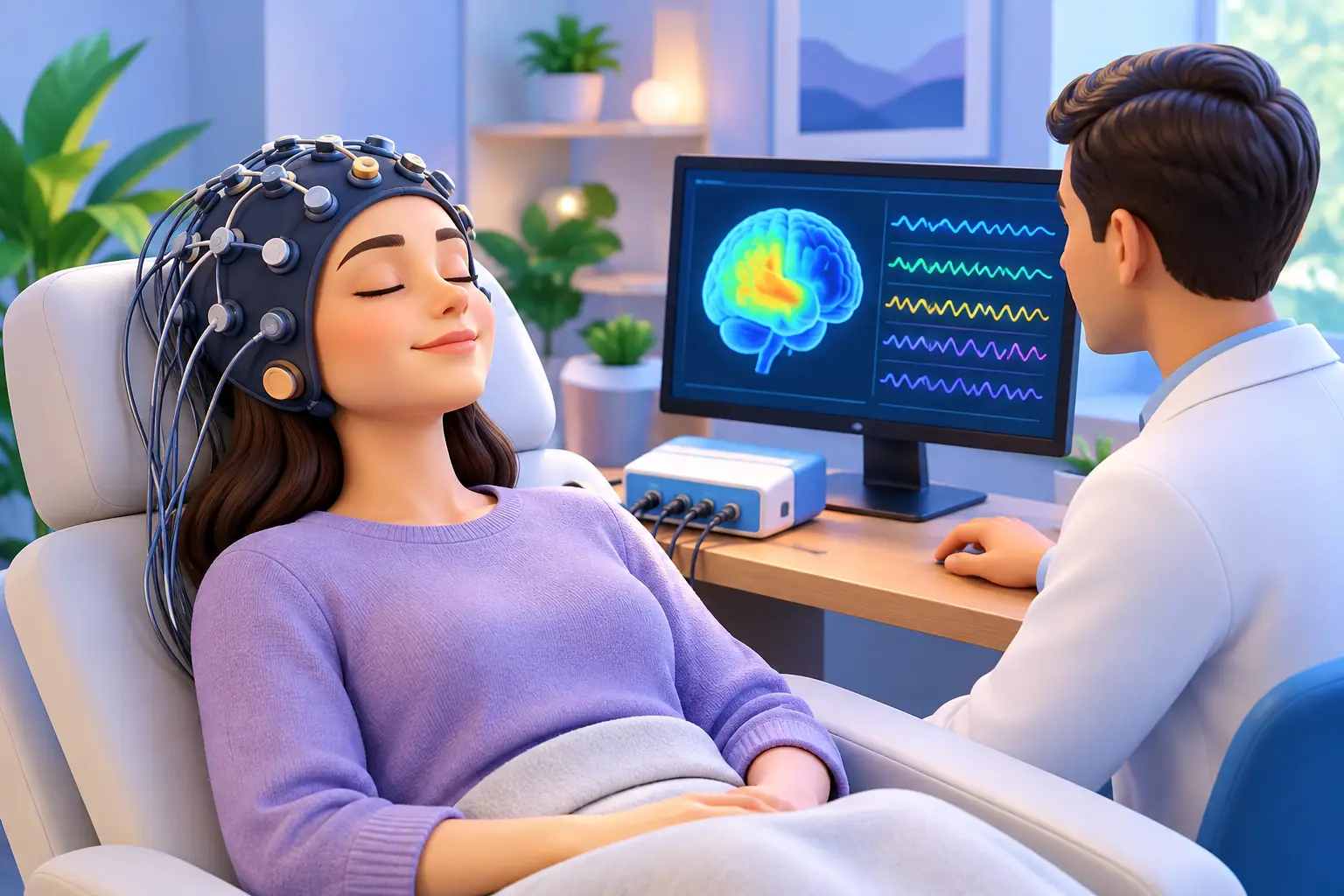
The small sensors, called electrodes, are placed on specific areas of the head. They may be held in place with a soft cap, a conductive paste, or a gel-like material. The electrodes are readers, not stimulators. They do not shock, zap, or change the brain. They listen to the brain’s activity much like a microphone picks up sound.
That distinction matters. People sometimes confuse brainwave testing with treatments that deliver electrical stimulation. A standard EEG-based brain map is different. During testing, no electrical current is sent through the electrodes and into the brain.
Most clients describe the process as easy and relaxing. You may sit in a comfortable chair while a provider records brainwave activity for several minutes. Depending on the type of assessment, you may be asked to rest quietly, open and close your eyes, watch a screen, or complete simple tasks. There are no needles, no radiation, and no recovery period afterward.
What might you feel during a brain map?
Painless does not always mean that every part of an appointment feels exactly the same for every person. The most noticeable part is usually the setup. A provider needs to part the hair and apply a small amount of conductive paste or gel so the sensors can get a clear reading.
Some people notice a cool or slightly damp sensation from the gel. Others may feel mild pressure from a cap or from the provider gently positioning an electrode. If you have a sensitive scalp, thick hair, a fresh hairstyle, or sensory sensitivities, that setup may feel unfamiliar or mildly bothersome. It should not hurt.
The paste can leave hair feeling a little sticky afterward, but it washes out with regular shampoo. Planning for a simple hair wash after the appointment can be helpful, particularly for children and teens who prefer to know what comes next.
For clients with anxiety, the harder part may be sitting still or wondering whether they are doing the test correctly. There is no performance required. Brainwave testing measures what the brain is doing naturally in that moment. A caring provider can explain each step, offer breaks when appropriate, and help the room feel calm rather than clinical.
Sensory needs deserve thoughtful planning
Children and adults with autism, ADHD, trauma histories, or sensory processing differences may need extra time to get comfortable with scalp sensors. That does not mean brain mapping is off limits. It means the approach should be individualized.
A supportive visit may include showing the sensors before they are used, explaining the process in simple language, allowing a parent to stay nearby, and moving at a pace that feels manageable. Some clients do best with a shorter first visit or a few minutes to settle into the space before testing begins.
At Neurofeedback Carolina, personalized care starts with getting to know the person behind the symptoms. A child who needs reassurance, a teen who wants clear explanations, and an adult who needs a quiet, low-pressure experience should not all be treated the same way.
Brainwave testing versus neurofeedback training
Brainwave testing and neurofeedback are connected, but they are not the same appointment.
A brain map or EEG assessment gathers information. It helps identify patterns in brainwave activity that may relate to concerns such as trouble focusing, racing thoughts, poor sleep, mood changes, stress reactivity, or difficulty with emotional regulation. The information can support a more individualized training plan when neurofeedback is appropriate.
Neurofeedback is the training process. During a neurofeedback session, sensors read brain activity while the client watches a movie, listens to music, or engages with a game-like display. The brain receives feedback based on its activity and gradually learns more efficient patterns. Clients often describe it as a relaxing, engaging workout for the brain.
Like the testing itself, traditional neurofeedback is noninvasive and does not involve medication or electrical stimulation of the brain. The sensors monitor activity. The feedback comes through the screen, sound, or other simple cues.
Why a brain map can be useful
Symptoms do not always tell the whole story. Two people can both struggle with focus, for example, while having very different sleep habits, stress levels, medical histories, and patterns of brain regulation. A personalized assessment helps move the conversation beyond a one-size-fits-all label.
Brainwave information may help a provider understand areas to explore and which training goals could make sense. For a child with ADHD, the focus may be attention, impulse control, and regulation. For an adult experiencing chronic stress or panic attacks, the conversation may center on calming an overactivated nervous system and supporting better sleep. For someone living with insomnia, the goal may be helping the brain shift more readily into restful states.
A brain map is not a crystal ball, and it should not be treated as a stand-alone diagnosis. Meaningful care considers symptoms, health history, daily functioning, goals, and, when needed, collaboration with other healthcare professionals. The value of testing comes from placing the results in the context of the whole person.
How to prepare for a comfortable appointment
There is usually very little preparation needed. Arriving with clean, dry hair and avoiding heavy hair products can help the sensors make good contact with the scalp. If possible, get a typical night’s sleep and eat normally before the appointment. Extreme fatigue, an unusually large amount of caffeine, or a major change from your normal routine can affect how you feel and may influence the recording.
Bring a list of current medications, supplements, diagnoses, and questions. Do not stop prescribed medication unless the prescribing clinician tells you to do so. If your child has specific comfort items or communication needs, share that information ahead of time. Small details can make a big difference in creating a positive experience.
It is also helpful to set realistic expectations. Brainwave testing is calm and painless, but the results are one piece of a larger wellness picture. Lasting improvement often comes from consistent, personalized support rather than a single appointment.
When to ask more questions before testing
Most people can complete EEG-based brainwave testing comfortably. Still, let the provider know if you have a scalp condition, recent head injury, open skin on the scalp, severe sensory sensitivity, or difficulty remaining seated for a period of time. These details do not automatically prevent testing, but they can affect timing, setup, or the type of support that is best.
If you are seeking help for new or severe neurological symptoms, such as sudden weakness, loss of consciousness, a seizure, or a sudden severe headache, seek prompt medical evaluation. Brain mapping for wellness and neurofeedback planning is not a substitute for emergency care or a medical diagnosis.
For many families, the biggest relief comes from learning that brainwave testing is not something to endure. It is a quiet first step toward understanding how the brain may be responding to stress, attention demands, sleep challenges, and everyday life. A free consultation can give you space to ask questions, share your goals, and decide whether a personalized brain-based plan feels right for you or someone you love.


