A child who cannot settle into homework, falls apart after school, or lies awake with racing thoughts is not giving parents a simple problem to solve. When families are looking for support beyond medication alone, a common and very reasonable question is: is neurofeedback safe for children?
For many children, neurofeedback can be a gentle, noninvasive option when it is provided by a qualified professional and tailored to the child’s needs. It does not send electricity into the brain, require surgery, or ask a child to talk through difficult experiences before they are ready. Instead, it uses real-time feedback to help the brain practice more balanced patterns of activity.
That said, safety is not just about whether a treatment is physically noninvasive. It also involves appropriate screening, thoughtful protocols, realistic expectations, and a provider who pays attention to how each child responds.
Is neurofeedback safe for children?
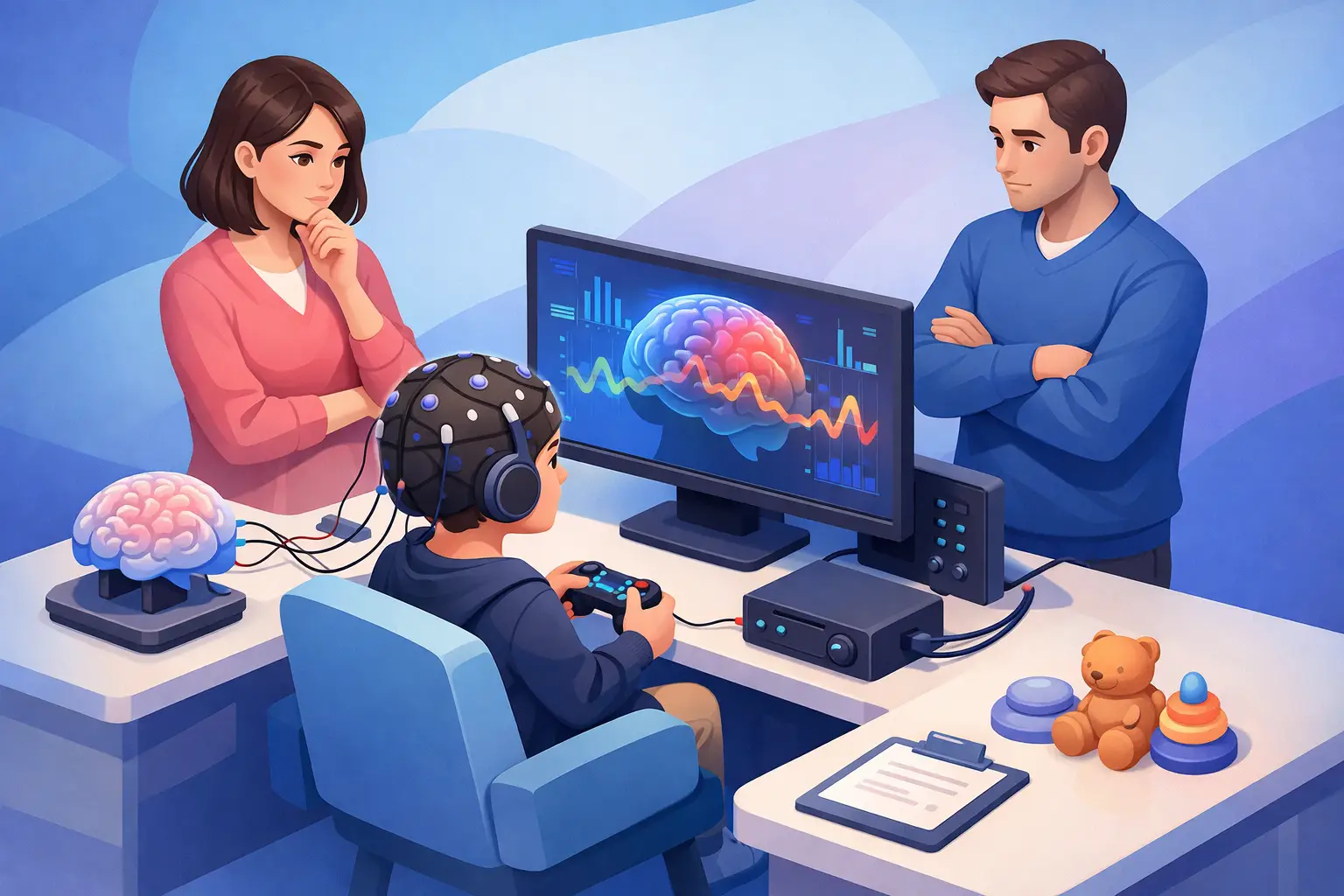
Neurofeedback is generally considered low risk because it is a form of biofeedback. Sensors placed on the scalp simply read the brain’s electrical activity, much like a thermometer reads temperature. The sensors do not put anything into the brain. Your child may watch a movie, play a simple game, or listen to audio while the system gives the brain feedback based on its activity.
When the brain produces the targeted patterns, the movie may become clearer, the game may respond, or the sound may improve. This gives the brain information it can use to practice self-regulation. Many children experience sessions as a calm, engaging brain workout rather than a medical procedure.
Neurofeedback has been used with children who struggle with attention, hyperactivity, anxiety, sleep problems, emotional regulation, and some autism-related challenges. Research is still developing across specific conditions and neurofeedback methods, so it should not be presented as a guaranteed cure or a replacement for every other form of care. But for the right child, it can be a valuable part of a broader support plan.
What a child experiences during a session
Parents often feel more comfortable once they understand what actually happens in the room. A typical session begins with a provider placing small sensors on the child’s scalp and sometimes on the ears. The skin is prepared so the sensors can accurately detect brainwave activity. This process should not hurt.
The child then sits comfortably and engages with age-appropriate feedback, often through a favorite show or a simple visual activity. There is no need to force concentration or perform perfectly. The brain is doing the learning in the background, while the child relaxes.
For younger children, the best experience is usually one that feels predictable and positive. A caring provider will explain each step in plain language, allow time for questions, and adjust the environment when a child is sensitive to sounds, touch, or new routines.
Possible side effects and why personalization matters
Most children tolerate neurofeedback well. Still, any treatment that aims to influence regulation deserves careful monitoring. Some children may notice temporary tiredness after a session, changes in sleep, mild headache, irritability, or feeling unusually energized. These responses are often mild and can be addressed by adjusting the training plan, session length, or frequency.
A child should not be pushed through discomfort simply because a program is scheduled. The provider should regularly ask about sleep, mood, focus, behavior, and changes at home or school. Parents are an essential part of that process because they see the day-to-day picture that may not show up during a session.
This is where individualized care matters. Two children can both have an ADHD diagnosis and need very different approaches. One may be restless and impulsive, while another is quiet, overwhelmed, and mentally exhausted. A personalized assessment, and in some cases brain mapping, can help guide training toward the patterns most relevant to that child.
Who should provide neurofeedback for a child?
The quality of care matters as much as the technology. Before starting, parents should have the opportunity to discuss their child’s history, current concerns, medications, sleep, learning challenges, and any existing diagnoses. A thoughtful provider will explain what neurofeedback can reasonably address, what progress may look like, and where other support may also be needed.
Ask how the provider determines a training plan and how they monitor a child’s response from session to session. Families should also feel comfortable asking about the provider’s experience working with children, including children with sensory sensitivities, anxiety, autism, or complex attention concerns.
Neurofeedback is not intended to replace medical care, counseling, school supports, occupational therapy, or prescribed medication when those services are needed. It may work alongside them. If your child has a seizure disorder, significant neurological history, rapidly changing mental-health symptoms, or other complex health concerns, discuss neurofeedback with the child’s physician and make sure the provider has a clear understanding of the full clinical picture.
What results can parents realistically expect?
Parents naturally want to know whether neurofeedback will help their child focus, sleep more soundly, manage big feelings, or make school less stressful. Those are meaningful goals, but improvement is rarely a single dramatic moment. More often, families notice small shifts that build over time.
A child may begin falling asleep with less struggle. Morning routines may become less tense. A teacher may mention that the child is staying with an assignment longer, or a parent may notice fewer explosive reactions after a frustrating day. These changes can be significant because better regulation often supports many areas of life at once.
The pace varies. Some children show early changes, while others need more sessions before parents see a consistent pattern. Progress can also depend on sleep habits, family stress, learning differences, diet, medication changes, and the child’s overall health. A responsible provider will never promise a specific outcome or suggest that every child responds in the same way.
How to decide whether neurofeedback is right for your child
Start with the concern that is affecting daily life most. Is your child struggling to concentrate? Are worry and panic getting in the way of school or friendships? Is bedtime becoming a nightly battle? A clear picture of the challenge helps shape a useful conversation about whether neurofeedback fits.
It can also help to set practical goals before training begins. Rather than hoping your child will simply “do better,” consider changes you could recognize at home: fewer reminders to start homework, easier transitions, more restful sleep, less tearfulness, or a greater ability to recover after disappointment. These observations give parents and providers a shared way to evaluate progress.
At Neurofeedback Carolina, families can begin with a conversation about their child rather than a one-size-fits-all program. A free consultation or evaluation can help you understand the process, ask questions about safety, and decide whether personalized brain-based training is an appropriate next step.
A calm path forward for families
Parents do not have to choose between taking their child’s struggles seriously and seeking an approach that feels gentle. When neurofeedback is carefully individualized, monitored, and coordinated with the rest of a child’s care, it offers a non-drug way to support the brain skills behind focus, calm, sleep, and resilience.
If you are considering it, bring your questions, your child’s history, and the real-life moments you hope could feel easier. The right next step is not pressure to begin treatment. It is a clear, supportive conversation that helps your family make a confident decision.


