A child who melts down after school, struggles to settle at bedtime, or seems constantly overwhelmed is not giving anyone a hard time. They may be having a hard time regulating a nervous system that is working overtime. Neurofeedback for autism is a non-drug, personalized approach that may help the brain practice steadier patterns related to regulation, attention, sleep, and emotional resilience.
For many families, the goal is not to change who their child is. Autism is not something that needs to be erased. The goal is to support everyday comfort and functioning: fewer exhausting transitions, more restful sleep, better recovery after stress, and more capacity for school, relationships, and the activities a person enjoys.
What Is Neurofeedback for Autism?
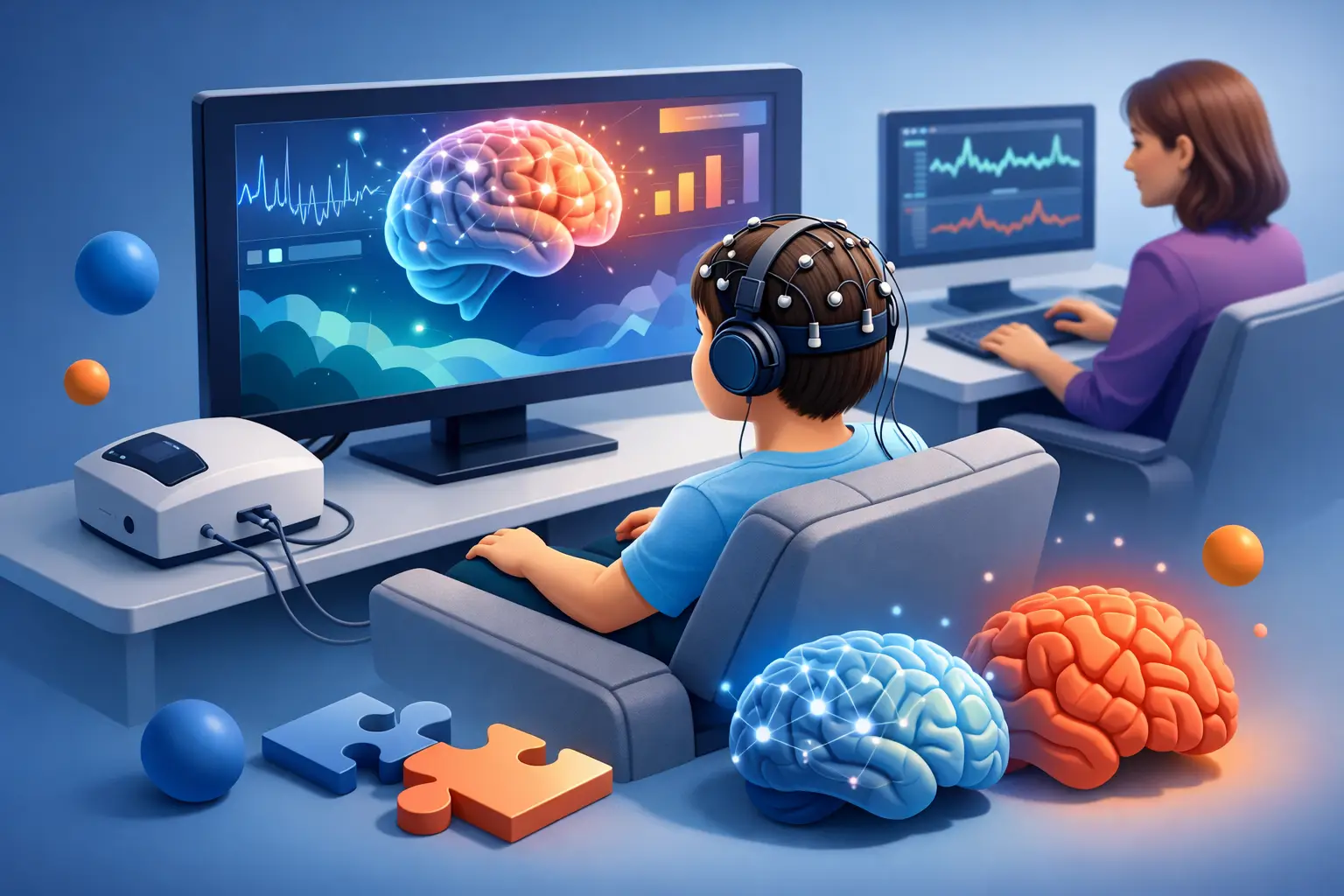
Neurofeedback is a form of biofeedback that gives the brain information about its own activity in real time. During a session, small sensors are placed on the scalp to read brainwave activity. They do not send electricity into the brain, hurt, or require medication.
While the sensors gather information, the client may watch a movie, listen to music, or engage with another relaxing activity. When the brain produces patterns associated with the training goals, the feedback responds. Over repeated sessions, the brain can learn to recognize and use more regulated patterns more often.
A simple way to picture it is as a fun workout for the brain. Just as physical training uses repetition to build strength and coordination, neurofeedback uses gentle feedback to help the brain practice regulation.
Autistic children, teens, and adults have different needs, sensitivities, strengths, and goals. That is why individualized care matters. One person may be looking for support with sleep and racing thoughts, while another may need help with attention, emotional recovery, or sensory overwhelm. A personalized plan should begin with understanding the individual rather than assuming every autistic person needs the same kind of support.
Why Regulation Can Be So Challenging
Autism can affect how a person processes sensory input, communicates needs, manages transitions, and responds to stress. A busy classroom, an unexpected change in plans, hunger, poor sleep, or a noisy family gathering can place a heavy demand on the nervous system.
When that demand becomes too great, the result may look like irritability, shutdowns, meltdowns, difficulty focusing, repetitive behaviors that increase under stress, or trouble falling and staying asleep. These experiences are not always behavioral choices. They can be signs that the brain and body need more support getting back to a calmer state.
Neurofeedback does not teach a child to mask discomfort or force them to act less autistic. Instead, the focus can be on helping the brain become more flexible and resilient. When regulation improves, a person may have more room to use the coping skills, communication tools, therapies, and supports already available to them.
What Families May Notice Over Time
Every response to neurofeedback is individual, and progress is rarely identical from one client to the next. Some families first notice that bedtime is less difficult or that their child recovers more quickly after a frustrating moment. Others report better focus, fewer anxious thoughts, more stable moods, or greater tolerance for everyday demands.
Potential areas of support may include:
- Sleep quality and the ability to wind down
- Attention, organization, and task persistence
- Emotional regulation and recovery after stress
- Anxiety, racing thoughts, and panic-related symptoms
- Sensory overwhelm and resilience during transitions
- Communication and participation when stress has made these harder
These changes can be meaningful because they affect family life in practical ways. A calmer evening routine may help everyone sleep. A child who can recover more quickly after disappointment may feel more successful at school. An adult with autism who feels less mentally overloaded may have more energy for work, relationships, and daily responsibilities.
That said, neurofeedback is not a guaranteed solution for every challenge associated with autism. It is not a cure for autism, and it should not replace medical care, speech therapy, occupational therapy, counseling, educational accommodations, or other supports that serve the person well. For many people, it works best as one part of a thoughtful, coordinated care plan.
The Value of Brain Mapping and Personalized Training
Symptoms alone do not tell the whole story. Two people may both struggle with sleep or attention, yet their brainwave patterns and training needs can be different. A brain map, also called a quantitative EEG or qEEG in some settings, can provide a clearer picture of brain activity and help guide an individualized neurofeedback plan.
This information can be especially helpful for autistic clients because their concerns may overlap with anxiety, ADHD, insomnia, depression, or chronic stress. Rather than relying on a one-size-fits-all protocol, a provider can use the evaluation process, client history, goals, and brain-based information to determine where training may be most useful.
Personalization also includes respecting sensory preferences. Some clients need time to get comfortable with the office, the sensors, or a new routine. Others enjoy the process quickly. A caring practice should make room for those differences and create an environment where clients and families feel heard rather than rushed.
What a Neurofeedback Session Feels Like
Most sessions are calm and straightforward. The provider places sensors on the scalp using a conductive paste or gel, then the client settles in for training. There are no needles, no medication changes, and no need to actively perform a difficult task.
Many children and teens watch a favorite type of visual content while the brain receives feedback in the background. Adults often appreciate that sessions can feel restful while still working toward practical goals. The brain is doing the learning, even when the experience feels simple.
Consistency matters. Neurofeedback is generally completed as a series of sessions because the brain benefits from repetition. The number of sessions and pace of training depend on the person, their goals, and how they respond. Families should be cautious about anyone who promises dramatic results after only one or two appointments or guarantees a specific outcome.
A good provider will monitor progress, invite feedback from the client and family, and adjust the plan when needed. Changes can be gradual, which is why tracking sleep, emotional recovery, school functioning, or other goals can help make progress easier to recognize.
Questions to Ask Before Getting Started
Choosing support for an autistic child, teen, or adult deserves careful thought. Ask whether the provider has experience working with autism and related concerns such as ADHD, anxiety, and sleep difficulties. Find out how they individualize training, whether brain mapping is available, and how they track changes over time.
It is also helpful to ask how the practice accommodates sensory needs and what the first visit will be like. The right setting should feel welcoming, respectful, and collaborative. Families should leave with a clear understanding of the proposed goals, expected commitment, cost considerations, and how neurofeedback may fit alongside other care.
For parents, it can be tempting to search for one intervention that solves everything. A more helpful approach is to identify the areas causing the greatest strain right now. Is sleep affecting the entire household? Is anxiety making school attendance difficult? Are transitions leading to daily distress? Starting with real-life goals helps create a plan that feels grounded and meaningful.
A Supportive Next Step for Families
At Neurofeedback Carolina, families can begin with a conversation about what daily life looks like now and what they hope can feel easier. A free consultation or evaluation can help determine whether personalized brain training may be a good fit for your child, teen, or yourself.
The best next step is not to chase perfection. It is to look for support that honors the individual, builds on their strengths, and gives the whole family more opportunities for calm, connection, and confidence.


