A child melts down over a small change in plans. A teen feels flooded before a test or social event. An adult lies awake replaying a conversation, unable to settle their thoughts. These moments can look very different on the surface, but they often share a common challenge: the brain is having trouble shifting out of a high-alert state. Neurofeedback for emotional regulation is a non-drug, brain-based approach designed to help the brain practice more flexible, balanced patterns.
Emotional regulation does not mean never feeling upset, worried, frustrated, or disappointed. It means being better able to notice emotions, recover from them, and respond in ways that fit the moment. For many children, teens, and adults, that ability becomes harder when stress, anxiety, ADHD, poor sleep, depression, trauma, or sensory overwhelm affect the nervous system.
What emotional regulation looks like in real life
When the brain is well regulated, emotions still happen, but they are less likely to take over the whole day. A child may be able to calm down after being told “no.” A teen may pause before reacting to a text message. An adult may feel anxious before a meeting without spiraling into panic or shutting down completely.
Difficulties with regulation can show up as irritability, frequent tears, explosive reactions, racing thoughts, panic attacks, perfectionism, withdrawal, or trouble handling transitions. Some people become outwardly reactive. Others hold everything in until they feel exhausted, numb, or unable to sleep.
These patterns are not a character flaw or a sign that someone is not trying hard enough. They can reflect a nervous system that is working too hard to stay alert, focused, or safe. That is why approaches that support the brain itself can be meaningful for families looking beyond temporary coping strategies alone.
How neurofeedback for emotional regulation works
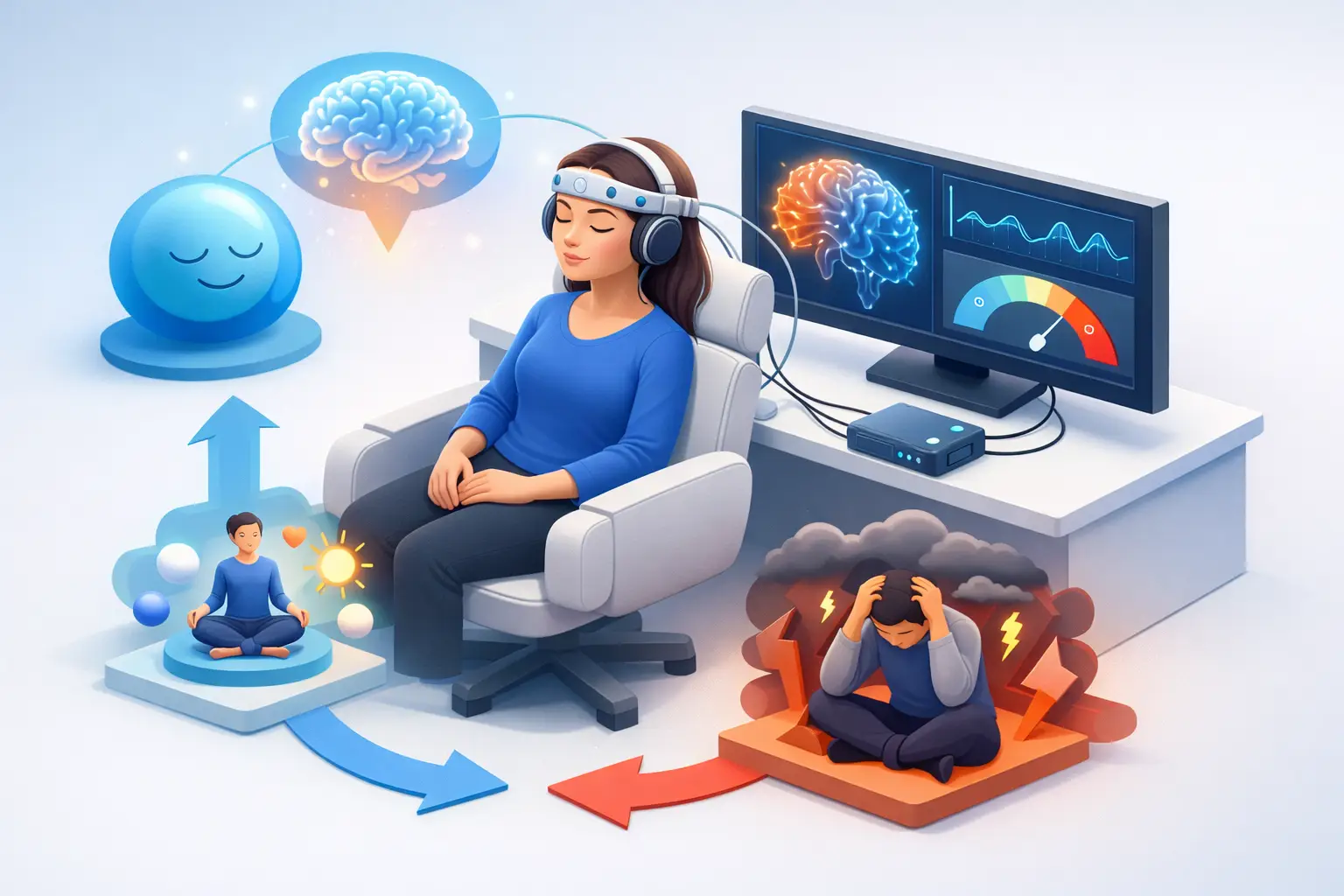
Neurofeedback is a form of biofeedback that gives the brain information about its own activity. During a session, sensors are placed comfortably on the scalp to measure brainwave patterns. The sensors do not put electricity into the brain. They simply read activity, much like a thermometer reads temperature.
That information is connected to a screen, movie, sound, or game. When the brain produces patterns associated with the training goals, it receives positive feedback through the experience on the screen. Over repeated sessions, the brain can learn to spend more time in better-regulated patterns.
Many clients describe sessions as relaxing. A child may watch a favorite show while the brain does the work in the background. An adult may appreciate having a quiet, structured time to support their focus and resilience. Rather than asking someone to talk through every difficult moment, neurofeedback gives the brain a gentle workout.
The goal is not to create one “perfect” brainwave pattern. Healthy brains need flexibility. A person needs enough alertness to focus at school or work, enough calm to sleep, and enough responsiveness to handle a challenge without becoming overwhelmed. Training is intended to support that adaptability.
Why brain mapping and personalization matter
Two people can both struggle with anxiety and need different support. One may feel constantly wired, restless, and unable to slow down. Another may feel tired, foggy, and emotionally flat. A child with attention difficulties may have big reactions because transitions are hard, while another may react strongly because sensory input is overwhelming.
That is why personalized care matters. Brain mapping can provide additional information about a person’s brainwave activity and help guide a training plan. It is considered alongside symptoms, history, goals, lifestyle, and day-to-day challenges.
At Neurofeedback Carolina, care is built around the individual rather than a one-size-fits-all protocol. Training may be adjusted as someone progresses, especially when goals include calmer moods, improved focus, better sleep, fewer panic symptoms, or easier recovery after stress.
Who may benefit from brain-based training?
Neurofeedback may be considered by children, adolescents, and adults who want support with emotional balance and nervous system regulation. It is often of interest to families dealing with ADHD, anxiety, panic attacks, autism-related regulation challenges, insomnia, depression, chronic stress, or persistent racing thoughts.
For children, parents may notice that their child seems more able to pause, communicate needs, handle disappointment, or settle at bedtime. For teens, goals may include less overwhelm, steadier focus, improved confidence, and fewer intense reactions. Adults may be looking for more peace, improved sleep, clearer thinking, or a greater ability to stay present during stressful situations.
Results vary from person to person. Progress may be gradual, and the number of sessions depends on the individual’s goals and response to training. Neurofeedback is not a substitute for emergency mental health care, and it should be part of a thoughtful care plan when someone has severe symptoms, safety concerns, or a complex medical history.
What changes may feel like
The first signs of improvement are not always dramatic. A parent might realize that the morning routine felt less chaotic. An adult may notice they recovered more quickly after a frustrating phone call. Someone who usually lies awake for hours may begin falling asleep with less mental replay.
Over time, clients may report that they have more space between a feeling and a reaction. That space matters. It can make it easier to use counseling tools, communicate clearly, follow through with routines, or make choices that support health.
Neurofeedback can work especially well alongside other supportive habits. Consistent sleep, movement, balanced meals, therapy, school accommodations, medication when appropriate, and family routines can all play a role. The right combination depends on the person. For some families, neurofeedback becomes a central part of their wellness plan. For others, it is one helpful piece of broader support.
What to expect during a session
A neurofeedback appointment is typically calm and comfortable. After reviewing goals and preparing the sensors, the client sits back and engages with the training activity. There is no need to force concentration or perform perfectly. The brain receives feedback moment by moment and learns through repetition.
Consistency is helpful because brain training is a learning process. Just as physical fitness develops through regular workouts, regulation skills in the brain generally benefit from repeated sessions over time. Families often appreciate that appointments can fit into regular life without adding another emotionally demanding task to the week.
Parents are also encouraged to share changes they notice at home or school. Feedback about sleep, mood, behavior, focus, and stressful events helps the provider understand how training is translating into daily life.
A calmer response is a skill worth supporting
Emotions are not the enemy. They carry information, connect us to other people, and help us respond to what matters. The goal is to help the brain experience emotions without becoming stuck in alarm, shutdown, or overwhelm.
If emotional reactions are affecting school, work, sleep, relationships, or family life, a free consultation can be a comfortable first step. A personalized conversation can help you decide whether neurofeedback may be a good fit and what support could help your family move toward more calm, confidence, and resilience.


