A mind that keeps scanning for what could go wrong can make even quiet moments feel exhausting. Generalized anxiety often reaches far beyond a single stressful event, showing up as racing thoughts, muscle tension, poor sleep, irritability, trouble focusing, and a persistent sense that it is hard to settle. Neurofeedback for generalized anxiety offers a non-drug, brain-based way to help the nervous system practice a calmer, more flexible response.
For many people, anxiety is not a lack of willpower or a failure to think positively. It can reflect a brain and body that have become highly practiced at staying on alert. Neurofeedback does not ask someone to force relaxation. Instead, it uses real-time feedback to encourage healthier brainwave patterns over time, much like a gentle workout that helps the brain build new regulation skills.
Why Generalized Anxiety Can Feel So Persistent
Generalized anxiety disorder, often called GAD, involves excessive worry that is difficult to control and occurs more days than not for an extended period. The worries may move from health and family to work, school, finances, or everyday responsibilities. Even when one concern is resolved, the mind may quickly find another.
This ongoing state of vigilance can affect the whole person. Someone may feel tired but unable to sleep, want to concentrate but feel pulled away by intrusive thoughts, or recognize that a fear is unlikely while still feeling its physical effects. The nervous system is doing its best to protect the person, but its alarm response may be working too hard or staying active too long.
Anxiety is also highly individual. A child may show it through perfectionism, tearfulness, stomachaches, or frequent reassurance-seeking. A teen may withdraw, struggle with sleep, or become overwhelmed by school demands. Adults may push through a full schedule while carrying constant tension underneath it. Personalized care matters because the experience of anxiety, and the patterns contributing to it, are not identical for everyone.
How Neurofeedback for Generalized Anxiety Works
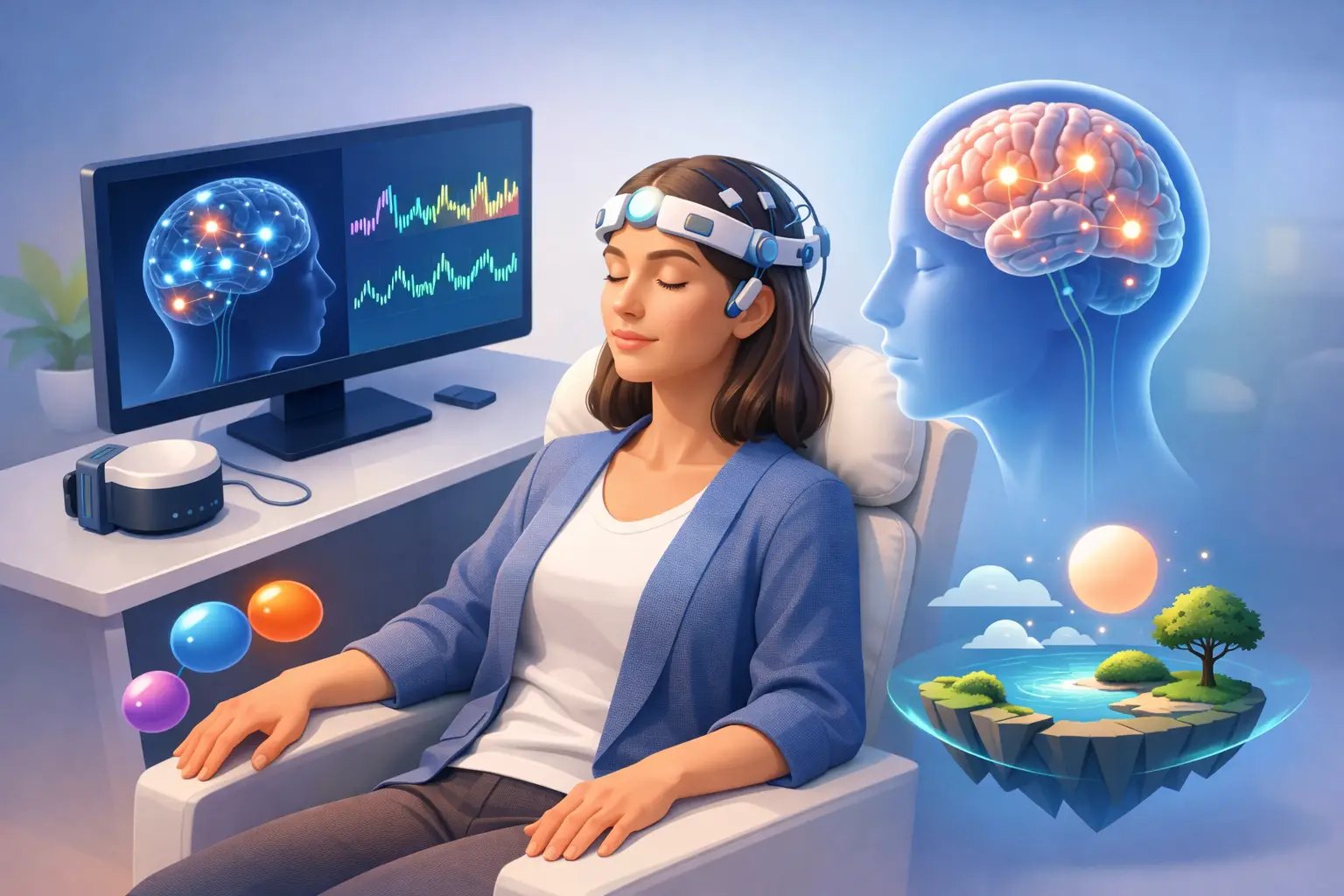
Neurofeedback is a form of biofeedback that measures brain activity using sensors placed comfortably on the scalp. The sensors only read electrical activity. They do not send electricity into the brain, and the training is noninvasive.
During a session, the brain receives immediate feedback through a movie, game, sounds, or visual display. When the brain produces activity that aligns with the training goals, the experience responds positively. When it drifts away from those patterns, the feedback briefly changes. The brain begins to recognize and repeat more efficient patterns without requiring the client to consciously control every moment.
For a person with generalized anxiety, training may be designed to support steadier arousal, improved flexibility, and better regulation between alertness and rest. The goal is not to remove normal concern or make someone emotionally flat. Healthy anxiety can help us prepare, pay attention, and respond to real challenges. The aim is to reduce the intensity, frequency, or staying power of the alarm response when it is no longer useful.
Brain Mapping Can Add a More Personal Starting Point
A brain map, sometimes called a quantitative EEG or qEEG, can provide additional information about a person’s brainwave patterns. It may help identify areas of overactivation, underactivation, or communication patterns that could be relevant to symptoms such as worry, poor sleep, attention difficulties, or emotional reactivity.
A brain map is not a stand-alone diagnosis and should not replace a thorough medical or mental health evaluation. It can, however, help guide an individualized neurofeedback plan. Rather than assuming every anxious brain needs the same training, a provider can use the person’s history, symptoms, goals, and assessment information to make thoughtful adjustments.
What a Neurofeedback Session Feels Like
Many clients are pleasantly surprised by how low-pressure neurofeedback feels. After sensors are placed, a client may watch a favorite show, play a simple activity, or relax while the system provides feedback. There is no need to talk through difficult experiences during every appointment, complete homework perfectly, or try to make the session work through effort alone.
Sessions are generally short and fit into a regular weekly routine. Consistency matters because the brain learns through repetition. Some people notice early changes in sleep, calmness, recovery after stress, or focus. Others experience gradual progress over a longer course of training. The timeline depends on factors such as symptom severity, sleep habits, medication changes, co-occurring ADHD or depression, life stress, and how consistently training occurs.
What Research and Realistic Expectations Tell Us
Interest in neurofeedback for anxiety has grown because it is noninvasive and seeks to address regulation at the brain level. Research on neurofeedback for anxiety is promising, but it is still developing. Studies vary in the protocols used, the populations studied, and the way improvement is measured. That means no ethical provider should promise a cure or guarantee the same result for every client.
The most helpful expectation is practical: neurofeedback may be one part of a personalized plan for helping the brain become less reactive and more resilient. For some people, it works well alongside counseling, stress-management skills, movement, supportive routines, or medication managed by a qualified prescriber. Others pursue it because they want a non-drug option or would like additional support when anxiety has not fully improved with other approaches.
Neurofeedback is not an emergency treatment for a mental health crisis. Anyone experiencing thoughts of self-harm, feeling unsafe, or facing severe symptoms needs prompt support from emergency services, a crisis resource, or an appropriate medical or mental health professional.
Who May Benefit From Brain-Based Anxiety Support
Neurofeedback may be worth considering for children, teens, and adults whose anxiety affects sleep, school, work, relationships, or day-to-day peace. It can be particularly appealing for people who feel physically keyed up, become easily overwhelmed, have trouble turning off their thoughts, or notice that stress makes attention and emotional regulation more difficult.
It may also be useful when anxiety overlaps with other concerns. ADHD, insomnia, panic symptoms, depression, sensory sensitivity, and chronic stress can all influence how regulated a person feels. A careful evaluation helps determine whether neurofeedback is a reasonable fit and whether other support should be included.
Starting With a Clear, Supportive Plan
The best neurofeedback experience begins with listening. Before training starts, a provider should ask about symptoms, health history, sleep, medications, current supports, family goals, and the changes that would make the greatest difference in daily life. For one person, that may be falling asleep without hours of worry. For another, it may be getting through a school day with less overwhelm or being able to enjoy time with family without constant tension.
At Neurofeedback Carolina, the focus is on making advanced brain-based care feel approachable, personal, and comfortable for the whole family. A free consultation or evaluation can help you ask questions, understand what training may involve, and decide whether a personalized plan makes sense for your needs.
A calmer brain is not a brain that never faces stress. It is a brain that can recognize stress, respond appropriately, and return to a steadier place afterward. If worry has been taking up too much space in your life or your child’s life, asking for support can be a meaningful first step toward more rest, focus, and peace.


