When homework ends in tears, bedtime becomes a battle, or your own thoughts seem to race long after the house is quiet, the problem can feel bigger than one difficult day. Neurofeedback therapy Rock Hill families seek offers a calm, non-drug way to help the brain practice better regulation – the foundation for focus, sleep, mood, and resilience.
Neurofeedback is not about changing who someone is. It is a form of biofeedback that gives the brain information about its own activity and rewards healthier patterns in real time. Think of it as a gentle, engaging workout for the brain. Over a personalized series of sessions, the brain can learn to spend less time stuck in patterns that may contribute to distraction, worry, poor sleep, or emotional overwhelm.
How Neurofeedback Therapy in Rock Hill Works
The brain communicates through electrical activity commonly called brainwaves. Different patterns are useful at different times. A person needs enough alert, organized activity to concentrate on schoolwork or a meeting, but also needs the ability to settle into a calmer state at night. When those patterns are out of balance or inflexible, everyday demands can feel much harder to manage.
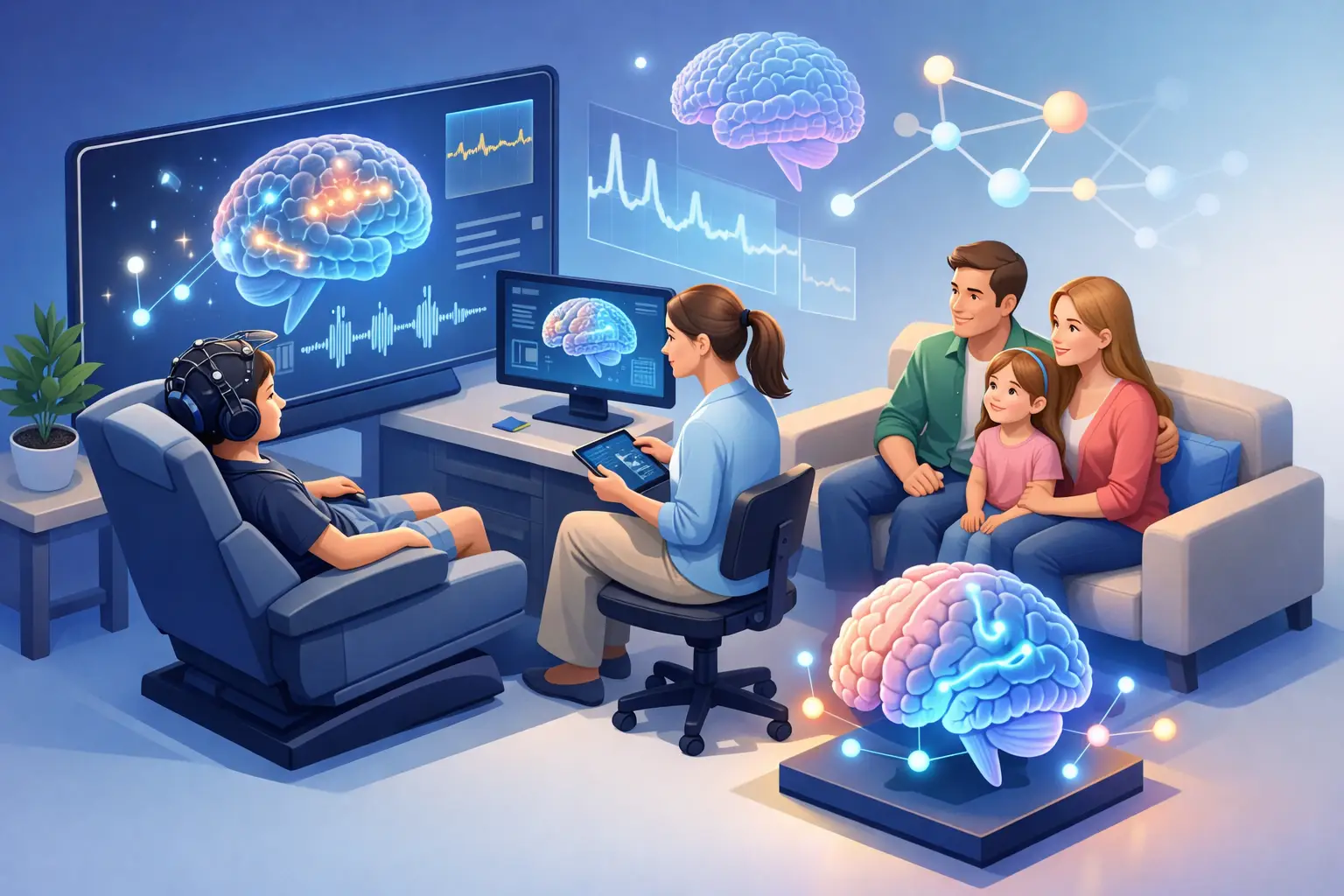
During a neurofeedback session, small sensors are placed on the scalp to read brainwave activity. They do not send electricity into the brain, and the process is noninvasive and painless. The sensors simply provide information to a computer program.
Clients may watch a movie, listen to audio, or participate in another relaxing activity while the system tracks selected brainwave patterns. When the brain moves toward the desired pattern, the feedback responds – perhaps the picture becomes clearer or the sound improves. Without needing to consciously force anything, the brain receives an immediate cue that helps it recognize and repeat more regulated activity.
This is why many children, teens, and adults describe sessions as surprisingly easy. The training itself is quiet and comfortable, but the goal is meaningful: helping the nervous system become more flexible when life requires focus, calm, rest, or recovery from stress.
Who May Benefit From Brain-Based Training?
People come to neurofeedback for different reasons, and individualized care matters because no two brains or families are exactly alike. Parents may be looking for support for a child with ADD or ADHD who struggles to sustain attention, follow routines, or settle after school. Others may be seeking a non-drug option to complement care for autism-related regulation challenges.
Adults often reach out because anxiety, panic attacks, chronic stress, depression, insomnia, or racing thoughts are interfering with work, relationships, and quality of life. Some people simply feel mentally worn down. They may be functioning on the outside while quietly dealing with poor sleep, low patience, brain fog, or a sense that their system is always “on.”
Neurofeedback may also appeal to families who want support for more than one household member. A teenager can have trouble concentrating while a parent is dealing with stress and insomnia. Personalized brain training makes room for each person’s needs instead of assuming one plan should fit everyone.
It is not a replacement for appropriate medical, psychological, or emergency care. For some clients, neurofeedback is one helpful part of a broader plan that may include counseling, medical treatment, school supports, healthy routines, or other services. A thoughtful provider can help you understand whether brain-based training fits your situation and goals.
Why Brain Mapping Can Make Care More Personal
Symptoms tell an important story, but they do not always explain the full picture. Two people can both report anxiety, for example, while their patterns of brain activity and daily triggers look very different. That is one reason a brain map can be valuable.
A brain map, often called a qEEG assessment, measures and organizes information about brainwave activity across different areas of the brain. It can help identify patterns that may be associated with concerns such as attention difficulty, emotional reactivity, sleep disruption, or cognitive fatigue. The results are considered alongside a person’s history, symptoms, and goals.
At Neurofeedback Carolina, this individualized approach helps shape a training plan around the person in the chair, not just a diagnostic label. For a child, that may mean targeting patterns connected to attention and calmer transitions. For an adult, it may mean supporting sleep, steadier mood, or a greater ability to recover after stress.
A brain map is not a stand-alone diagnosis, and it cannot predict every outcome. It is a useful tool for making neurofeedback more targeted and for tracking the conversation about what may need support.
What a Typical Training Plan Feels Like
The first step is usually a conversation about what has been difficult and what improvement would look like in daily life. Parents may want fewer conflicts around homework or mornings. An adult may hope to sleep through the night, feel more present at work, or stop bracing for the next wave of anxiety. Clear goals make progress easier to recognize.
After an initial evaluation, and brain mapping when recommended, training sessions are scheduled around the person’s needs. Sessions are appointment-based and designed to fit into regular life. Most people can return to school, work, or home responsibilities afterward without a recovery period.
Progress is often gradual. A client may first notice falling asleep more easily, having fewer intense reactions, or getting through a task with less frustration. For another person, the first changes may be improved energy, a quieter mind, or more consistent focus. Because the brain is learning over time, the number of sessions and the pace of change can vary.
Consistency matters. Just as one workout rarely builds lasting strength, a single neurofeedback session is not expected to resolve a long-standing concern. A personalized program gives the brain repeated opportunities to practice new patterns. Families are encouraged to share observations along the way so the plan can remain responsive.
Questions Families Often Have
A common question is whether neurofeedback is safe for children. The process is noninvasive: sensors monitor activity, while the computer-based feedback provides cues for learning. Children often do well because training can feel like watching a favorite show or playing a simple game. Still, a child’s plan should be based on an individual evaluation and guided by an experienced provider.
People also ask whether they need medication to begin. Neurofeedback is a non-drug service, and some clients pursue it because they prefer that approach. Others use it alongside medications or therapy recommended by their healthcare professionals. Decisions about medication should always be made with the prescribing clinician.
Finally, it is reasonable to ask how long results last. The purpose of neurofeedback is to support learned regulation rather than provide a temporary boost that disappears when a session ends. Individual results differ, and ongoing stressors, sleep habits, health conditions, and consistency all matter. The encouraging goal is a brain that can access healthier patterns more readily in everyday life.
A Supportive Local Place to Start
Choosing care for yourself or your child can feel personal, especially after trying strategies that have not brought enough relief. Look for a practice that takes time to listen, explains the process in plain language, and builds a plan around real-life concerns instead of promises.
A free consultation or evaluation can be a low-pressure first step. It gives you space to ask questions about symptoms, brain mapping, session frequency, and whether neurofeedback may be appropriate for your family. You do not have to wait until challenges become overwhelming to ask for support.
Better regulation can show up in small but powerful moments: a child who can begin homework without a fight, a teen who recovers more quickly from a hard day, or an adult who finally feels some peace at bedtime. Those moments are worth a conversation about what your brain may be ready to practice next.


