A child who cannot settle into homework, a teen whose anxiety seems to appear out of nowhere, or an adult lying awake with racing thoughts may all raise the same question: is there a way to better understand what the brain is doing? When families begin looking into brain-based care, they often encounter qEEG versus EEG. The names sound similar because they are related, but they serve different purposes.
An EEG records the brain’s electrical activity. A qEEG takes that recording further by using computer analysis to measure brainwave patterns and present them in a detailed brain map. Neither test can explain every challenge a person is facing, and neither replaces a thoughtful clinical evaluation. Still, understanding the difference can help you make a more confident decision about whether brain mapping or neurofeedback may be a good fit.
What Is an EEG?
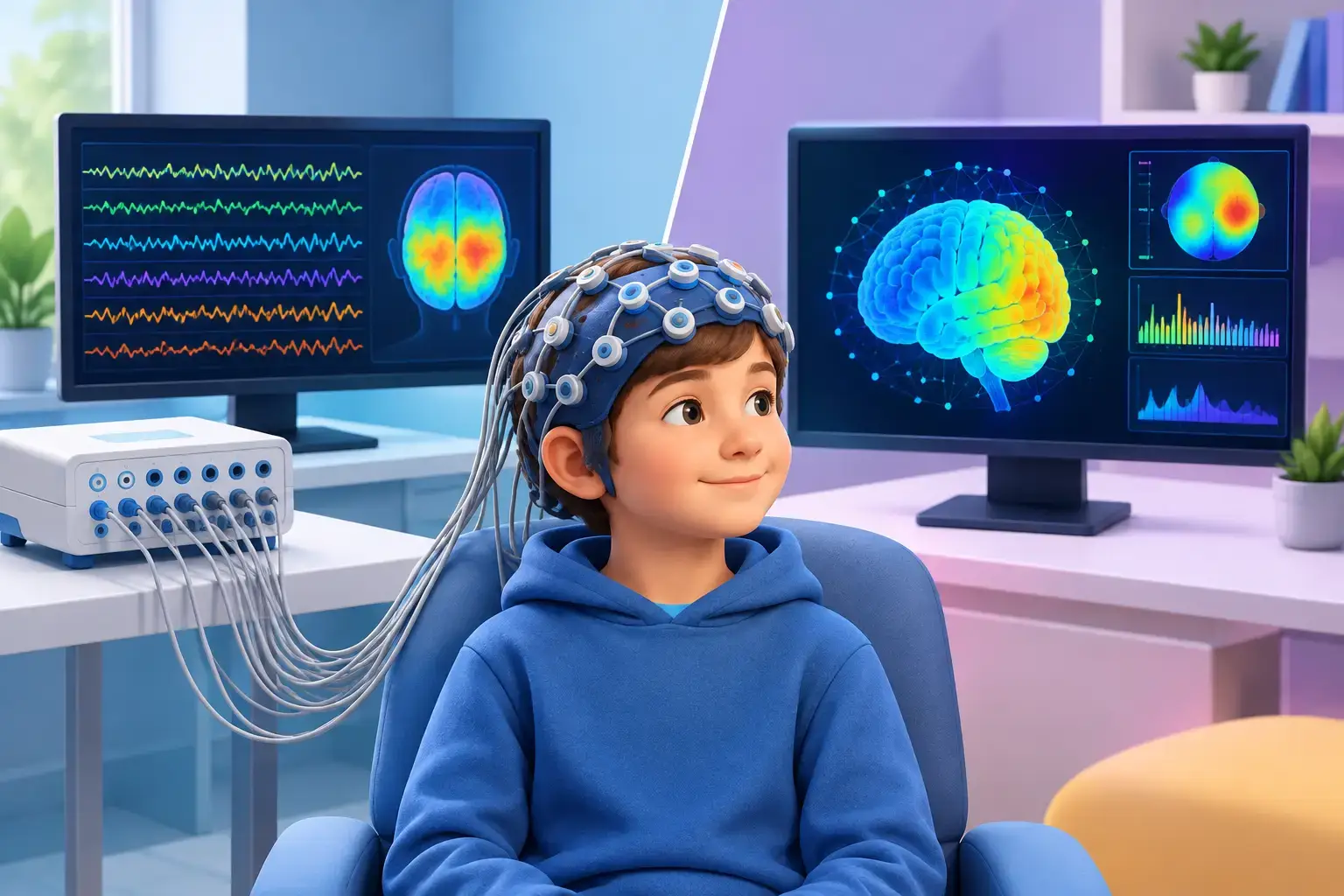
EEG stands for electroencephalogram. It is a noninvasive test that records the tiny electrical signals produced as brain cells communicate. During an EEG, sensors are placed on the scalp with a conductive paste or gel. The sensors do not send electricity into the brain. They simply listen and record.
A traditional EEG is commonly used in medical settings, especially when a physician needs to look for unusual electrical activity related to seizures, epilepsy, fainting episodes, or certain sleep concerns. The recording may be brief, extended over several hours, or completed while a person sleeps, depending on the reason for testing.
The result is a series of wave-like tracings that a qualified medical professional interprets. An EEG can provide valuable information, but it is not usually designed to create a broad picture of attention, stress regulation, sleep patterns, or emotional reactivity in the way a neurofeedback-focused assessment may.
qEEG Versus EEG: The Main Difference
The easiest way to understand qEEG versus EEG is this: an EEG collects the brainwave data, while a qEEG quantitatively analyzes that data.
qEEG stands for quantitative electroencephalogram. It begins with an EEG recording, often collected while a person rests quietly with eyes open and eyes closed. Specialized software then measures features of the recording, such as the amount of activity in different brainwave frequencies, how activity is distributed across brain regions, and how different areas may be communicating with one another.
These results are often displayed as color-coded images called brain maps. A map might show patterns that are worth discussing in relation to symptoms, daily functioning, health history, and goals for care. For example, a person struggling with sleep and persistent mental overactivity may show a different overall pattern from someone whose primary concern is focus or impulsivity.
The colors on a qEEG map are not a diagnosis, and they are not a scorecard for a “good” or “bad” brain. They are one source of information. A meaningful interpretation considers the whole person – including medications, sleep habits, stress, developmental history, medical conditions, and what the individual or family is experiencing day to day.
A quick comparison
An EEG is often used to help medical providers assess for specific neurological concerns, particularly seizure-related activity. A qEEG is more often used to measure and compare brainwave patterns in greater detail, which can be useful when developing a personalized neurofeedback training plan.
Both are painless and noninvasive. The right choice depends on the question being asked. If someone has possible seizures, sudden unexplained loss of awareness, or other urgent neurological symptoms, medical evaluation should come first. If the goal is to better understand patterns connected with attention, regulation, stress, mood, or sleep, a qEEG brain map may be a helpful part of the conversation.
What Can a qEEG Brain Map Help Explore?
People come to brain mapping for many reasons. Parents may want a clearer starting point for a child with ADD, ADHD, anxiety, autism-related regulation challenges, or sleep difficulties. Adults may be looking for non-drug support for panic attacks, depression, chronic stress, brain fog, or a mind that feels as though it never gets to power down.
A qEEG may help identify patterns that can be considered alongside these concerns. It can offer a more individualized view than assuming every person with the same label needs the same approach. Two children may both have trouble focusing in school, for example, but one may be under-slept and anxious while another is highly impulsive and easily overstimulated. Their experiences, and potentially their training plans, may not look alike.
That said, a qEEG does not diagnose ADHD, autism, anxiety, depression, or any other condition by itself. These concerns require appropriate assessment from qualified professionals. Brain mapping is best viewed as a tool that can add useful information, not a shortcut around careful care.
How qEEG Can Guide Neurofeedback
Neurofeedback is a form of biofeedback that gives the brain information about its own activity in real time. During a session, sensors monitor brainwave activity while the client watches a movie, listens to audio, or engages with a simple visual display. When the brain moves toward the desired pattern, the movie or game responds positively.
There is no shock, no forced stimulation, and no requirement to “try harder.” Many clients describe it as a calm, engaging workout for the brain. Over repeated sessions, the brain can practice becoming more flexible and better regulated.
A qEEG can help make this training more personal. Instead of relying only on broad protocols, a provider may use the map, symptoms, and response to training to choose areas of focus and adjust the plan over time. This can be especially reassuring for families who have tried a one-size-fits-all approach and want care that pays attention to the individual.
However, brain mapping is not the only factor that matters. A strong neurofeedback plan also includes ongoing observation. Is the child falling asleep more easily? Is the adult less reactive during stressful moments? Is homework taking less of a battle? Meaningful progress is measured in daily life, not just on a screen.
What to Expect During an Assessment
For most people, the process is comfortable and straightforward. The provider will ask about current concerns, health history, medications, sleep, school or work demands, and goals. Sensors are then placed on the scalp to record brainwave activity. The recording itself is quiet and painless, although the gel used with the sensors can leave hair feeling a little messy afterward.
After the data is analyzed, the findings should be explained in clear, everyday language. You should have the opportunity to ask what the patterns may mean, what they do not mean, and whether neurofeedback is recommended. If it is, the plan should connect directly to your goals rather than offering vague promises.
Be cautious of anyone who presents a qEEG as proof of a diagnosis or guarantees a particular outcome. Brain function is complex. Factors such as medication changes, illness, lack of sleep, trauma, and major life stress can all affect how someone feels and functions. The most responsible care is both hopeful and realistic.
Is a qEEG Right for You or Your Child?
A qEEG may be worth considering when symptoms are affecting daily life and you want a clearer, individualized starting point for neurofeedback. It can be particularly useful for families seeking a noninvasive approach to attention, emotional regulation, sleep, resilience, and overall brain wellness.
It may not be necessary for every situation. Some people begin neurofeedback based on a thorough consultation and symptom history, while others benefit from the additional detail a brain map can provide. The decision should reflect your concerns, your goals, and the recommendations of an experienced provider.
If you are considering qEEG versus EEG, start with the question behind the question: what are you hoping to understand or improve? At Neurofeedback Carolina, a conversation about your family’s needs can help turn that question into a calm, practical next step toward better focus, steadier moods, more restful sleep, and greater peace at home.


