A stressful email, a crowded school hallway, an approaching deadline – the brain and body can react before you have time to think. Your heart may race, your shoulders may tighten, or your thoughts may begin looping. Stress biofeedback gives those reactions a visible signal, helping you notice what is happening in real time and practice a different response.
That matters because stress is not only a feeling. It is also a physical state involving the nervous system, breathing, muscle tension, heart rhythm, and brain activity. When the stress response stays switched on too often or too intensely, it can affect sleep, focus, mood, digestion, relationships, and the ability to handle everyday demands.
Biofeedback is not about forcing yourself to be calm or pretending that difficult situations do not exist. It is a way to build awareness and practice regulation. Over time, that practice may help the brain and body recover more readily after stress.
What Is Stress Biofeedback?
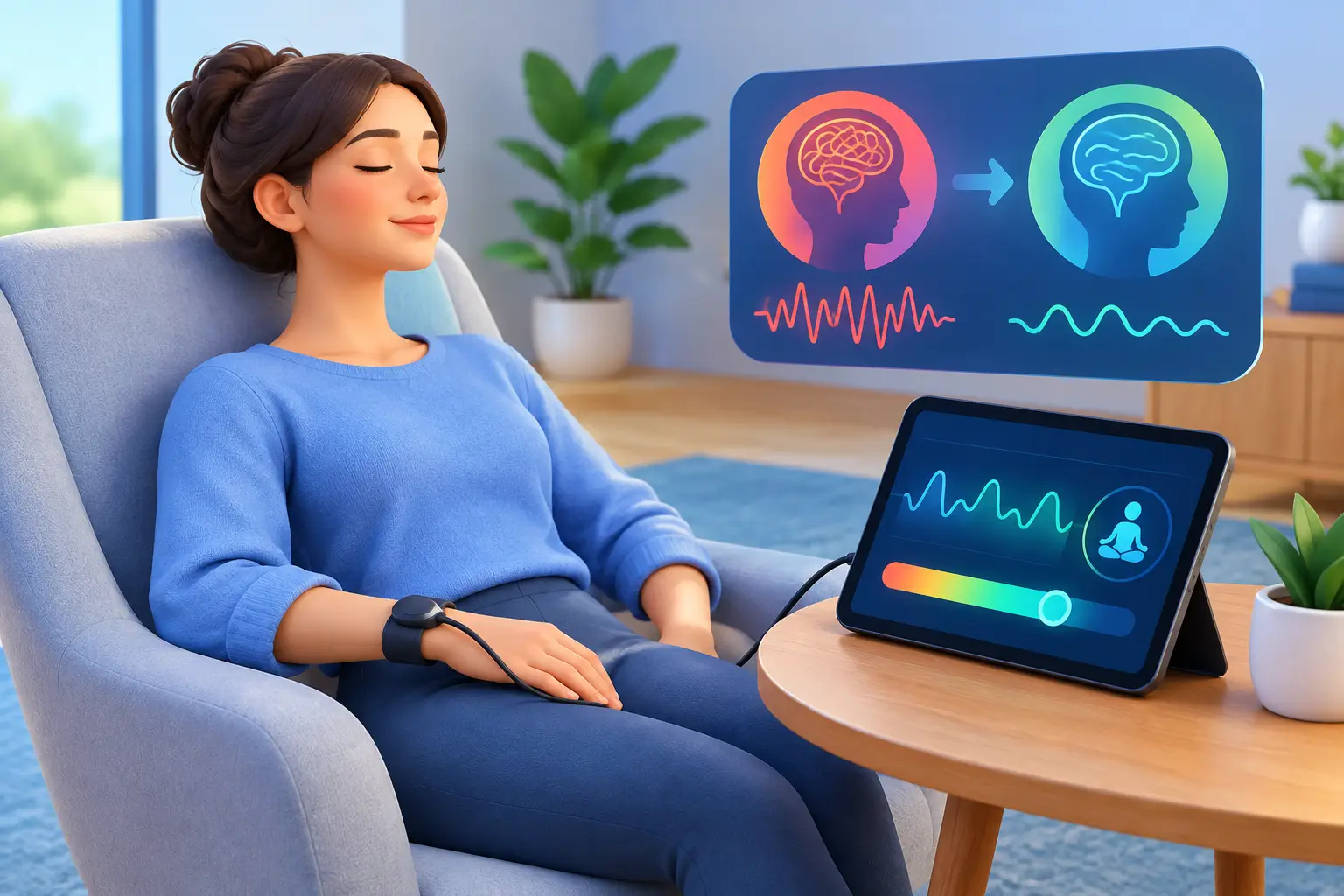
Biofeedback uses sensors to measure a body process that usually happens outside of conscious awareness. The information is then shown back to you through a screen, sound, or other cue. Instead of guessing whether your body is settling, you can see patterns as they occur.
For stress support, biofeedback may track heart rate variability, breathing rate, skin conductance, skin temperature, or muscle tension. Each measure offers a slightly different window into the stress response. For example, shallow, rapid breathing may accompany anxious feelings, while ongoing jaw, neck, or shoulder tension can contribute to headaches and physical discomfort.
With guidance, a person practices skills such as paced breathing, muscle relaxation, or shifting attention. The feedback shows how the body responds. It can be encouraging to see that a small adjustment in breathing or posture changes a physical signal. That connection helps turn a calming strategy from an idea into a skill that can be used at home, at school, at work, or before bed.
Stress does not look identical for everyone. One person may become restless and irritable, while another goes quiet, feels exhausted, or cannot fall asleep. Personalized feedback can be especially helpful because it begins with your own patterns rather than a one-size-fits-all definition of stress.
Stress Biofeedback and Neurofeedback: What Is the Difference?
Biofeedback is a broad term. It can refer to training with many physical signals, including breathing, heart rhythm, and muscle activity. Neurofeedback is a specialized form of biofeedback that focuses on the brain’s electrical activity, commonly called brainwaves.
During neurofeedback, sensors placed on the scalp monitor brainwave patterns. The sensors only read activity; they do not send electricity into the brain. As the brain produces patterns associated with improved regulation, it receives immediate feedback, often through a movie, game, or sound. For many children, teens, and adults, it feels more like a relaxing, engaging workout for the brain than a medical procedure.
The goal is not to create a perfectly stress-free brain. Stress can be useful when it helps us prepare, pay attention, or respond to a real challenge. The goal is flexibility: being able to activate when needed, settle afterward, sleep at night, and return attention to the task in front of you.
A person dealing with racing thoughts, panic symptoms, irritability, trouble concentrating, or insomnia may benefit from looking at both the body-level stress response and brain regulation. Which approach is most appropriate depends on the person, their symptoms, health history, goals, and evaluation findings.
Why Chronic Stress Can Feel So Hard to Turn Off
The nervous system learns from repetition. If a child repeatedly feels overwhelmed in class, if a teen has spent months navigating social pressure, or if an adult is carrying nonstop work and family responsibilities, the brain may begin to anticipate threat even during quiet moments. That can create a frustrating pattern: the person knows they are safe, but their body does not seem to get the message.
This is not a character flaw or a lack of willpower. It is a regulation challenge. People often try to compensate by pushing harder, avoiding triggers, staying busy, scrolling late at night, or relying on caffeine to get through the day. Those strategies may offer temporary relief while making recovery more difficult.
Stress biofeedback can help create a pause between the trigger and the reaction. A child may learn to notice the first signs of overwhelm before behavior escalates. An adult may recognize that tense breathing is showing up halfway through the workday rather than only after a sleepless night. Awareness alone is not the whole solution, but it gives you a practical place to begin.
What a Personalized Training Plan May Include
A helpful plan starts with listening. Symptoms such as inattention, emotional outbursts, panic attacks, low mood, poor sleep, and brain fog can overlap, but they do not always have the same underlying pattern. A thoughtful evaluation considers daily routines, stressors, sleep, goals, previous care, and the ways symptoms affect school, work, and family life.
For neurofeedback, a brain map may be recommended to gather more detailed information about brainwave activity. This can help guide a more individualized training plan. It is not a label and it does not replace a medical diagnosis. Instead, it offers another piece of information about how the brain may be regulating attention, arousal, and rest.
Sessions are typically calm and appointment-based. After sensors are placed, the client relaxes while receiving feedback through a preferred activity. There is no need to perform perfectly. The brain learns through repetition, much like physical conditioning develops through regular practice.
Progress may be gradual. Some people first notice easier sleep, a quieter mind, or less reactivity. Others notice improvements in focus, confidence, or recovery after a difficult day. For families, a meaningful change might be fewer morning battles, smoother homework time, or a child who can explain their feelings before becoming overwhelmed.
What Stress Biofeedback Can and Cannot Do
Biofeedback and neurofeedback can be valuable supports, but they are not instant fixes. The number of sessions, pace of progress, and outcomes vary from person to person. Consistency matters, and day-to-day habits such as sleep, nutrition, movement, therapy, medical care, and family support can affect results.
They also should not be used to ignore serious symptoms. Sudden changes in mood, thoughts of self-harm, severe panic, chest pain, fainting, or other urgent concerns require prompt medical or mental health attention. People taking medication should make changes only with guidance from their prescribing clinician.
For many families, the appeal is that neurofeedback is noninvasive and does not rely on medication as the training method. That does not mean medication, counseling, school accommodations, or other supports are automatically unnecessary. In some situations, a coordinated approach is the most helpful one. The right plan respects the whole person and does not treat one tool as the answer to every challenge.
Is It a Good Fit for Your Family?
Stress-related symptoms can be easy to normalize, especially when life is busy. Yet ongoing sleep struggles, frequent emotional meltdowns, persistent worry, difficulty focusing, or a sense of always being on edge deserve attention. A child does not have to be failing in school, and an adult does not have to reach burnout, before seeking support.
At Neurofeedback Carolina, a free consultation or evaluation can be a comfortable first step for individuals and families in Rock Hill and the surrounding Carolinas. It is an opportunity to talk through concerns, ask practical questions, and learn whether brain-based training may fit your goals.
A calmer response is rarely built in one perfect moment. It grows through small, repeatable experiences of noticing, practicing, and giving the nervous system evidence that it can settle again.


