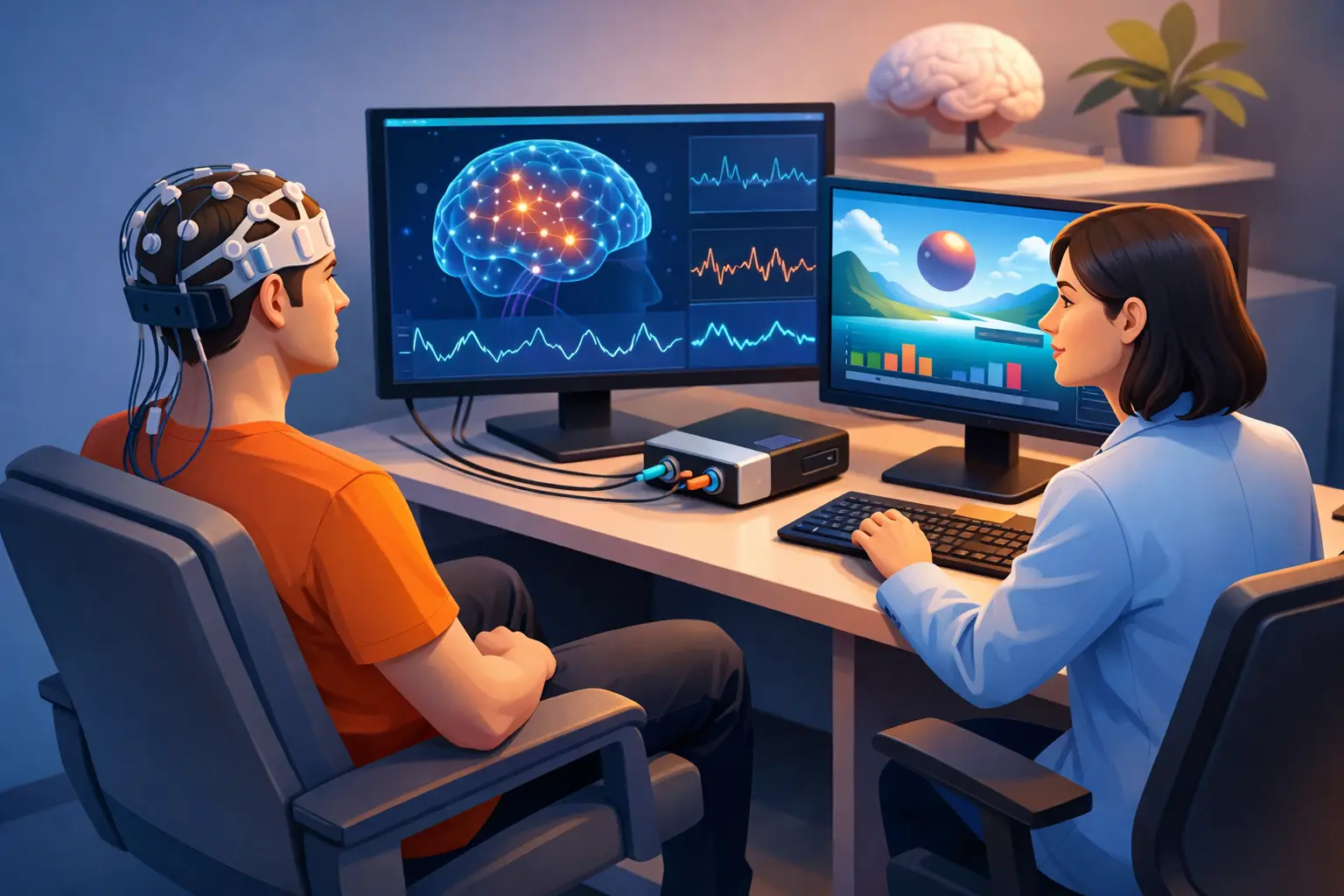
A neurofeedback appointment may look surprisingly simple: you sit comfortably, small sensors rest on your scalp, and you watch a movie or play a simple game while your brain receives real-time feedback. Yet that simple experience is doing meaningful work. Understanding what happens during neurofeedback sessions can make the process feel far less mysterious, especially for parents considering care for a child or adults looking for non-drug support for stress, sleep, focus, or mood.
Neurofeedback is a form of biofeedback. It does not put anything into the brain, and it does not require you to talk through difficult experiences during every visit. Instead, it helps the brain notice and practice more regulated patterns. Think of it as a calm, engaging workout for the brain.
Before Neurofeedback Training Begins
Your care should begin with a conversation about what is getting in the way of daily life. For a child, that might include trouble staying seated, big emotional reactions, difficulty falling asleep, or struggles at school. For a teen or adult, it may be racing thoughts, panic, low mood, mental fatigue, poor concentration, or waking throughout the night.
A provider will ask about symptoms, health history, medications, sleep, stressors, and goals. The goal is not to place every person into the same program. Two people may both have ADHD, for example, but one may need support with impulsivity and the other with anxiety, sluggish focus, or sleep. Personalized care matters because the brain patterns connected to those experiences can differ.
In some cases, a brain map may be recommended. A brain map, also called a quantitative EEG or qEEG, records brainwave activity across different areas of the scalp. It can provide a clearer picture of patterns that may be linked to attention, regulation, sleep, or emotional resilience. Not every training plan looks identical, and a brain map can help guide a more individualized approach.
What Happens During a Neurofeedback Session?
Once training begins, most sessions follow a comfortable, consistent routine. The appointment is generally quiet and low-pressure. There are no needles, no electrical stimulation, and no need to force your brain to perform.
Sensors Measure Activity, but Do Not Send Anything In
The provider gently places small sensors on specific locations of the scalp, often using a small amount of conductive paste. These sensors read the brain’s electrical activity, similar to how a thermometer reads temperature. They do not send electricity into the brain.
The sensors connect to a computer that recognizes selected brainwave patterns in real time. Brainwaves are normal electrical rhythms involved in alertness, rest, attention, and sleep. The training protocol is designed to encourage patterns associated with better regulation while reducing patterns that may be overactive or underactive for that individual.
For many children, the setup becomes routine quickly. Parents often find it helpful to explain that the sensors are simply listening to the brain, not changing it directly.
Your Brain Receives Immediate Feedback
After the sensors are in place, the client may watch a movie, listen to music, or interact with a visual display. The computer responds to the brain’s activity moment by moment. When the brain moves toward the desired pattern, the movie may become brighter, the sound may become clearer, or the game may respond more smoothly.
That response is the feedback in neurofeedback. The brain naturally pays attention to what helps the experience continue. Over repeated practice, it can become more efficient at returning to healthier, more flexible patterns without conscious effort.
You do not have to figure out the “right” way to think. Trying too hard is not necessary. Most people simply relax and let the feedback system do its job. A child may be absorbed in a favorite show, while an adult may enjoy having a quiet break from constant demands.
Training Is Usually Comfortable and Engaging
A typical neurofeedback session often includes a period of active training followed by time to remove the sensors and check in with the provider. The exact length and frequency depend on the person’s plan, age, symptoms, schedule, and response to training.
Many people describe the session as easy or relaxing. Some notice changes gradually, such as falling asleep more easily, feeling less reactive, staying with tasks longer, or recovering faster after a stressful moment. Others may notice an earlier shift in energy, calm, or focus. Progress is individual, and lasting improvement usually comes through consistent training over time.
What Does Neurofeedback Feel Like?
Most clients do not feel the brainwave training itself. The experience is not like a medication effect, where you may notice a sudden change in your body. Instead, neurofeedback uses learning principles. The brain receives frequent, gentle feedback and gradually becomes better at self-regulation.
After a session, some people feel calm or mentally refreshed. Others feel no immediate difference, particularly at the beginning. Occasionally, a person may feel tired, more alert, or temporarily emotional as the brain adjusts. These responses are worth sharing with the provider so the training plan can be monitored and adjusted when appropriate.
For children and teens, the most meaningful signs of progress may show up outside the office. A parent might notice fewer bedtime battles, less homework frustration, smoother mornings, or more ability to pause before reacting. Adults may recognize that they are no longer lying awake replaying the day, or that a stressful conversation does not derail the rest of the afternoon.
How Many Sessions Will You Need?
This is one of the most common questions, and the honest answer is that it depends. The number of sessions can vary based on the concerns being addressed, how long they have been present, the person’s overall health, and how consistently training occurs.
Neurofeedback is generally approached as a series of sessions because the brain is practicing a skill. One workout can feel good, but building strength takes repetition. In the same way, repeated feedback gives the brain opportunities to stabilize more helpful patterns.
Your provider should review progress throughout care rather than treating the original plan as fixed. Goals may shift as sleep improves, anxiety settles, attention becomes more consistent, or a child gains better emotional control. A personalized plan can change with the person receiving it.
Neurofeedback for Children, Teens, and Adults
The basic process is similar across ages, but the experience should be adapted to the person in the chair. Younger children may train with animated shows or game-like feedback and need a little more help getting comfortable with the sensors. Teens often appreciate a private, judgment-free space where they can work on focus, sleep, stress, or mood without being lectured.
Adults may come in after years of feeling overwhelmed, exhausted, unfocused, or dependent on coping strategies that no longer work. They may be balancing work, parenting, caregiving, or chronic stress. A short appointment that feels calm and manageable can be a practical part of a broader wellness plan.
Neurofeedback may support people with ADD and ADHD, anxiety, panic attacks, autism, depression, insomnia, and stress-related concerns. It is not a replacement for emergency care, and it should not be presented as a guaranteed cure. Some people use it alongside counseling, medical care, school supports, lifestyle changes, or medication management. The best plan depends on the full picture.
Making the Most of Your Sessions
You do not need special preparation to train, but a few practical habits can help. Arriving with clean, dry hair makes sensor placement easier. Eating regularly, drinking water, and getting as much rest as possible can also make appointments more comfortable.
The most valuable thing you can bring is honest feedback. Let the provider know how sleep has been, whether school or work feels different, how emotions are showing up at home, and whether any changes feel helpful or uncomfortable. Small details help shape care that stays responsive to real life.
At Neurofeedback Carolina, families are encouraged to see training as a supportive process, not another burden on an already full schedule. The office experience should feel welcoming, clear, and tailored to your goals.
If you are considering neurofeedback, a free consultation or evaluation can be a good place to ask questions, share what has been difficult, and find out whether brain-based training fits your needs. Sometimes the first helpful step is simply giving your brain a calm place to practice feeling more like itself.


